
How Silicone Concealers Actually Work on Your Skin
The best silicone based concealer works through unique physical properties that distinguish it from water-based or oil-based formulas. Silicones—particularly dimethicone, cyclopentasiloxane, and cyclomethicone—create a breathable but water-resistant film on skin that allows perspiration to escape while preventing moisture loss and providing a smooth, grippy surface for makeup. In concealer formulas, silicones suspend pigment particles in this flexible matrix that moves with facial expressions rather than cracking across lines, theoretically providing long-wearing coverage that doesn't settle or crease. The silicone molecules also fill microscopic irregularities in skin texture, creating an optically smooth surface that reflects light uniformly rather than scattering it across uneven terrain.
Here's what cosmetic chemists understand about silicone based under eye concealer that beauty marketing obscures: silicones are not a single ingredient but a family of compounds with dramatically different properties and performance characteristics. Volatile silicones like cyclomethicone evaporate after application, depositing other ingredients without remaining on skin. Non-volatile silicones like dimethicone stay on skin, creating the long-lasting film that provides endurance. Silicone elastomers like dimethicone crosspolymer create a flexible mesh network that genuinely fills fine lines. A concealer's performance depends on which specific silicones it contains and in what concentrations, not simply whether it's silicone-based or not.
The critical factor most advice overlooks: silicone concealers require matching with silicone-based primers and foundations to prevent pilling and separation. When you layer water-based foundation over silicone concealer, or vice versa, the two formulas repel each other like oil and water, creating the pilling and balling that ruins your makeup within hours. This incompatibility is the primary cause of concealer failure that people attribute to poor formulas when the actual issue is mismatched product bases. Silicone concealer works beautifully as part of an all-silicone routine but fails dramatically when mixed with incompatible bases.
The Longevity Promise Versus Reality
Silicone-based concealers are marketed as the ultimate long-wearing formulas that maintain coverage through sweat, humidity, and long days without touch-ups. This promise holds true on specific skin types—primarily normal to oily skin with minimal texture—where silicones create their intended water-resistant, flexible film. On very oily skin, however, the skin's natural sebum eventually breaks down even robust silicone films, causing separation and fading after 6-8 hours. On very dry skin, silicones can paradoxically worsen the appearance of dehydration by creating an occlusive barrier that prevents moisture absorption from skincare products applied underneath.
What professional makeup artists know about silicone concealer longevity that tutorials skip: the durability depends entirely on proper application technique and setting. Silicone concealer must be applied in thin layers, allowing each layer to set for 30 seconds before adding more, which allows the volatile silicones to evaporate and the film-forming silicones to bond with skin. Rushing this process by applying one thick layer prevents proper film formation and causes the sliding and separation that silicone formulas are supposed to prevent. Additionally, silicone concealer requires setting with powder—the silicone film alone provides initial grip but needs powder reinforcement to achieve the advertised all-day wear.
When Silicone Concealers Excel Versus When They Fail
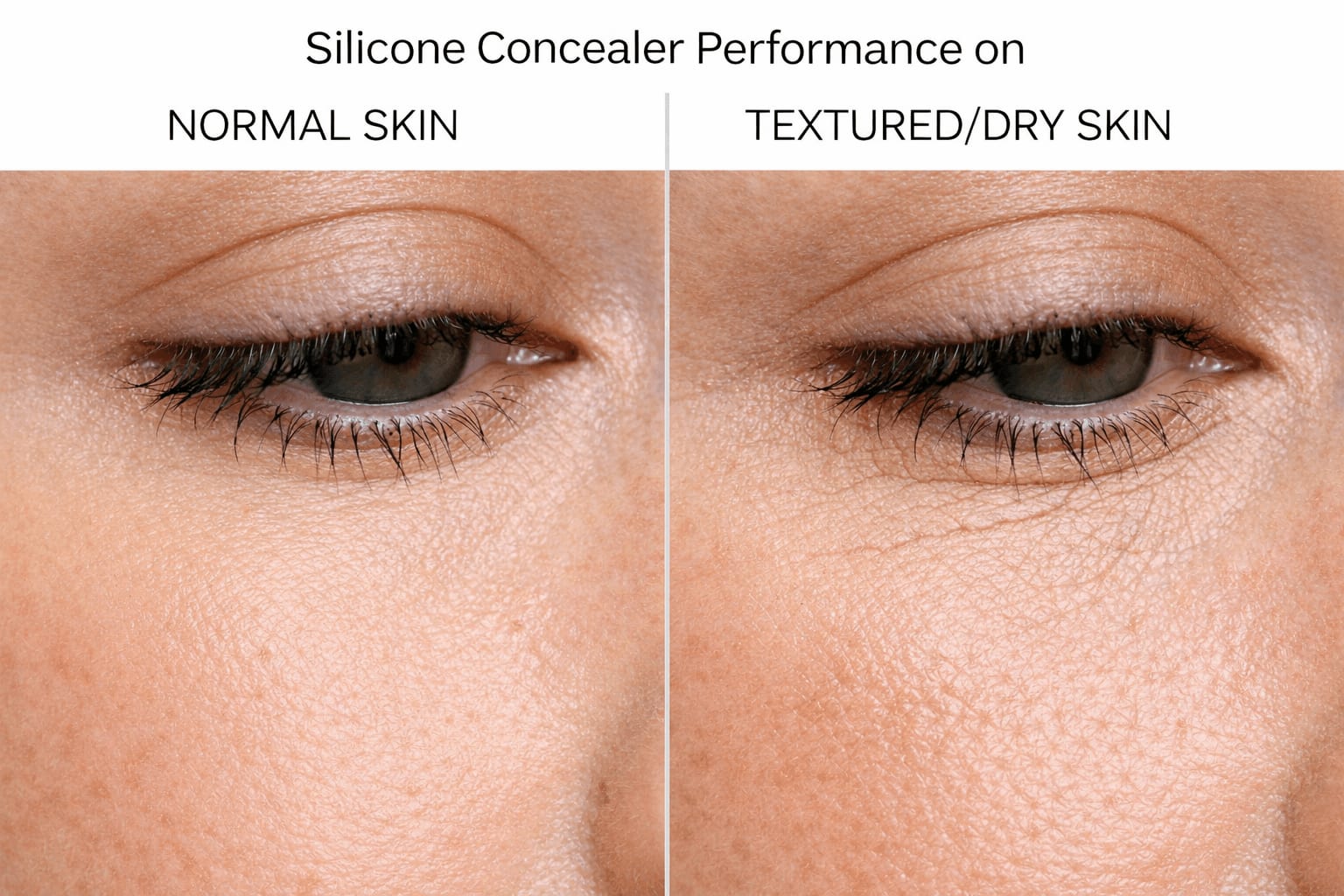
Silicone-based concealers perform exceptionally on younger skin with good elasticity and minimal texture, where the smoothing and long-wearing properties shine without drawbacks. They work beautifully for covering blemishes on normal to oily skin, providing transfer-resistant coverage that survives through touching your face, mask-wearing, or humid conditions. For athletic individuals or those working in hot environments, silicone concealers' sweat-resistance makes them superior to water-based alternatives that break down with moisture exposure. The key is having relatively smooth, resilient skin that benefits from silicone's filling and film-forming properties without the textural issues that arise on compromised skin.
However, silicone concealers fail dramatically on mature skin with developing fine lines and crepiness, particularly in the under-eye area where aging changes concentrate. The same film-forming properties that provide longevity also create rigidity that doesn't accommodate the natural movement of thinning, less elastic skin. As you make facial expressions throughout the day, silicone concealer cracks along expression lines rather than flexing with them, creating the prominent creasing that makes you look older than bare skin would. Additionally, silicone's ability to fill texture works against you when texture is extensive—it settles into the network of fine lines like caulk in cracks, emphasizing rather than smoothing the very issues you're trying to minimize.
- Silicone concealer for blemishes on oily skin: Provides transfer-resistant coverage that survives through oil production and touching
- Silicone concealer for athletic or humid conditions: Sweat-resistant properties maintain coverage where water-based formulas fail
- Silicone concealer on young, smooth skin: Smoothing and filling properties work beautifully without emphasizing texture
- All-silicone makeup routine: Ensures product compatibility without pilling when primer, foundation, and concealer all share silicone base
- Avoid silicone concealer on: Mature, lined, or crepey skin: Settles into texture and cracks along expression lines, emphasizing aging rather than concealing
The dry skin paradox with silicone concealer: while silicones are technically non-drying because they don't absorb moisture, they create an occlusive barrier that prevents your skin from absorbing moisture from subsequent products or the environment. On very dry skin, this means your concealer sits on top of dehydrated tissue rather than allowing the continuous moisture exchange that keeps skin looking plump and smooth. You might apply beautifully hydrated concealer over well-moisturized skin, only to find by afternoon that the silicone barrier has prevented your skin from maintaining that hydration, causing the concealer to emphasize dryness and texture that weren't visible at application.
Application technique for successful silicone concealer use: warm the product between your fingers before application, which softens the silicones and improves blendability. Apply in extremely thin layers using pressing motions rather than rubbing, allowing the silicone film to form properly rather than being disrupted by friction. Wait the full 60 seconds between layers for volatile silicones to evaporate before building coverage. Set with minimal powder using a damp sponge to press rather than dust, which prevents powder buildup that makes silicone concealer look cakey. This patient, methodical approach takes extra time but transforms silicone concealer performance from disappointing to impressive.
For specific techniques on using makeup including concealer to minimize forehead lines and wrinkles, where silicone formulas' texture-filling properties might seem beneficial but often backfire, explore our guide on covering forehead lines and wrinkles that addresses the unique challenges of high-movement areas with expression lines.
When Silicone Concealer Recommendations Completely Backfire
The universal recommendation to use long-wearing silicone concealer for under-eye coverage fails for women over 50 with developing under-eye texture because longevity and natural appearance become mutually exclusive. The very properties that make silicone concealer last 12+ hours—rigid film formation, complete coverage, transfer resistance—create the obvious, settled appearance that ages mature skin. You face a choice: flawless coverage that looks natural for 4-6 hours using hydrating, flexible formulas, or coverage that lasts all day but looks increasingly artificial and emphasizes texture as hours pass. Most women over 50 would prefer natural-looking coverage that requires light touch-up over long-wearing coverage that looks progressively worse.
Another scenario where conventional wisdom fails: using silicone concealer with water-based foundation or vice versa because you love products with incompatible bases. The silicone versus water-based distinction matters more than brand loyalty or product quality—mismatched bases will always separate and pill regardless of how expensive or highly-rated the individual products are. If you've found a water-based foundation that works perfectly for your skin, accept that you need water-based concealer to pair with it, even if that means abandoning a beloved silicone concealer. Attempting to make incompatible products work through application tricks wastes time and money when the solution is simply matching product bases.
The critical contradiction between makeup artist recommendations and real-world mature skin: professional makeup artists frequently recommend silicone concealer for its photograph-ready finish and impressive longevity, but they're working on models or clients for single events with professional lighting that minimizes texture. In your daily life with natural lighting, normal facial movement, and skin that's been compromised by decades of sun exposure and declining collagen, silicone concealer's drawbacks outweigh its benefits. Professional settings—photoshoots, stage performance, special events with professional photography—justify silicone's trade-offs. Daily wear requires formulas that prioritize natural appearance over extreme longevity.
What actually fails that nobody discusses: removing silicone concealer completely at day's end. Silicone's durability means regular cleansing often leaves residue that accumulates over days, clogging pores and causing the congestion and breakouts that make you need more concealer in a vicious cycle. Silicone-based makeup requires oil-based or micellar cleansing specifically formulated to break down silicone films, followed by a second cleanse with water-based cleanser. Single cleansing with your regular face wash likely isn't removing your silicone concealer adequately, even when your face feels clean. This incomplete removal contributes to the skin texture deterioration that ironically makes silicone concealer perform worse over time.
The hidden challenge with silicone concealer during hormonal transitions: declining estrogen affects sebum composition and production patterns, making your skin's interaction with silicone formulas unpredictable. The concealer that provided perfect 12-hour wear at 40 might start breaking down or oxidizing by afternoon at 50, not because the formula changed but because your skin's oil production fundamentally shifted. Perimenopause creates particularly chaotic results as hormone levels fluctuate wildly—some days silicone concealer performs beautifully, other days it separates within hours. This inconsistency makes silicone concealer frustratingly unreliable precisely when you need makeup confidence during an already challenging life transition.
For understanding how concealer selection fits into comprehensive strategies for managing all makeup concerns during hormonal changes, including product base compatibility and formulation adjustments for changing skin, see our complete makeup guide for menopausal skin changes that addresses how declining estrogen affects every aspect of cosmetic performance from absorption to longevity.