
Understanding Why Forehead Lines Become More Visible During Menopause
Forehead wrinkles during menopause aren't just about aging—they're about fundamental skin structure changes that make traditional makeup techniques backfire. Estrogen decline reduces collagen production by up to 30% in the first five years after menopause, causing skin to lose its ability to bounce back from facial expressions. This creates deeper expression lines that standard makeup formulas can't simply fill or hide.
The challenge intensifies because menopausal skin produces 40% less sebum, creating a paradox: wrinkles need moisture to appear less prominent, but the skin can't maintain hydration like it once did. When you apply makeup to dehydrated skin with compromised elasticity, products settle into lines within hours—sometimes minutes—making wrinkles look worse than bare skin. This happens because makeup particles accumulate in the creases where moisture has evaporated, creating visible texture that catches light.
Understanding these physiological changes matters because the solution isn't about finding the perfect product—it's about adapting your entire approach to how menopausal skin behaves. The same foundation that worked beautifully at 40 may emphasize every line at 52, not because the product changed, but because your skin's structure, oil production, and moisture retention fundamentally transformed. Learn more about these changes in our complete makeup guide for menopausal skin.
Additionally, facial muscle activity changes during menopause due to reduced collagen support, meaning expressions create deeper grooves. The forehead, being one of the most expressive areas, shows this dramatically—raising eyebrows, frowning, or concentrating all create repetitive folding in skin that no longer springs back fully. Without addressing the dehydration and loss of resilience first, any makeup application is merely temporary camouflage that degrades rapidly.
Common Myths vs. What Actually Works for Covering Wrinkles
Myth #1: Heavy Coverage Foundations Hide Wrinkles Better
The instinct to pile on full-coverage foundation to mask forehead lines is one of the most counterproductive approaches for menopausal skin. Heavy formulas contain more pigment particles and binding agents, which accumulate in wrinkle crevices and actually accentuate depth by creating shadow contrast. Within 2-3 hours, these thick formulas settle and crack along expression lines, drawing attention to exactly what you're trying to hide.
What works instead: lightweight, hydrating foundations or tinted moisturizers with light-reflecting particles. These formulas contain fewer pigment particles that can't sink into lines as easily, and their moisture content keeps skin plump longer. The key is building coverage strategically—apply a thin layer everywhere, then spot-conceal specific concerns rather than coating the entire forehead heavily. This prevents the caking effect while still providing adequate coverage.
Myth #2: Primer Fills in Wrinkles Like Spackle
Marketing imagery suggests primers create a smooth surface by physically filling wrinkles, but silicone-based pore fillers designed for oily, young skin often make menopausal forehead lines worse. These mattifying primers absorb the limited moisture menopausal skin produces, leaving lines more visible by mid-afternoon. The temporary smoothing effect lasts 30-90 minutes before dehydration undoes everything.
The evidence-based approach: hydrating primers with hyaluronic acid or glycerin that pull moisture into the skin rather than creating a barrier. Applied to damp skin, these actually plump fine lines temporarily through hydration rather than concealment. For deeper expression lines, skip primer entirely on the forehead—use it only on smoother areas like cheeks. This selective application prevents product buildup in wrinkle-prone zones while still providing benefits where skin is less textured.
Myth #3: Setting Powder Locks Makeup in Place All Day
Powder is the most common culprit in making forehead wrinkles look dramatically worse. While setting powder prevents shine on oily skin, it catastrophically dehydrates menopausal skin, causing makeup to crack along every line. The powder particles themselves are visible in wrinkles under certain lighting, creating a chalky, aged appearance that's worse than no makeup at all. Many women report their forehead lines looking 20 years older after powder application.
The contradiction: menopausal skin rarely produces enough oil to need powder, yet habit drives its use. If you must set makeup, use setting spray instead—it locks products through a moisture-preserving film rather than absorbent particles. For the forehead specifically, leave it completely unpowdered. Any initial dewiness fades naturally within an hour without the devastating texture powder creates. This represents a complete reversal from pre-menopausal makeup routines where powder was essential.
Practical Application Strategies That Actually Work
The Three-Layer Hydration Method
Successful wrinkle coverage during menopause starts 15 minutes before makeup touches your face. The three-layer method addresses the fundamental hydration deficit that causes makeup to fail. First, apply a hyaluronic acid serum to damp skin—the moisture helps the acid pull water into the dermis. Second, while skin is still damp, apply a rich moisturizer focusing on the forehead and around eyes. Third, wait 10-15 minutes before makeup application so products fully absorb rather than mixing with foundation.
This waiting period is critical and often skipped. When you apply foundation over incompletely absorbed skincare, the products combine into a slippery, separating mess that slides into every wrinkle within an hour. The 10-minute wait allows skincare to penetrate and set, creating a stable, hydrated base that keeps makeup suspended on the skin's surface rather than sinking into lines. For deeper forehead furrows, consider facial oils in layer two—they create a moisture-trapping barrier that keeps skin plump longer. Explore more hydration strategies in our guide to menopausal skin creams.
Strategic Application Technique: Press, Don't Rub
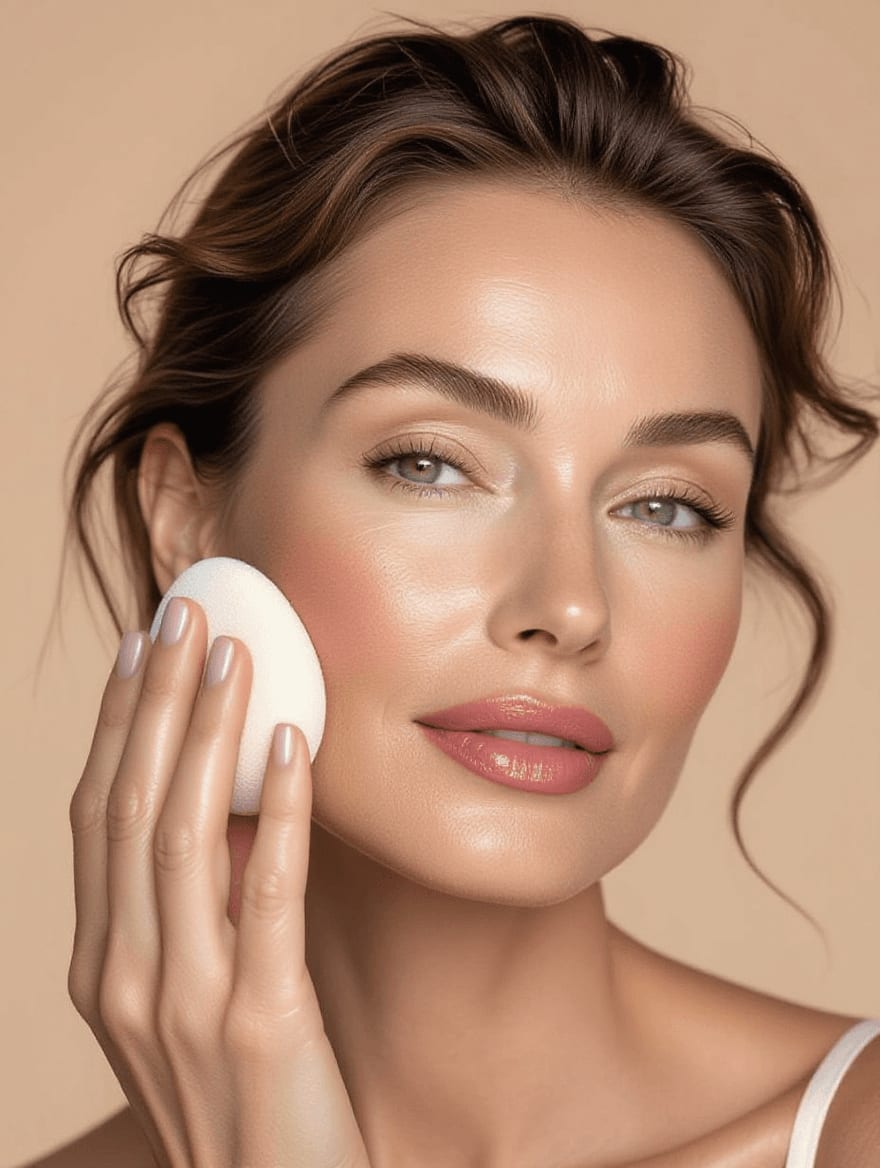
Application method transforms how makeup sits on wrinkled skin. Rubbing or brushing foundation across the forehead drags product into lines and creates streaky coverage. Instead, the press-and-roll technique deposits product on top of skin texture without forcing it into crevices. Use a damp beauty sponge—the moisture prevents absorption and creates a sheerer application. Place small dots of foundation across the forehead, then gently press the sponge flat against each dot and roll slightly to blend.
The difference is immediate: pressed makeup sits on the surface in a thin, even layer, while rubbed makeup accumulates in wrinkles within minutes. For deep frown lines between brows, use even less product—sometimes just tapping the sponge across without any rolling motion. This seems insufficient until you see photos—heavy coverage in deep lines creates sharp shadows that make them look carved in, while sheer coverage with good lighting diffusion makes them nearly invisible.
Light Direction and Product Finish Matter More Than Coverage
What beginners misunderstand: wrinkles are visible primarily because of shadow and light catch, not because of the wrinkle itself. A 2mm deep line becomes invisible with proper lighting but looks like a canyon under harsh overhead lights. This is why light-reflecting foundations with subtle pearl or luminous finishes outperform full-coverage matte formulas—they bounce light away from wrinkle depth, reducing shadow contrast.
Choose foundations labeled 'radiant,' 'luminous,' or 'satin finish' rather than 'matte' or 'ultra-matte.' The light particles don't make you look oily on menopausal skin—they make wrinkles disappear through optical diffusion. Avoid products with obvious glitter or shimmer, which create sparkle points that draw attention to texture. The ideal finish looks naturally skin-like with a subtle glow, as if your skin is healthy and hydrated rather than made up. This finish works across all lighting conditions, while matte finishes look good only in diffused light and catastrophic in direct sunlight or flash photography.
When Standard Advice Fails: Edge Cases and Adaptations
Deep Static Wrinkles vs. Expression Lines Require Opposite Approaches
Not all forehead wrinkles behave identically under makeup. Expression lines (those visible when you raise eyebrows or frown) respond well to hydration and light-reflecting makeup because they're temporary folds in mobile skin. However, static wrinkles (those visible even with a relaxed face) are permanent creases where collagen has collapsed. These actually look worse with hydrating products because moisture causes surrounding skin to plump slightly, making the wrinkle depression more pronounced by contrast.
For static forehead wrinkles, the strategy reverses: use minimal hydration on the wrinkled area itself, apply matte foundation (yes, matte in this specific case), and keep coverage light. The goal shifts from plumping to creating uniform texture. Some women with severe static wrinkles actually achieve better results by using face tape or wrinkle-smoothing patches for 15-30 minutes before makeup to temporarily minimize depth, then applying makeup to that smoother surface. This is an honest limitation: no makeup technique perfectly erases permanent deep wrinkles, and anyone promising otherwise is misleading you.
When Skin Becomes Extremely Dehydrated: The Makeup-Free Option
There's a threshold where menopausal skin becomes so dehydrated that any makeup application looks worse than bare skin. This often happens during severe hormonal fluctuations, in harsh climates, or after certain medical treatments. When you apply foundation and it immediately cracks, settles, or creates visible texture despite perfect technique, your skin has crossed this threshold. The trade-off becomes clear: you can have makeup that emphasizes every flaw, or you can skip makeup and work on restoring skin barrier function.
During these periods, focus on intensive hydration for 1-2 weeks—hyaluronic acid serums, ceramide-rich moisturizers, facial oils, and potentially overnight masks. If you must have coverage, use only tinted sunscreen or BB cream with SPF on the rest of your face while leaving the forehead bare or using only concealer on specific spots. This temporary retreat from full makeup often resolves the problem faster than continuing to fight with products that won't cooperate. Experienced practitioners recognize this signal and adjust rather than forcing techniques that aren't working.
The Downside of All Wrinkle-Covering Techniques: Time and Maintenance
Every effective technique for covering forehead wrinkles adds time and maintenance to your routine—there's no quick fix for menopausal skin. The three-layer hydration method requires 15 minutes pre-makeup. Proper application technique takes 5-10 minutes longer than quickly swiping on foundation. Throughout the day, you'll need to check makeup because even optimal techniques last only 6-8 hours before requiring touch-ups.
Additionally, these methods work progressively less well as skin continues changing through menopause stages. What covers wrinkles beautifully in early perimenopause may need complete revision within two years. This isn't failure—it's adaptation to continuing hormonal shifts. The honest answer is that covering deep forehead wrinkles during menopause requires more effort, more adjustment, and more realism about limitations than most beauty content admits. But with proper technique, the results justify the investment for women who value makeup as part of their self-expression and confidence.