
Why Summer Requires Different Foundation During Menopause
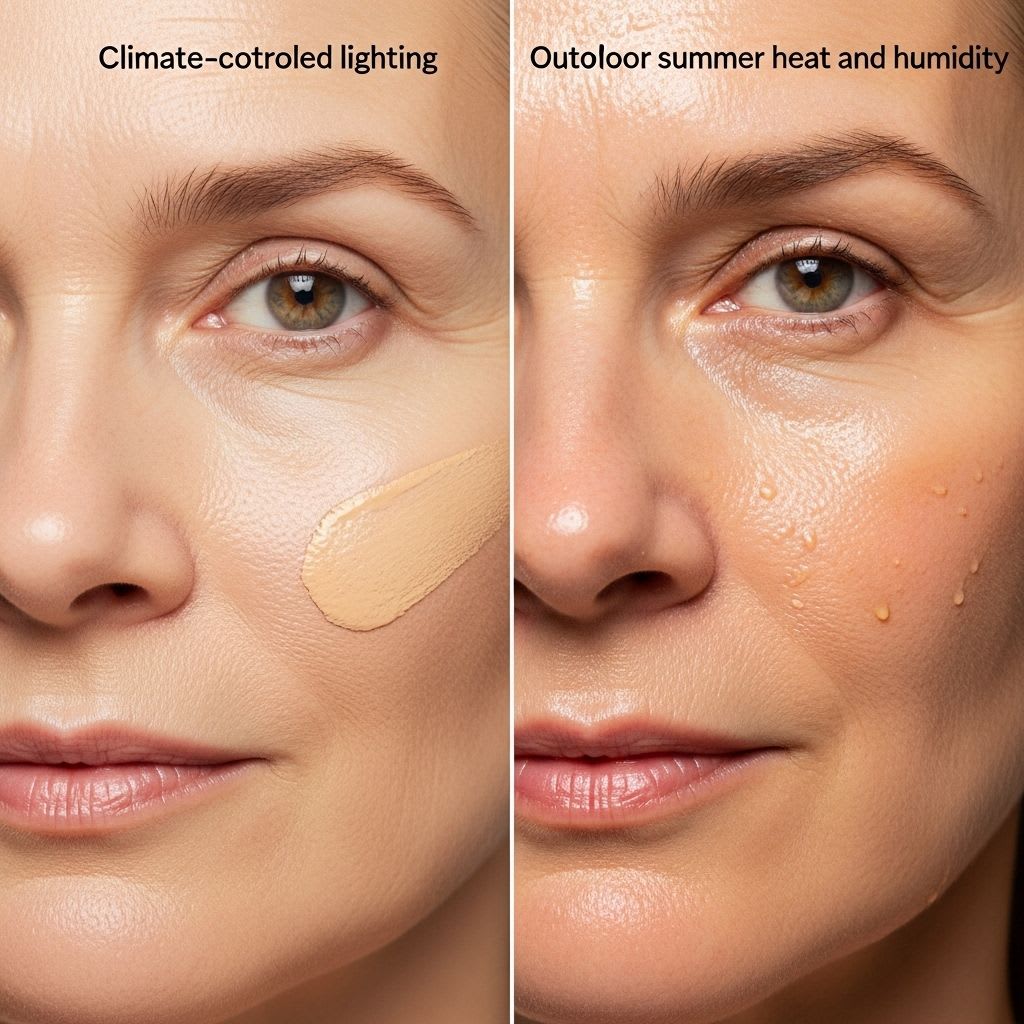
Summer foundation challenges for menopausal women extend far beyond what younger women experience because hot flashes create internal heat waves that combine with external temperature and humidity to destroy foundation integrity within minutes. While young women deal with environmental heat alone, menopausal women face sudden facial perspiration from hormonal surges that can strike multiple times daily, regardless of ambient temperature. This internal heat causes foundation to break down through a combination of moisture, oil production spikes, and temperature fluctuation that standard summer foundations aren't designed to withstand.
The complexity intensifies because summer also means increased sun exposure that causes foundation oxidation—where foundation darkens or turns orange throughout the day. Mature skin's thinner barrier provides less protection against UV-triggered chemical reactions in foundation formulas, making oxidation more pronounced than on young skin. Additionally, summer heat can cause some foundations to separate on skin as emulsions break down, creating patchy coverage and obvious texture emphasis. The winter foundation that looks flawless in air conditioning becomes a streaky, separated mess within hours of summer heat exposure.
What beginners misunderstand is thinking they can simply apply their regular foundation more lightly for summer—the issue isn't quantity but formula compatibility with heat and moisture. Heavy hydrating winter foundations designed for dry menopausal skin become too emollient in summer heat, sliding off the face. Conversely, mattifying formulas that might seem ideal for sweat control often emphasize the crepey texture summer sun exposure worsens. Summer foundation for mature skin requires specific formulation characteristics: heat-resistant polymers, sweat-proof technology, oxidation-resistant pigments, and lightweight texture that provides coverage without heaviness. Understanding these requirements prevents the frustrating cycle of foundation melting, separating, or oxidizing by noon. Learn comprehensive seasonal adaptation strategies in our complete makeup guide for menopausal skin changes.
Common Summer Foundation Mistakes on Mature Skin
Myth: Tinted Moisturizer Is Always Best for Summer Heat
The standard summer advice to switch to tinted moisturizer for lightweight coverage fails many menopausal women because tinted moisturizers lack the coverage needed for age-related pigmentation, redness, and uneven tone that develops during hormonal transition. While tinted moisturizers work beautifully for women with naturally even skin tone, they provide inadequate coverage for age spots, broken capillaries, or post-inflammatory hyperpigmentation common in mature skin. The result is either accepting visible imperfections or layering so much tinted moisturizer that it becomes as heavy as foundation while providing inferior coverage and longevity.
What works better for most mature women is lightweight foundations with buildable medium coverage rather than sheer tinted moisturizers. Formulas like IT Cosmetics CC+ Cream, Bare Minerals Complexion Rescue, or Supergoop! CC Screen provide genuine coverage with SPF protection in textures light enough for summer wear. These hybrid formulas offer the lightweight feel tinted moisturizers promise but with actual pigment concentration that covers mature skin concerns in one application. The trade-off is slightly more product on skin than pure tinted moisturizer, but achieving adequate coverage without multiple layers or frustration over visible imperfections.
Myth: Waterproof Foundations Survive Hot Flashes Best
Waterproof or sweat-proof foundations seem ideal for hot flash-prone menopausal women, but these formulas designed for athletics create catastrophic dryness on already moisture-deficient mature skin. True waterproof foundations achieve moisture resistance through high silicone or acrylate content that repels water—this same technology blocks skin's natural moisture from surfacing, causing severe dehydration, caking, and texture emphasis within hours. While they resist hot flash perspiration initially, the drying effect creates worse appearance than foundations that allow some moisture movement while maintaining coverage.
The evidence-based choice is long-wear foundations with flexible polymers rather than rigid waterproof formulas. Products like Estée Lauder Double Wear Light, NARS Light Reflecting, or Clinique Even Better Refresh resist heat and moisture through breathable film-forming technology that allows skin to function while maintaining coverage. These formulas survive hot flashes reasonably well without the texture-destroying dryness waterproof options cause. The honest limitation is that no foundation survives severe hot flash perspiration perfectly—touch-ups become necessary, but starting with skin-compatible formulas means those touch-ups improve rather than worsen appearance.
Myth: Matte Finishes Control Summer Shine Best
The instinct to choose matte foundations for summer shine control backfires on mature skin because matte finishes emphasize sun-damaged texture that worsens during summer months. Increased sun exposure, even with SPF protection, causes temporary texture changes—slight roughness, emphasized pores, and surface dryness from environmental stress. Matte foundations highlight every bit of this texture, creating an aged, obviously made-up appearance that's particularly unflattering in bright summer natural light. Additionally, completely matte finishes look flat and two-dimensional in summer's intense lighting conditions where some luminosity creates healthier, more youthful appearance.
The optimal summer finish for mature skin is natural or satin that provides subtle light reflection without looking oily or greasy. These finishes diffuse light away from texture while still controlling obvious shine better than dewy formulas that slide in heat. Use strategic powder application—minimal translucent powder only on true oil zones if needed—rather than relying on matte foundation for shine control. This approach maintains the skin-like quality that looks appropriate and youthful in summer while managing moisture and preventing that wet, melted appearance. The contradiction between needing shine control and avoiding matte finishes requires this balanced approach that most simplified summer advice misses.
Best Summer Foundation Strategy for Menopausal Skin
Formula Requirements: Heat-Resistant with SPF Protection
Summer foundation for mature menopausal skin requires SPF 30 minimum with heat-stable polymers that maintain coverage through temperature fluctuations. Look for foundations listing acrylates copolymers, VP/VA copolymer, or film-forming silicones that create flexible, heat-resistant coverage. SPF inclusion is critical because reapplying separate sunscreen over foundation throughout the day is impractical—foundation with built-in broad-spectrum protection simplifies summer skincare. However, SPF foundations alone aren't sufficient; start with dedicated sunscreen underneath, using SPF foundation as supplementary protection and coverage.
The texture should be fluid or cream-gel rather than thick cream—lightweight textures spread more easily in thin layers that won't feel heavy in heat. Avoid foundations with heavy emollients or oils listed in the first three ingredients, as these become too slippery in summer warmth. Instead, prioritize water-based or silicone-based formulas with humectants like glycerin that hydrate without heaviness. For clean beauty preferences, explore heat-resistant options in our guide to non-toxic foundations for menopausal skin. Specific summer performers include La Roche-Posay Anthelios Mineral Tinted SPF 50, Shiseido Synchro Skin Self-Refreshing Foundation, or Fenty Pro Filt'r Soft Matte Longwear Foundation—all resist heat while maintaining appropriate texture for mature skin.
Application Strategy: Less Product, More Technique
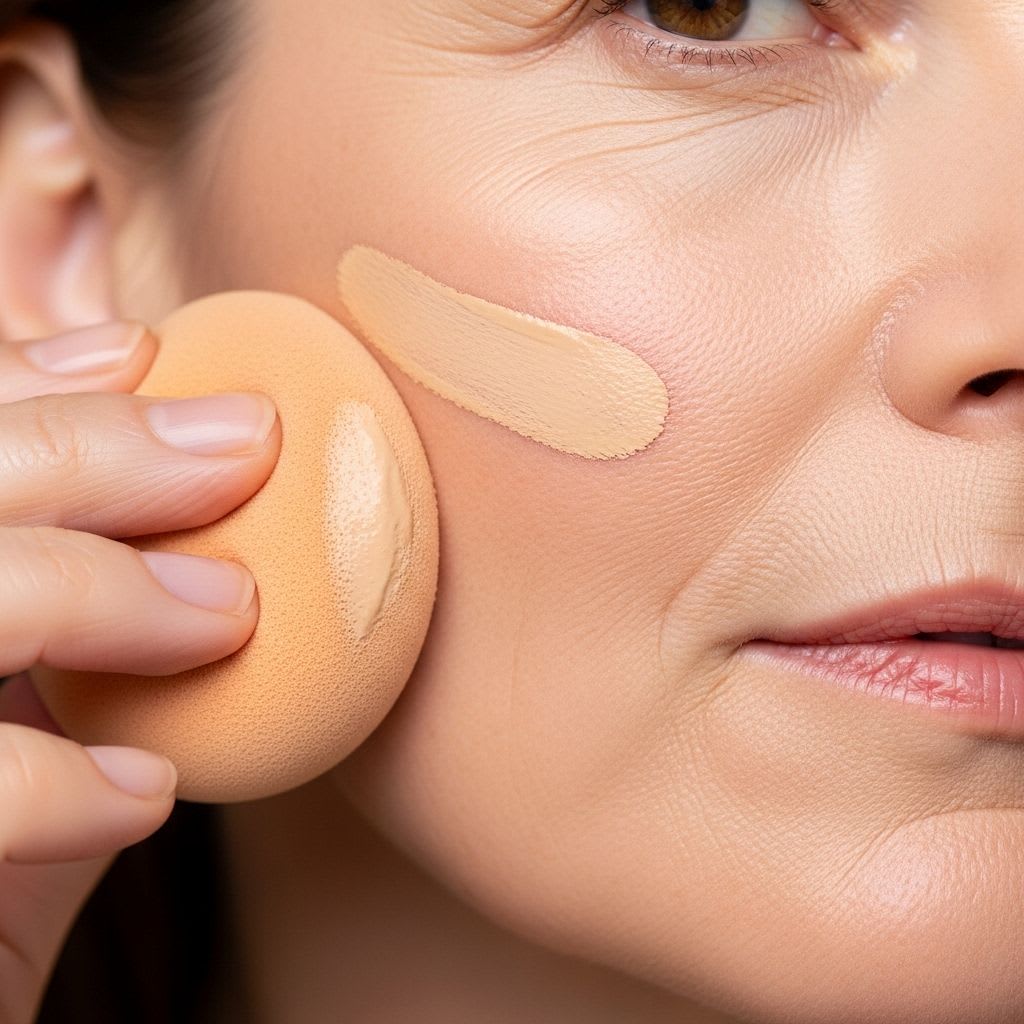
Summer application for mature skin requires using half the foundation amount you'd use in winter, applied in ultra-thin layers that build coverage strategically. Apply foundation with a damp beauty sponge that's been thoroughly squeezed—the moisture helps foundation spread thinner while the sponge absorbs excess product, preventing heavy application. Focus coverage on the center face where redness and unevenness concentrate, blending outward to nearly sheer coverage at the hairline and jawline. This creates natural gradation that withstands heat better than uniform heavy coverage across the entire face.
For hot flash-prone areas like upper lip, forehead, and neck, use minimal foundation or skip entirely, relying on targeted concealing instead. These zones perspire first and most during hot flashes—any foundation applied there will likely break down quickly. Instead, focus on achieving beautiful coverage on cheeks and mid-face while keeping hot flash zones as bare as possible. Set strategically with minimal setting spray rather than powder, which can cake when mixed with perspiration. The application approach requires more precision than uniform coverage but delivers foundation that actually survives summer heat rather than melting within hours.
Managing Oxidation and Touch-Ups Throughout the Day
Foundation oxidation—darkening or orange discoloration—occurs more readily in summer due to UV exposure and heat triggering chemical reactions in foundation pigments. Mature skin's thinner barrier provides less protection against these reactions, making shade selection critical. Choose foundations one-half shade lighter than your perfect winter match to account for inevitable oxidation—what looks slightly pale initially will oxidize to your correct tone by afternoon. Test oxidation by applying foundation and checking color in natural light after 6-8 hours, not just at initial application.
Accept that touch-ups become necessary during intense summer or hot flash episodes—no foundation survives these conditions flawlessly for 12+ hours. Keep blotting papers and a small amount of foundation or cushion compact for midday refresh. Blot excess oil or moisture first, then press small amounts of fresh foundation onto affected areas using fingertips—don't rub or blend extensively, which disturbs existing coverage. This targeted refresh maintains appearance without the heavy layering that makes touch-ups obvious. The honest reality is that summer foundation for menopausal women requires more maintenance than winter formulas, but with proper initial application and smart touch-up strategy, you can maintain polished appearance despite heat, humidity, and hormonal challenges that would destroy winter foundation approaches within hours.