
Understanding Tinted Primers on Menopausal Skin
Tinted primers promise to simplify makeup routines by combining color correction, hydration, and base preparation in one product. For menopausal skin, this sounds ideal—fewer layers mean less product settling into fine lines and less time spent blending. However, most tinted primers fail on mature skin because they're formulated for the concerns of younger women: oil control, pore blurring, and mattifying effects that catastrophically dehydrate skin that already produces 40-50% less natural oil.
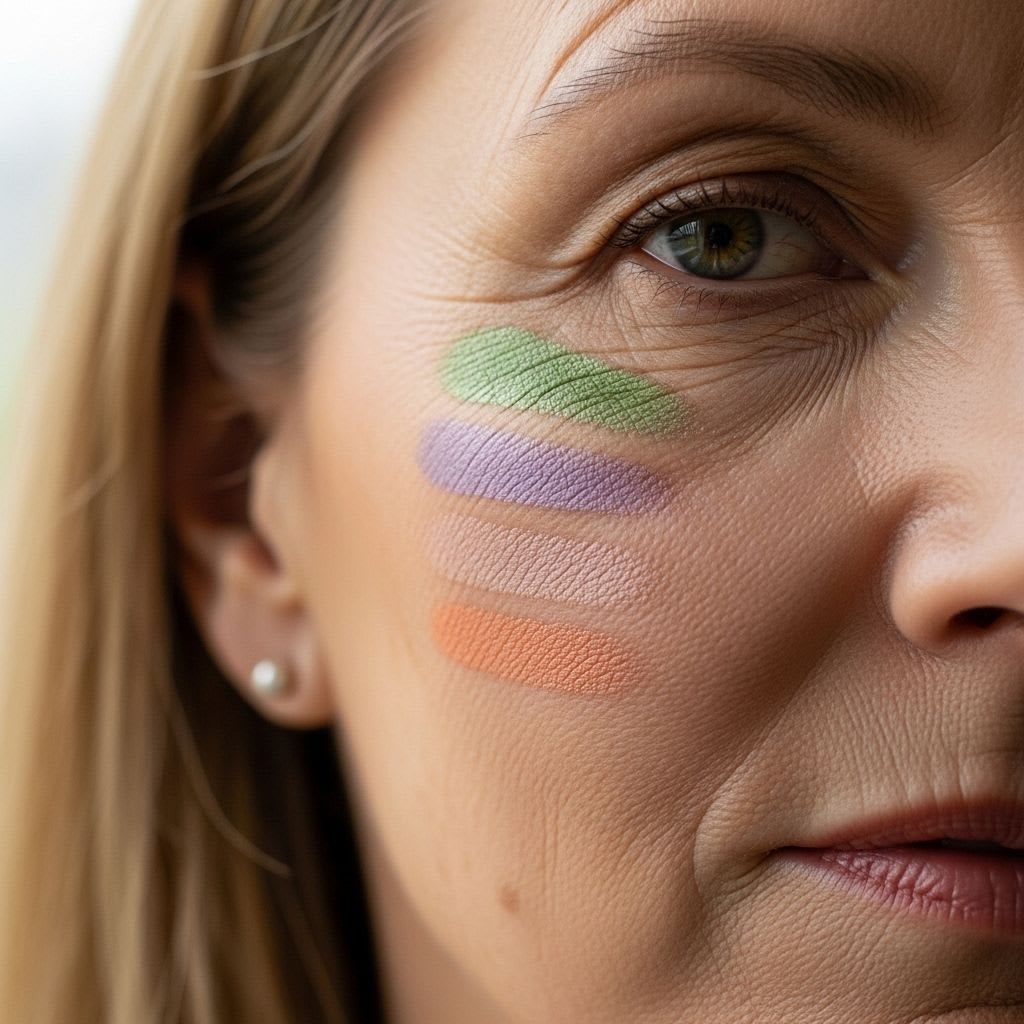
The color-correcting aspect of tinted primers—green for redness, purple for sallowness, peach for dark circles—works on the principle of neutralizing opposite colors on the spectrum. While this theory is sound, execution on menopausal skin often creates visible tint that looks unnatural without additional foundation coverage. The dilemma is that if you need foundation over the tinted primer anyway, you've added a layer rather than simplified your routine. This defeats the primary appeal of tinted primers for time-conscious women navigating menopause.
Successful tinted primer use during menopause requires matching the tint intensity to your specific needs and understanding when tinted primers actually simplify versus complicate your routine. For comprehensive guidance on adjusting makeup strategies during hormonal changes, explore our complete beauty guide for menopausal skin changes.
When Tinted Primers Work vs. When They Create More Problems
The Single-Concern Scenario: Tinted Primers Excel
Tinted primers work beautifully when you have one dominant color concern and relatively even skin texture. For example, if menopause has triggered persistent facial redness but your skin tone is otherwise even, a sheer green-tinted primer can neutralize redness while providing a hydrated base for minimal makeup or even bare skin. Similarly, post-menopausal sallowness (that yellowish, tired appearance) responds well to lavender or purple-tinted primers that brighten without adding coverage.
The key word is sheer—the tint should be barely visible during application and completely undetectable after blending. If you can see green, purple, or peach color on your skin after blending, the product is either too heavily pigmented for mature skin or you've applied too much. The correct amount for the entire face is typically a pea-sized dollop, applied with damp fingers or a sponge using pressing motions. When done correctly, tinted primers can replace foundation entirely for low-key days, genuinely simplifying routines.
The Multi-Concern Reality: When Tinted Primers Fail
Most menopausal women face multiple skin concerns simultaneously: redness around the nose, dark circles, age spots, and uneven tone. Tinted primers can only address one color concern at a time, meaning you'd need green for redness, peach for darkness, and potentially a regular primer for texture—defeating the simplification purpose entirely. Additionally, if you have visible pores or textured skin, tinted primers often emphasize these issues because their sheer formulas don't blur or fill texture the way dedicated pore primers do.
The trade-off becomes clear: tinted primers offer speed and simplicity for single-concern skin, but create frustration when expectations exceed their capabilities. If your skin needs comprehensive correction, a clear hydrating primer plus targeted concealer actually saves time compared to layering multiple tinted primers or trying to force one tinted primer to solve everything. For specific pore concerns during menopause, see our guide to primers for large pores.
Critical Selection Criteria for Menopausal Skin
Hydration Ingredients Trump Color-Correcting Claims
The best tinted primers for menopausal skin prioritize hydration over color correction intensity. Look for formulas with hyaluronic acid, glycerin, or squalane in the first five ingredients—these humectants and emollients prevent the common issue of primers emphasizing dry patches and fine lines. The tint itself should be subtle, almost imperceptible in the bottle, because menopausal skin shows every excess pigment particle as uneven patches or strange undertones.
Avoid tinted primers with mattifying claims, blurring powders, or silicone as the primary ingredient. While these work on oily, younger skin, they create a dry, cakey appearance on mature skin within hours. The texture should feel more like a tinted serum or essence than a thick cream—lightweight formulas blend more easily and layer better under foundation if needed. Test on your jawline first; if the product feels tight or looks chalky after 30 minutes, it's too drying regardless of its color-correcting properties.
The Honest Limitation: Tinted Primers Don't Replace Good Skincare
Marketing suggests tinted primers can correct, hydrate, prime, and protect simultaneously—this is misleading for menopausal skin. While tinted primers offer convenience, they cannot compensate for inadequate skincare hydration. If your base routine lacks hyaluronic acid serum and rich moisturizer, no tinted primer will prevent makeup from settling into lines and emphasizing texture. The primer works with your skincare, not instead of it.
What experienced users discover: tinted primers perform best as a final skincare-makeup bridge step rather than a standalone solution. Apply your complete skincare routine, wait 10 minutes for absorption, then apply tinted primer as the last step before optional foundation or concealer. This layering order prevents the pilling and separation that occurs when tinted primers mix with incompletely absorbed serums and moisturizers. The truth is that tinted primers simplify application technique but not the underlying skincare requirements—during menopause, thorough hydration remains non-negotiable regardless of which primer you choose.