
Why Tinted Moisturizers Work Differently on Menopausal Skin
Tinted moisturizers occupy a strategic position for menopausal skin because they solve the fundamental coverage paradox: aging skin needs hydration to look smooth, but heavy foundations emphasize texture and settle into wrinkles. The dual-purpose formula delivers moisture and sheer coverage simultaneously, preventing the product buildup that makes pores and fine lines more visible. However, not all tinted moisturizers accommodate the specific challenges menopause creates—hormonal acne, unexpected oiliness in previously dry zones, and increased sensitivity to previously tolerated ingredients.
The skin changes during menopause create contradictory needs that confuse product selection. You might experience dehydration-driven wrinkles alongside hormonal breakouts, or persistent T-zone oil despite overall dryness. Traditional tinted moisturizers designed for 'mature skin' assume universal dryness and load formulas with rich emollients that trigger acne. Meanwhile, oil-free versions marketed for acne often contain mattifying ingredients that worsen crepiness and emphasize texture. This is why understanding formula construction matters more than brand marketing—you need specific ingredient combinations that address your particular symptom cluster.
Here's what beginners misunderstand: tinted moisturizers aren't universally lighter or more suitable than foundation. Some contain heavy oils that clog pores worse than full-coverage foundation, while others provide such minimal coverage they're functionally useless for hiding redness or discoloration. The product category exists on a spectrum from barely-tinted hydrators (skin tints) to pigmented moisturizers that approach foundation coverage. Knowing where on this spectrum your skin needs to land determines success versus frustration. Learn comprehensive coverage strategies in our complete makeup guide for menopausal skin changes.
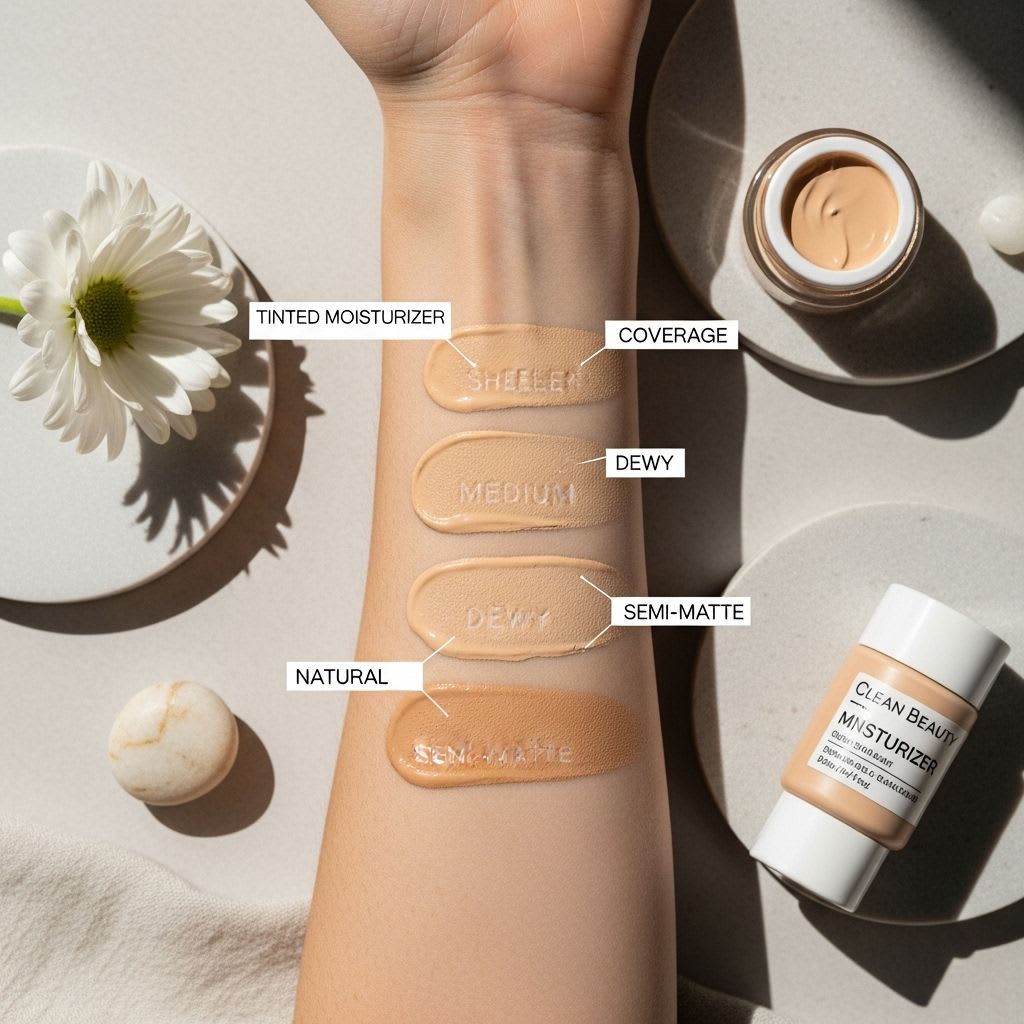
Matching Formula Type to Your Specific Menopausal Skin Concerns
For Mature Skin with Wrinkles and Loss of Elasticity
Mature menopausal skin experiencing collagen depletion needs tinted moisturizers with hyaluronic acid, peptides, or niacinamide that actively improve skin texture while providing coverage. Look for formulas labeled 'luminous,' 'radiant,' or 'satin finish'—the light-reflecting particles diffuse wrinkle shadows without settling into lines like matte formulas do. Avoid anything marketed as 'ultra-matte' or 'pore-minimizing,' as these contain silica or clay that emphasize skin texture on dehydrated mature skin.
The trade-off with moisture-rich formulas: they provide beautiful, skin-like finish but offer minimal wear time—typically 4-6 hours before requiring touch-ups. If you need all-day coverage, you'll need setting spray or powder, which partially negates the natural-skin benefit. Additionally, these formulas often lack SPF at adequate levels (you need SPF 30+ for real protection), requiring separate sunscreen that adds another product layer. For comprehensive foundation alternatives, explore our best foundations for mature skin over 50.
For Oily or Combination Menopausal Skin
Some women experience persistent or new oiliness during menopause due to androgen dominance as estrogen declines. This creates the confusing combination of oily T-zone with dehydrated, lined cheeks. You need oil-free, non-comedogenic formulas that won't exacerbate shine or trigger breakouts, but that also don't contain aggressive mattifiers that emphasize wrinkles. Look for gel-based or serum-based tinted moisturizers with lightweight hydrators like glycerin rather than heavy oils.
The misconception here: 'oil-free' doesn't automatically mean suitable for oily skin. Many oil-free formulas replace oils with silicones that can still clog pores or create that slippery feeling that never sets. Check for 'non-comedogenic' certification and avoid heavy dimethicone as the second or third ingredient. The honest limitation is that true matte tinted moisturizers for oily skin almost universally make wrinkles look worse—it's a genuine either/or choice. Most women with combination menopausal skin achieve better results using different products on different zones rather than seeking one perfect product.
For Acne-Prone Menopausal Skin
Hormonal acne during menopause differs from teenage acne—it's typically deeper, more cystic, and concentrated along the jawline and chin. Standard acne-safe tinted moisturizers designed for young skin contain salicylic acid or benzoyl peroxide that can irritate increasingly sensitive menopausal skin. Instead, seek non-pore-clogging formulas with niacinamide, which reduces inflammation without harsh actives. Mineral-based tinted moisturizers with zinc oxide provide anti-inflammatory benefits alongside sun protection and coverage.
What experienced users learn: even products labeled 'acne-safe' can trigger breakouts during hormonal fluctuations. Ingredients that worked fine pre-menopause—like coconut derivatives, shea butter, or certain plant oils—may suddenly cause cystic acne as your hormone ratios shift. The only reliable testing method is patch-testing for 2 weeks on your jawline where hormonal acne typically appears. This timing frustration is real: you can't know if a product works until you've used it through at least one hormonal cycle, making trial-and-error expensive and time-consuming.
When Tinted Moisturizers Fail: Edge Cases and Honest Limitations
The Pale Skin Paradox: Limited Shade Ranges
Most tinted moisturizers offer 5-8 shades maximum, and the lightest shades are often too dark or too pink for pale menopausal skin that's lost its natural ruddiness. This isn't a minor inconvenience—wearing a shade too dark makes skin look muddy and emphasizes the contrast with your lighter neck, while overly pink shades look obviously artificial on skin that's become more sallow with age. Very pale or very deep skin tones often find tinted moisturizers completely unusable, forcing a choice between no coverage or full foundation.
The workaround: some women mix two shades or add a drop of white mixer to lighten formulas, but this changes the consistency and can affect wear time. Others use tinted moisturizer only on the center of the face and blend foundation at the perimeter for better color matching. The honest reality is that if you're outside the narrow middle range of skin tones, tinted moisturizers may simply not work for you, and that's a formula limitation, not a user failure.
When Coverage Needs Exceed What Tinted Moisturizers Provide
Tinted moisturizers provide sheer to light coverage—they even out minor redness and create a uniform base, but they don't hide significant hyperpigmentation, broken capillaries, or deep redness from rosacea that often worsens during menopause. If you need to conceal these conditions, layering tinted moisturizer creates a cakey, separated mess rather than increased coverage. The coverage ceiling is real and non-negotiable—more layers just look worse, not better.
The practical solution requires hybrid approaches: use tinted moisturizer as a base for natural skin-like finish, then spot-conceal with actual concealer on problem areas. This gives you the lightweight feel of tinted moisturizer where your skin is relatively even, while providing real coverage where you need it. Don't let marketing convince you that tinted moisturizer can replace foundation for everyone—it's a specific tool that works beautifully within its limitations and fails miserably when pushed beyond them.
The SPF Insufficiency Problem
Many tinted moisturizers tout SPF 15-30, but here's the contradiction: you need to apply 1/4 teaspoon of product to your face to achieve the labeled SPF protection. Most women use 1/8 teaspoon or less of tinted moisturizer because more looks heavy and unnatural. At reduced application amounts, you're getting SPF 5-8 protection maximum—essentially useless for preventing the photoaging that accelerates during menopause when skin loses its natural UV resilience.
This means you need separate sunscreen underneath, which adds another layer that can pill, separate, or create too much product on the skin. Some dermatologists argue tinted moisturizers with SPF create false security, leading women to skip proper sun protection. The honest approach: treat the SPF as a bonus but never as your primary protection. Apply dedicated sunscreen first, wait 10 minutes for it to set, then apply tinted moisturizer. Yes, it's more steps and more product—this is the unglamorous reality of actually protecting aging skin rather than just appearing to.