
Yes, Women Can Use Minoxidil — But the Evidence Is More Nuanced Than the Packaging Suggests
Minoxidil is FDA-approved for women at the 2% concentration and is widely used off-label at 5%. It works by prolonging the anagen (growth) phase of the hair cycle and widening blood vessels around follicles to improve nutrient delivery. For women with female-pattern hair loss (FPHL) — which manifests as diffuse thinning at the crown and part-line rather than a receding hairline — it is currently the most evidence-backed topical treatment available without a prescription.
However, minoxidil is not a hormone treatment. It does not address the estrogen-to-androgen imbalance that drives hair loss in perimenopause. What it does is compensate at the follicle level, keeping follicles active longer despite the hormonal environment. This distinction matters because it explains both why minoxidil works — and why stopping it reverses the gains within 3–6 months. It treats the symptom, not the cause.
A common misconception is that minoxidil is 'for men' and unsafe for women. The 5% foam formula — the most commonly available strength — was actually studied in women and found effective with a similar safety profile to 2%, with slightly faster results. The key difference is application: women should apply to the scalp only, not let it run through lengths, and avoid the hairline where unwanted facial hair (hypertrichosis) is a real risk with higher concentrations.
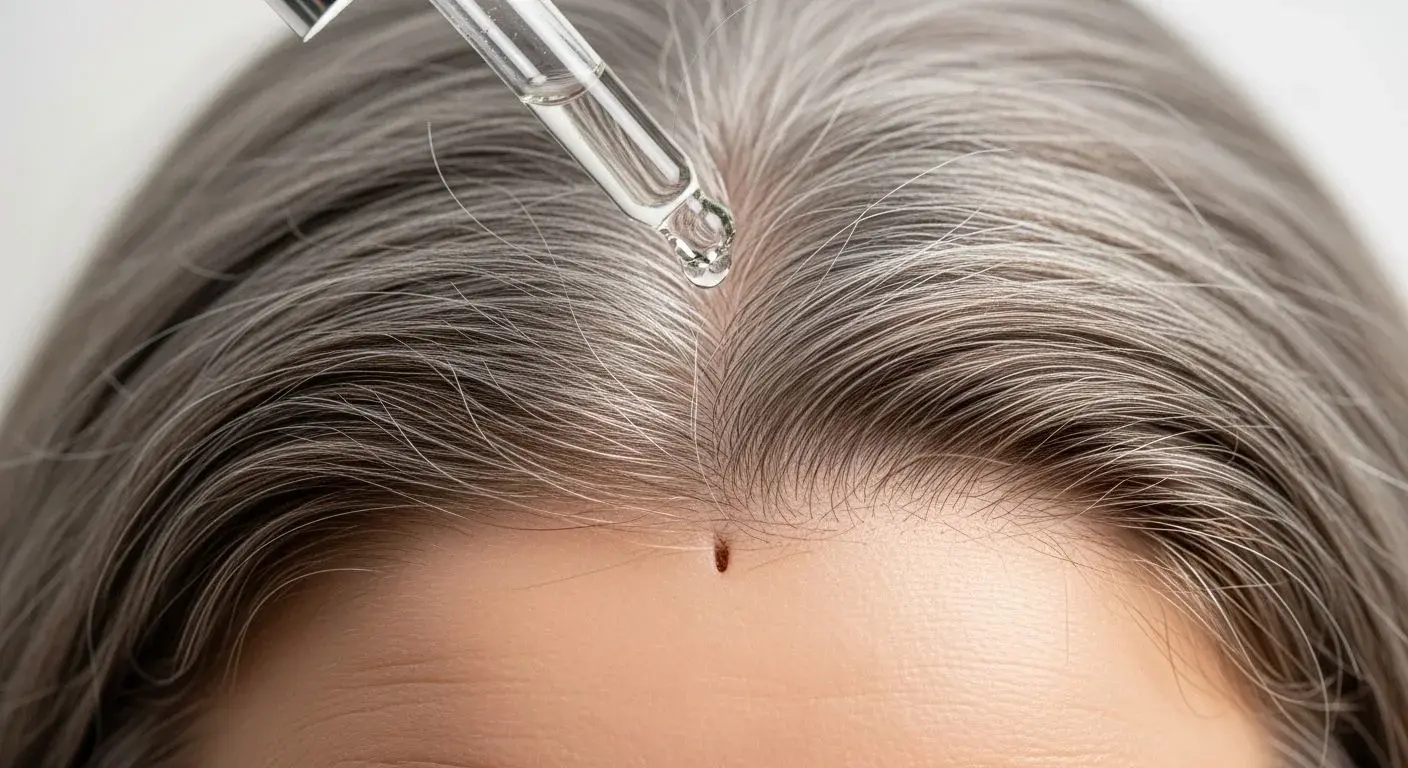
2% vs 5% vs Minoxidil + Finasteride: Which Formula Should Women Choose?
Choosing the right formula is where most women get confused. Here is a practical breakdown:
- 2% liquid solution: FDA-approved for women. Applied twice daily. Best for those with sensitive scalps or who are new to minoxidil. The liquid applicator allows precise parting-by-parting delivery, which is an advantage for diffuse thinning.
- 5% foam: Higher concentration, once-daily application (in studies). Foam evaporates more quickly and leaves less residue, making it preferred by women with fine hair who dislike the wet feel of liquid. Evidence shows non-inferior or marginally superior results compared to 2% twice daily.
- Minoxidil + azelaic acid formulas: Compounded products combining minoxidil with azelaic acid (a mild DHT blocker) are increasingly available. This combination may be more effective for women whose hair loss has an androgenic component — common in menopause — but requires a compounding pharmacy and dermatologist involvement.
- Oral minoxidil (low-dose, 0.25–1 mg): Prescribed off-label with growing evidence for women who do not respond to or tolerate topical application. Systemic exposure means different side effects (fluid retention, heart rate changes). This requires medical supervision.
The scalp's barrier function changes significantly during menopause — reduced estrogen leads to a drier, thinner scalp with altered absorption rates. This means the vehicle (foam vs liquid) and your individual scalp condition genuinely affect how well minoxidil penetrates. As with menopause skincare, understanding the changing biology of your skin is foundational — menopausal skin requires a different approach to ingredient absorption and barrier repair — and the scalp is no exception.
What No One Tells You About Starting Minoxidil
The single most important thing to understand before starting minoxidil is the initial shedding phase. In weeks 2–8, many women experience increased hair loss. This is not the treatment failing — it is minoxidil pushing hairs in the resting telogen phase out faster so that new anagen growth can begin. Women who stop minoxidil during this phase (the majority who quit) never see the regrowth that would have followed. Setting this expectation before starting is essential.
Side effects that are real but often downplayed include: scalp irritation and contact dermatitis (more common with the propylene glycol in liquid solutions — foam avoids this), unwanted facial hair if product migrates to the forehead during sleep, and a drop in blood pressure in women who are already hypotensive. The blood pressure effect is rare with topical use but worth knowing if you feel dizzy after application.
One evidence-backed limitation that is often glossed over: minoxidil response rates in women average around 60% in clinical studies — meaning roughly 4 in 10 women see minimal benefit. Non-responders are more likely to have severe follicle miniaturisation already established, very low ferritin, or a thyroid condition that has not been addressed. Before concluding minoxidil is not working, ruling out these confounders matters. For a broader look at how hormonal skincare intersects with scalp and hair health, the best menopause skincare products share key actives that support collagen and moisture retention throughout the scalp and face.