
Why Perimenopause Causes Burning and Sore Lips
Burning lips during perimenopause — often part of a broader condition called burning mouth syndrome (BMS) — is more common than recognised and can be intensely distressing. It can manifest as a burning, tingling, scalding, or sore sensation on the lips, tongue, or entire oral cavity. The neurological mechanism: Estrogen is neuroprotective and supports the health of peripheral sensory nerves including those in the oral mucosa. As estrogen declines, small nerve fibres in the lips and mouth can become sensitised or dysfunctional, generating phantom burning or tingling signals in the absence of any physical damage. This is essentially a form of peripheral neuropathy triggered by estrogen withdrawal.
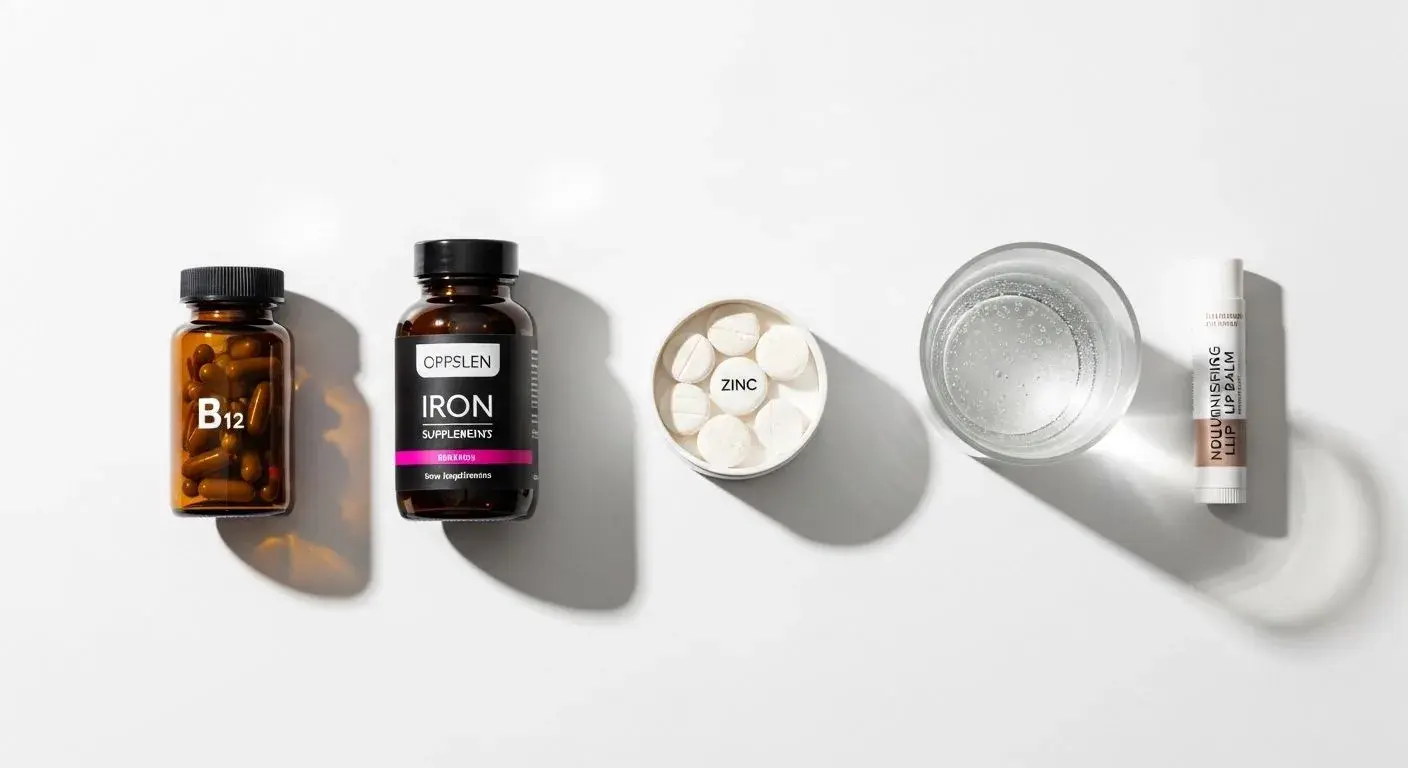
Nutritional deficiencies accelerate this significantly. Iron, B12, folate, and zinc are all essential for nerve and mucosa health, and all are more prone to depletion in perimenopause due to altered absorption, changed dietary patterns, and (in women still menstruating) continued blood loss. Burning lips can be the first sign of a B12 or iron deficiency long before it appears in routine blood markers. The broader pattern of burning sensations in menopause is explored in our article on menopause burning skin and prickly heat.
Common Errors in Diagnosing and Treating This Symptom
Misconception 1: Burning lips must mean a cold sore or fungal infection. Burning mouth syndrome (BMS) is frequently misdiagnosed as recurrent cold sores or oral candidiasis. Neither antiviral nor antifungal treatment resolves hormonally-driven BMS, leaving women feeling like they have a chronic untreatable infection when the cause is neurological and hormonal.
Misconception 2: Lip balm alone will fix the problem. While dryness can co-occur with burning, the burning in BMS is neurological — not a surface dryness issue. Topical treatments soothe but do not address the nerve sensitisation causing the symptom.
Trade-off to know: Low-dose tricyclic antidepressants and clonazepam are sometimes prescribed for BMS due to their nerve-calming effects. They can be effective but carry side effects including drowsiness and dry mouth that may compound oral symptoms. These should be short-term measures while hormonal and nutritional root causes are addressed. For related sensory changes in other areas, see our piece on itchy and sensitive ears during menopause.
Evidence-Based Relief for Burning Lips in Perimenopause
- Test for nutritional deficiencies: Request a full blood count, ferritin, B12, folate, and zinc from your doctor. Correcting deficiencies is often the fastest path to relief.
- Alpha lipoic acid (ALA): This antioxidant has the strongest evidence of any supplement for reducing BMS severity. Doses of 200-600mg daily have shown benefit in clinical trials specifically in menopausal women.
- Avoid trigger substances: Acidic foods, alcohol, strong mouthwashes, and toothpastes with sodium lauryl sulphate (SLS) can dramatically worsen BMS. Switch to SLS-free toothpaste as an immediate first step.
- Discuss HRT with your doctor: Several case series and studies have documented partial or full resolution of BMS with estrogen replacement, consistent with the neuroprotective mechanism driving the symptom.