
Why Hormonal Hair Loss Happens — and Whether It Can Undo Itself
During perimenopause and menopause, falling oestrogen levels disrupt the normal hair growth cycle. Oestrogen prolongs the anagen (growth) phase of each follicle. When it drops, follicles shift prematurely into the telogen (shedding) phase — producing diffuse thinning across the crown and temples rather than a defined bald patch. The short answer to whether this can be reversed: yes, often — but the degree of reversal depends on how long the follicles have been dormant and whether any scarring has occurred.
A key distinction most articles skip: hormonal hair loss is not a single condition. It sits on a spectrum. Telogen effluvium triggered by a hormonal shift is highly reversible once the trigger is stabilised. Female pattern hair loss (androgenetic alopecia) — which menopause can accelerate — is harder to fully reverse but very manageable with consistent treatment. Confusing the two leads women to either give up too early or over-invest in the wrong interventions.
If your scalp has also been feeling irritated or reactive alongside the shedding, that inflammation may be a compounding factor. menopause itchy scalp: causes and how to find relief covers how scalp inflammation during menopause can worsen follicle miniaturisation if left unaddressed.
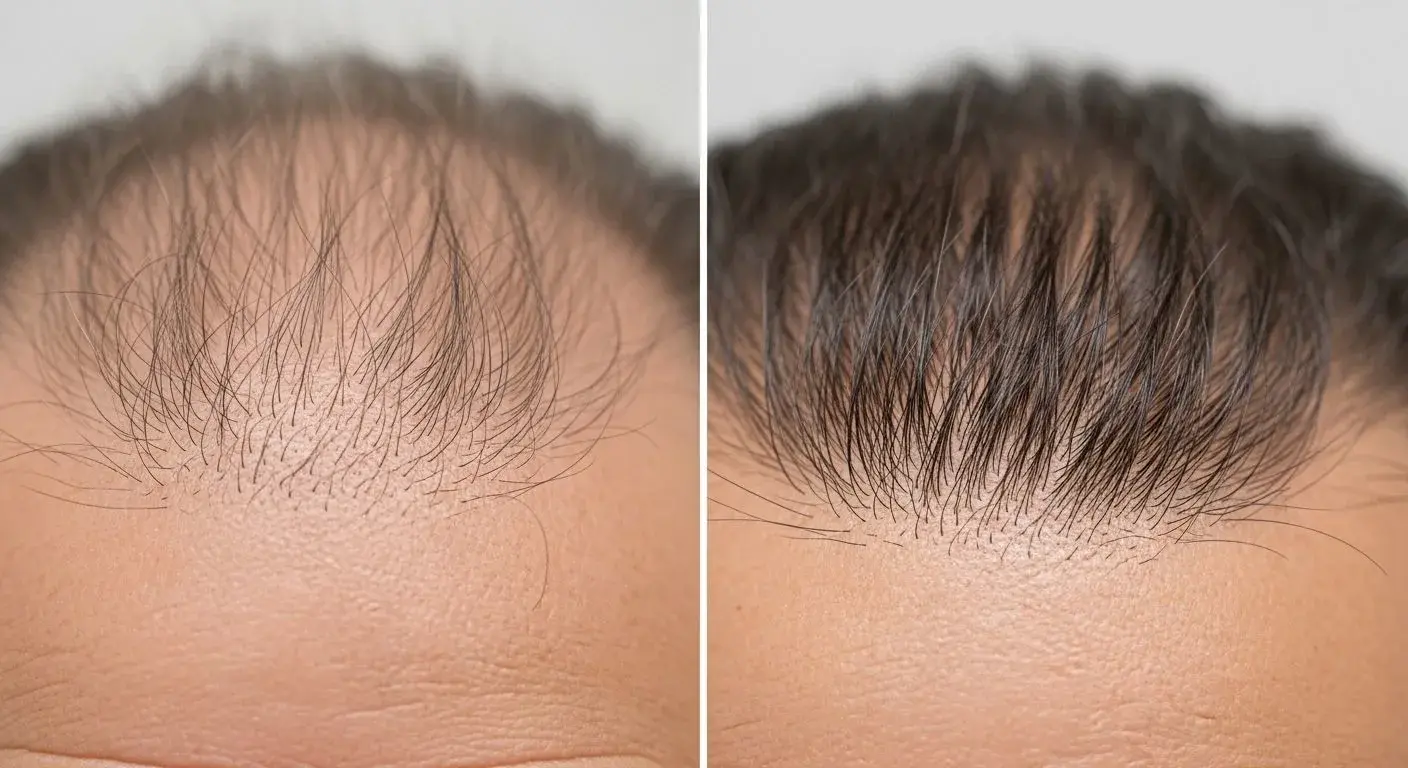
What Actually Reverses It — and Two Myths That Waste Your Time
The two most evidence-backed interventions for hormonal hair loss in menopausal women are topical minoxidil and hormone therapy (HRT). Minoxidil extends the growth phase and increases follicle size regardless of the hormonal cause. HRT can address the root hormonal deficit — but it is not universally prescribed for hair loss alone, and results vary considerably between individuals.
Myth 1: Biotin supplements reverse hormonal hair loss. Biotin deficiency is rare in Western diets, and supplementing above baseline has no proven effect on hormonally-driven shedding. Women report taking high-dose biotin for months with no change — because the mechanism of their hair loss is hormonal, not nutritional.
Myth 2: Stopping the shed means the follicle is recovering. Reduced shedding after a hormonal trigger normalises can simply reflect fewer active follicles — not regrowth. True reversal requires new anagen hairs visible at the root, which typically takes 3–6 months of sustained treatment to assess. Stopping treatment at the 6-week 'shed reduction' point is one of the most common mistakes.
When Hair Loss Is Harder to Reverse — and What to Do Instead
Standard advice fails in one key scenario: when hair loss has been ongoing, untreated, for more than two to three years. Prolonged follicle miniaturisation can lead to structural changes in the follicle itself — not just hormonal suppression of the cycle. In these cases, partial reversal (thicker regrowth in existing follicles) is realistic, but full density restoration is unlikely without dermatological intervention such as low-level laser therapy or PRP (platelet-rich plasma).
There is also a meaningful difference between early perimenopause and post-menopause. Women in early perimenopause, where oestrogen fluctuates but hasn't fully declined, often see better spontaneous partial reversal when the hormonal environment stabilises. Post-menopausal women typically need active, sustained treatment to achieve the same outcome.
One important trade-off: minoxidil requires indefinite use. Stopping treatment leads to renewed shedding within three to six months in most women. That 'reversal' is therefore conditional — it is management, not cure. This is not a reason to avoid it, but it is information that should shape realistic expectations from the outset. Always consult your GP or a trichologist before starting treatment, particularly if you have underlying cardiovascular or skin conditions.
For a broader view of how menopause supplements are being used alongside conventional treatments, Davina McCall's menopause supplements approach explores how public figures are navigating the supplement landscape — including ingredients relevant to hair health.