
Why Your Body Temperature Rises With Your Cycle
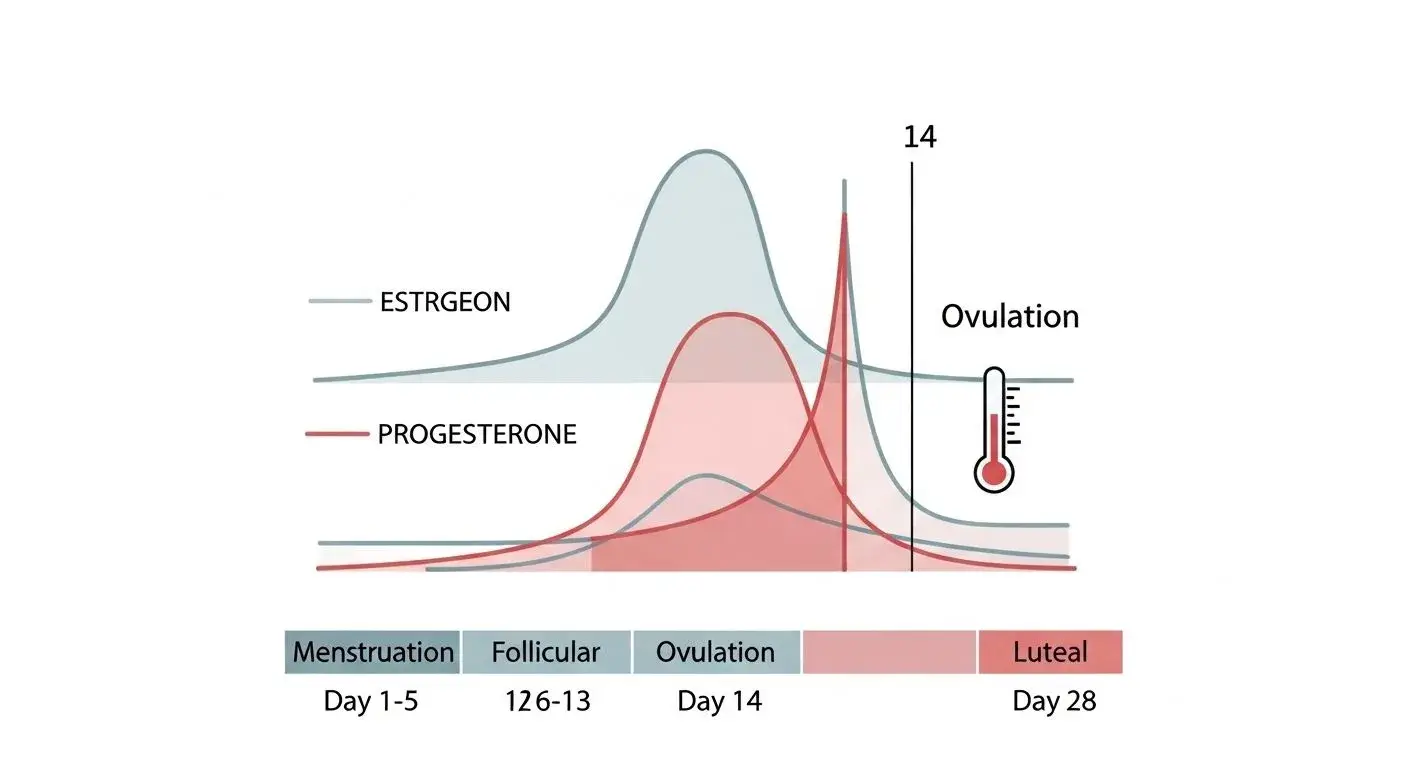
Feeling noticeably warm, flushed, or even sweaty in the days before your period or immediately around ovulation is entirely normal and has a clear hormonal explanation. At ovulation, a sharp surge in luteinising hormone (LH) causes the follicle to release an egg and simultaneously triggers a rise in basal body temperature of approximately 0.2-0.5 degrees Celsius. This temperature shift persists through the luteal phase (the two weeks between ovulation and your period) because progesterone — which rises steeply after ovulation — has a direct thermogenic effect: it acts on the hypothalamus to elevate the body's temperature set point.
This is why fertility tracking methods like basal body temperature charting can reliably detect ovulation. The warmth some women feel before their period is an extension of this same progesterone-driven rise, often amplified by pre-menstrual drops in estrogen and the prostaglandins that begin building in the uterine lining. Women who are highly sensitive to hormonal fluctuations — a trait that also predicts stronger PMS and a more symptomatic perimenopause — are more likely to notice and be bothered by this cyclical warmth. If your PMS symptoms are intensifying, our article on PMS during perimenopause explains how these cycles change as you approach menopause.
Cyclical Warmth vs. Menopausal Hot Flashes: Key Differences
The most important distinction is predictability and pattern. Feeling hot before your period is cyclical — it follows the same two-week pattern every month, peaks in the luteal phase, and resolves when your period arrives. True menopausal hot flashes, by contrast, are unpredictable, can occur at any time of day or night, are not tied to the menstrual cycle, and are accompanied by a visible flush, sweating, and sometimes heart palpitations. Another key difference is duration: the pre-period warmth is a background body temperature elevation lasting days, whereas a menopausal hot flash is an acute, intense event lasting two to four minutes.
Where the distinction blurs is during perimenopause, when you can experience both simultaneously: the cyclical warmth of an active luteal phase alongside the erratic estrogen-withdrawal flashes of the transition. Women in their early to mid-40s sometimes find that their pre-period heat episodes become more intense as perimenopause begins, which is a reliable early indicator that hormonal fluctuations are amplifying. Skin changes often accompany this shift too: rising androgens relative to estrogen can cause skin to become oilier, as explored in our piece on oily skin causes during perimenopause.
When to Take Action and What Actually Helps
If the pre-ovulatory or pre-menstrual warmth is disruptive, the most evidence-based approaches focus on the underlying progesterone sensitivity and thermoregulatory threshold. Magnesium (glycinate form, 200-400mg daily) reduces prostaglandin sensitivity and consistently lowers pre-menstrual physical discomfort including heat sensations in clinical trials. Keeping rooms cool in the days before your period, choosing breathable natural fabrics, and moderating alcohol and sugar intake in the luteal phase all reduce symptom intensity.
If you are tracking your cycle and notice the hot sensation does not follow a predictable pattern — or if it is occurring in the first half of your cycle without relation to ovulation — it is worth speaking to your GP. Thyroid dysfunction, adrenal dysregulation, and early perimenopause can all present with unpredictable warmth and are straightforward to assess with a blood test. The misconception to avoid is assuming all body heat in women of reproductive age is hormonal: anaemia, infection, and anxiety can each independently cause flushing and warrant their own assessment.