
Why Perimenopause Symptoms Are Not Consistent
Yes — perimenopause and menopause symptoms genuinely come and go, and this fluctuation is one of the most confusing aspects of the transition. Many women assume menopause is a steady downward slope: symptoms arrive, intensify, and eventually resolve after the final period. The reality is far more erratic, particularly in perimenopause, where hormones can swing dramatically from one week to the next.
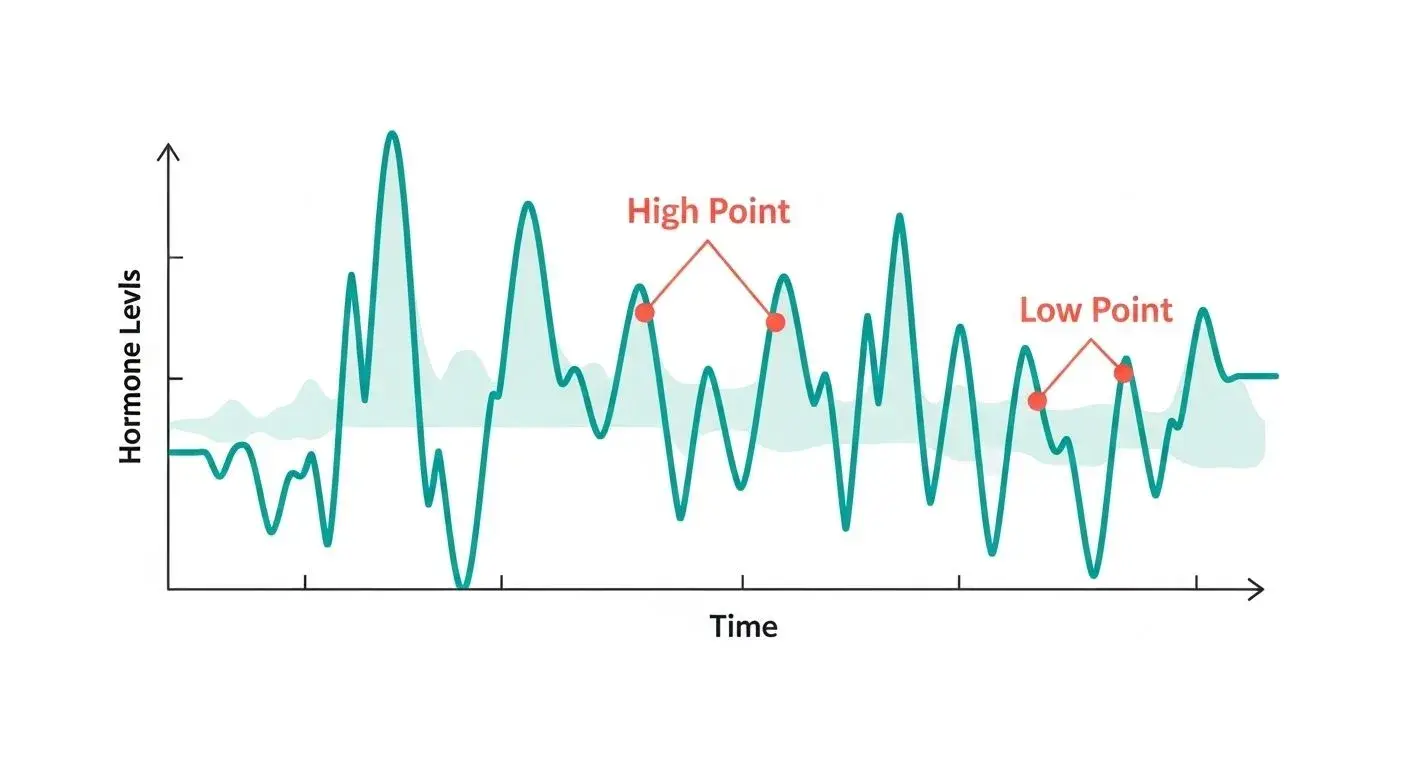
The root cause is the unpredictability of ovarian function during the transition. In perimenopause, the ovaries do not gradually produce less estrogen in an orderly decline. Instead, they produce erratic surges and drops — sometimes over-responding with very high estrogen levels, other times producing very little. Symptoms track this hormonal volatility, which means a woman can feel fine for two or three months, then have a week of intense hot flashes, brain fog, and disrupted sleep, then feel fine again.
This pattern is often most pronounced in early perimenopause when the hormonal swings are largest. As the transition progresses and estrogen settles into a consistently lower range post-menopause, symptoms often become more predictable — though for some women, the volatility itself is the dominant feature for years.
What Triggers Symptom Flares — and What Makes Them Disappear
Several factors determine when symptoms flare and when they recede. Cycle phase is a major one in early perimenopause — symptoms often intensify in the days around ovulation (when estrogen peaks sharply) and in the late luteal phase before a period. Stress is another significant driver: cortisol directly interferes with the hormonal feedback loop, and many women notice that periods of high stress bring on stronger or more frequent symptoms even when they had been quiet for weeks. Our article on stress and menopause covers this relationship in detail.
Sleep disruption compounds everything. When symptoms include poor sleep — whether from night sweats, anxiety, or vivid dreams — the resulting sleep debt makes daytime symptoms feel more intense, which then disrupts sleep further. This is a self-reinforcing cycle that can make a mild hormonal fluctuation feel like a severe episode. Women often report their worst symptom periods during times of both hormonal flux and poor sleep simultaneously. If vivid dreams and sleep disturbance are part of your picture, our guide on nightmares and vivid dreams in perimenopause explains the hormonal mechanism behind them.
A common misconception is that symptom-free stretches mean perimenopause has ended. Unless 12 consecutive months without a period have passed, menopause has not been reached. A quiet two or three months followed by a return of hot flashes, mood changes, or brain fog is entirely consistent with ongoing perimenopause — it simply reflects the ovaries having a temporarily more stable output before the next wave of fluctuation.
When Fluctuating Symptoms Need Medical Attention
Most coming-and-going symptom patterns are a normal feature of the perimenopause transition and do not require investigation beyond a conversation with a GP or menopause specialist. However, there are specific patterns that warrant prompt attention rather than a 'wait and see' approach.
Symptoms that escalate rapidly over a short period, particularly chest discomfort, heart palpitations, or severe anxiety, should be investigated to rule out non-hormonal causes — these symptoms overlap with cardiovascular and thyroid conditions that are also more common in midlife. Similarly, if symptoms disappear entirely and do not return for more than 12 months but then come back, this is worth investigating: unexpected bleeding after apparent menopause always needs assessment.
Where standard advice fails is in the dismissal of fluctuating symptoms as 'just stress.' While stress is genuinely a trigger, the underlying hormonal instability is real and measurable. Women who are told their symptoms coming and going means nothing is wrong sometimes go years without appropriate support. Tracking symptom patterns — including their timing relative to the cycle, sleep quality, and stress levels — provides the kind of evidence that makes clinical conversations more productive and leads to faster, more accurate management.