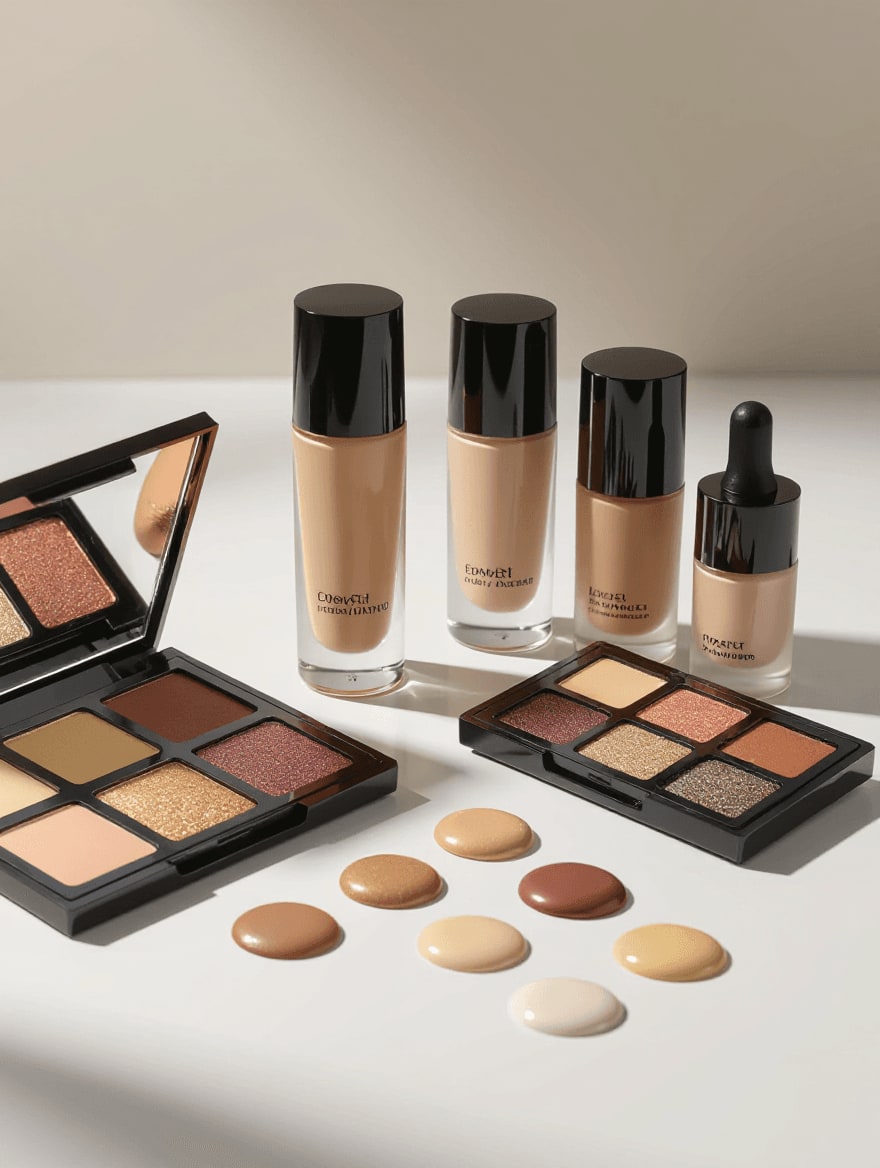
The Truth About How Color Changing Foundation Works
The appeal of color changing foundation for mature skin promises an elegant solution to one of makeup's most frustrating challenges: finding your exact shade match as skin tone fluctuates with seasons, hormones, and aging. These formulas, marketed as universal or adaptive foundations, appear white or beige in the bottle but claim to adjust to your unique skin tone upon application. The technology relies on pH-reactive pigments—encapsulated colorants that release and oxidize when they contact your skin's natural pH, theoretically creating a custom shade match. This sounds revolutionary, particularly for mature women whose skin tone may shift unpredictably during hormonal transitions.
What cosmetic chemistry reveals about these pH-reactive formulas: they work through iron oxide pigments encapsulated in microscopic beads that burst open when exposed to skin's acidity. Human skin pH typically ranges from 4.5-5.5, and these formulas are calibrated to react within that range, releasing pigments that oxidize upon air exposure to create deeper tones. The promise is that your individual pH will produce your perfect shade. But here's the critical issue for best color changing foundation for mature skin seekers: skin pH changes dramatically after menopause, shifting from naturally acidic (5.5) toward neutral (closer to 6.0-6.5) as estrogen decline alters sebum composition and barrier function. This pH shift means mature skin may not trigger the pigment release mechanism optimally.
The fundamental problem that marketing glosses over: these formulas don't truly adapt to skin tone—they react to pH, which correlates imperfectly with melanin content. Two women with identical skin tones but different pH levels will get different results. More critically for mature users, areas of your face may have different pH levels due to varying oil production, making color matching inconsistent across your complexion. The T-zone that's slightly more acidic might show darker foundation than your drier cheeks, creating the patchy appearance these formulas supposedly eliminate. For comprehensive foundation guidance, see our guide to the best foundation for mature skin over 50.
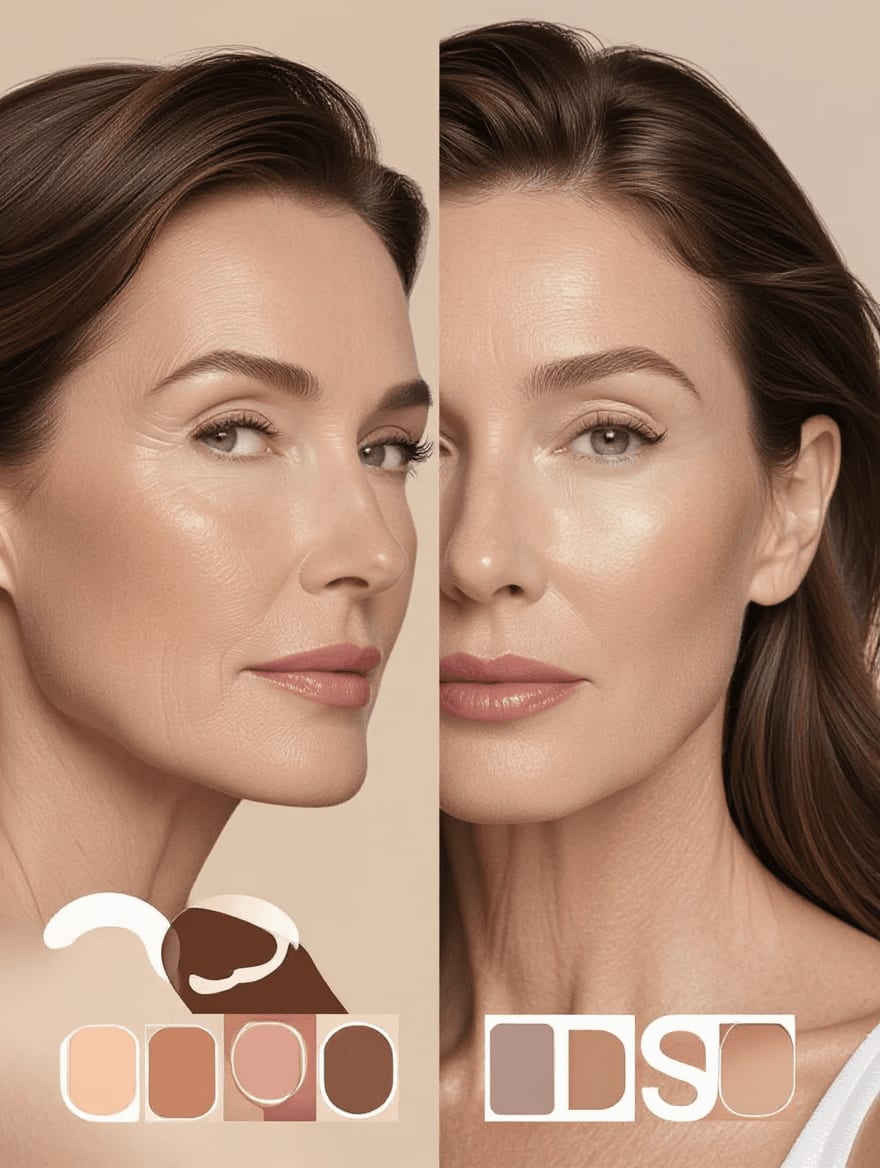
The Color Changing Foundation Myths vs. Reality
Myth 1: One Shade Works for Everyone
The most misleading claim about color changing foundations: that a single formula can adapt to all skin tones from porcelain to deep ebony. The reality contradicts this promise entirely—most pH-reactive foundations produce a limited range spanning approximately 3-4 traditional foundation shades, typically in the light-to-medium range. They work reasonably well for women within that narrow band, but fail spectacularly outside it. Very fair skin shows the formula too dark because even minimal pigment release creates visible color. Deep skin tones get foundation that appears gray or ashy because insufficient pigment develops to match their melanin density. For mature women specifically, whose skin often becomes lighter or more sallow with age, you might fall outside the effective range of formulas that worked at 30.
Myth 2: Color Changing Formulas Solve Undertone Matching
Here's what beginners misunderstand about these formulas: pH-reactive pigments control depth (how light or dark the foundation appears) but not undertone (whether it reads warm, cool, or neutral). Most color changing foundations default to neutral or slightly warm undertones, assuming this works universally. But mature skin often develops altered undertones as circulation changes, medications affect pigmentation, or hormonal shifts create sallow or ruddy casts. If you need cool pink-toned foundation to counteract yellowish mature skin, a pH-reactive formula that produces warm beige at your depth won't solve your problem—it'll just be the wrong undertone in the right depth, which looks equally bad as wrong shade entirely.
Myth 3: The Formula Adjusts Throughout the Day
The misconception about ongoing adaptation: marketing implies these foundations continuously adjust as your skin changes throughout the day, compensating for oxidation or environmental factors. But the color-changing reaction occurs once, within the first 60 seconds of application, when the pH-reactive capsules burst and pigments oxidize. After that initial reaction, the formula behaves like any traditional foundation—subject to oxidation that darkens it, oil production that alters appearance, and environmental factors that affect wear. The trade-off that's rarely explained is that you can't adjust or correct the shade once it's developed, unlike traditional foundations where you can add different shades or use color correctors. If the pH reaction produces the wrong tone, your only option is to remove everything and start over.
Why Color Changing Foundation Often Fails Mature Skin
The compound issues that make color changing foundations particularly problematic for mature skin extend beyond pH changes to include formulation characteristics required for the color-changing technology to function. These formulas typically contain higher concentrations of emulsifiers and stabilizers to keep the pigment capsules suspended properly, which creates heavier texture than modern lightweight foundations. Mature skin shows this weight through emphasis of fine lines, settling into pores, and creating the cakey appearance you're trying to avoid. Additionally, the oxidation process that develops color continues subtly for hours after initial application, meaning the shade that looked perfect at 8am may be noticeably darker by noon.
The specific failures for mature users include:
- Unpredictable results from altered skin pH:Menopausal pH shifts mean the formula may not react as intended, producing color too light, too dark, or inconsistent across your face. Areas with different moisture levels or oil production react differently, creating patchiness that defeats the universal-shade promise. You're essentially conducting a chemistry experiment on your face each morning.
- Heavy texture emphasizes skin concerns:The formulation requirements for pH-reactive technology result in foundations that feel and look heavier than current lightweight, hydrating formulas designed for mature skin. This weight settles into fine lines and emphasizes texture rather than blurring it, particularly problematic on areas like forehead and around eyes where mature skin shows pronounced texture.
- Limited coverage and finish options:Most color changing foundations offer medium coverage with satin-to-matte finish, which may not suit your needs. If you require sheer dewy coverage or full coverage for significant discoloration, the pH-reactive category doesn't provide options. You're locked into whatever the technology allows, not what your skin actually needs.
- Incompatibility with skincare ingredients:Active ingredients in mature skincare routines—acids, retinoids, vitamin C—alter skin pH temporarily. If you apply color changing foundation over recently applied actives, the pH interaction may be different than over bare or moisturized skin, creating inconsistent results day-to-day depending on your morning skincare routine.
The superior alternative for mature skin: invest in 2-3 traditional foundation shades that span your seasonal range (lighter for winter, deeper for summer tan), plus shade adjusting drops that let you customize any foundation to your current tone. This provides genuine adaptability without the pH-dependent unpredictability of color changing formulas. Mix your foundation shades or add white/dark drops to create perfect matches that remain consistent throughout wear. The upfront cost is similar to repeatedly buying color changing foundations that don't work, but the control over undertone, coverage, and finish provides dramatically better results. For comprehensive strategies during skin changes, see our makeup guide for menopausal skin changes.
When Color Changing Foundation Actually Works
Here's the narrow use case where color changing foundation serves mature skin well: women with minimal skincare routines (no pH-altering actives), relatively stable skin pH despite menopause, skin tones falling in the light-medium range, and tolerance for medium-coverage satin finishes. If you match all these criteria and find a formula that develops consistently on your skin after multiple tests, color changing foundation can work as a travel-friendly option or backup when you're between traditional foundation shades. The limitation is that this represents perhaps 15-20% of mature women—a minority for whom the technology's constraints happen to align with their specific biology and needs. For the majority, color changing foundations represent expensive experimentation that disappoints because the concept sounds perfect but execution depends on physiological factors you can't control. The marketing emphasizes convenience and innovation while downplaying the significant percentage of users who experience inconsistent color development, undertone mismatches, or textural issues on aging skin. Additionally, the category lacks transparency about pH ranges these formulas react to, making it impossible for consumers to assess compatibility before purchase. You're forced into trial-and-error spending that often results in unusable products. The better investment: learn proper shade matching techniques for traditional foundations, understanding that 10 minutes spent testing and blending shades in-store produces superior results to hoping pH-reactive technology works despite your altered menopausal skin chemistry. Some women report success with color changing foundations after extensive testing across multiple brands and formulas, eventually finding one that suits their particular pH and undertone. But this success requires the same persistence as traditional shade matching, while limiting you to heavier formulations that may not be ideal for mature skin texture concerns. The promise of simplified shade selection proves illusory when the reality requires as much—or more—experimentation as conventional foundation shopping, without guarantee of better results.