
What 'Cortisol Poisoning' Actually Means — and Why Your Hips Ache
'Cortisol poisoning' is not a medical diagnosis — it is a popular shorthand for chronic cortisol dysregulation, a state in which the body's stress hormone remains persistently elevated without returning to baseline between stressors. During menopause, falling oestrogen and progesterone disrupt the hormonal feedback systems that normally regulate cortisol, making dysregulation significantly more likely.
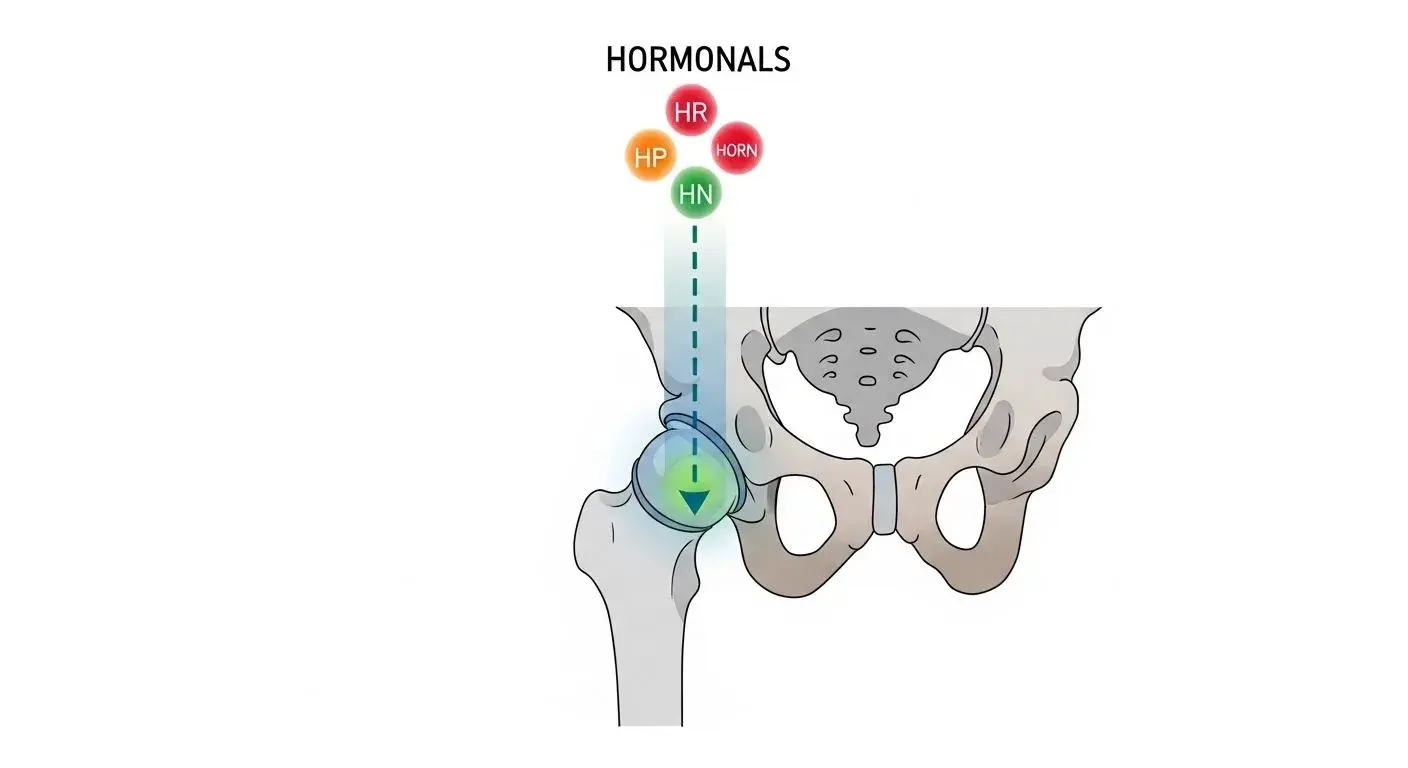
The hip pain connection is direct. Cortisol is catabolic, meaning that at chronically elevated levels it breaks down muscle and connective tissue faster than the body can repair it. The hip flexors, bursae, and the iliotibial band are particularly vulnerable because they bear significant load throughout the day. Women in menopause also lose oestrogen's protective anti-inflammatory effect on synovial tissue simultaneously, creating a double hit to hip joint health. Back and hip pain during menopause is one of the most commonly reported symptom clusters — and cortisol dysregulation is an underrecognised contributor.
A key misconception is that this pain means structural damage requiring surgery. In most cases of cortisol-related hip aching, imaging shows no significant structural abnormality. The pain is real — it originates in inflamed soft tissue and altered muscle tension — but it responds to hormonal and lifestyle interventions rather than orthopaedic ones.
Practical Strategies That Target Cortisol-Driven Hip Pain
Addressing cortisol-related hip pain in menopause requires working on the stress response, the hormonal environment, and the local tissue simultaneously. No single intervention resolves all three.
- Sleep restoration: Cortisol is tightly regulated by circadian rhythm. Poor sleep — extremely common during menopause — is one of the most powerful drivers of cortisol elevation. Prioritising 7 to 9 hours and addressing night sweats directly can reduce hip pain within weeks.
- Low-intensity movement over high-intensity training: Counterintuitively, intense workouts temporarily spike cortisol. For menopausal women already in a state of cortisol dysregulation, switching from HIIT to walking, yoga, or Pilates often reduces hip aching significantly.
- Anti-inflammatory nutrition: Omega-3 fatty acids, polyphenol-rich vegetables, and magnesium directly counter the inflammatory cascade driven by chronic cortisol elevation.
- HRT consideration: Restoring oestrogen can reduce cortisol sensitivity and restore some of the anti-inflammatory protection the hip joint has lost. Discuss with a menopause specialist whether HRT is appropriate for your situation.
The trade-off worth acknowledging: some women respond to cortisol-lowering strategies quickly while others see slow progress. This is because individual cortisol patterns, sleep architecture, and hormonal baselines vary significantly. If lifestyle changes fail to reduce hip pain after 8 to 12 weeks, a formal cortisol assessment through your GP — including a morning saliva or blood test — is warranted. Perimenopause muscle and joint pain shares many of the same hormonal drivers and may respond to the same interventions.
Frequently Asked Questions
Can cortisol cause hip pain in menopause?
Yes, cortisol dysregulation during menopause can cause or worsen hip pain. Chronically elevated cortisol breaks down soft tissue around the hip joint and amplifies the inflammatory response. Oestrogen decline compounds this by removing the joint's natural anti-inflammatory protection.
Is cortisol poisoning a real medical condition?
The term 'cortisol poisoning' is not a formal medical diagnosis. It refers colloquially to chronic cortisol dysregulation or hypercortisolism. True hypercortisolism — known as Cushing's syndrome — is a distinct and diagnosable condition. Chronic low-grade cortisol elevation is a real and measurable state that responds to lifestyle and hormonal interventions.
How long does it take for cortisol-related hip pain to improve?
Most women notice some improvement within 4 to 8 weeks of consistently addressing sleep, exercise intensity, and nutrition. Full resolution may take 3 to 6 months, especially if hormonal treatment is needed. Persistent pain beyond this should be investigated further by your GP.
Does HRT help with cortisol-related hip pain?
Yes, oestrogen replacement can reduce cortisol sensitivity and restore anti-inflammatory protection to the hip joint. Many women report significant improvement in joint pain within the first 3 months of HRT. It is not a guarantee, but for those with clear hormonal drivers, it is a well-supported option.
Sources
- Cortisol Dysregulation in Menopause and Musculoskeletal Pain. pubmed.ncbi.nlm.nih.gov — PubMed / NIH
- Joint Pain and Menopause: Understanding Hormonal Drivers. menopausesociety.org — The Menopause Society
- The Role of Cortisol in Chronic Pain Conditions. healthline.com — Healthline