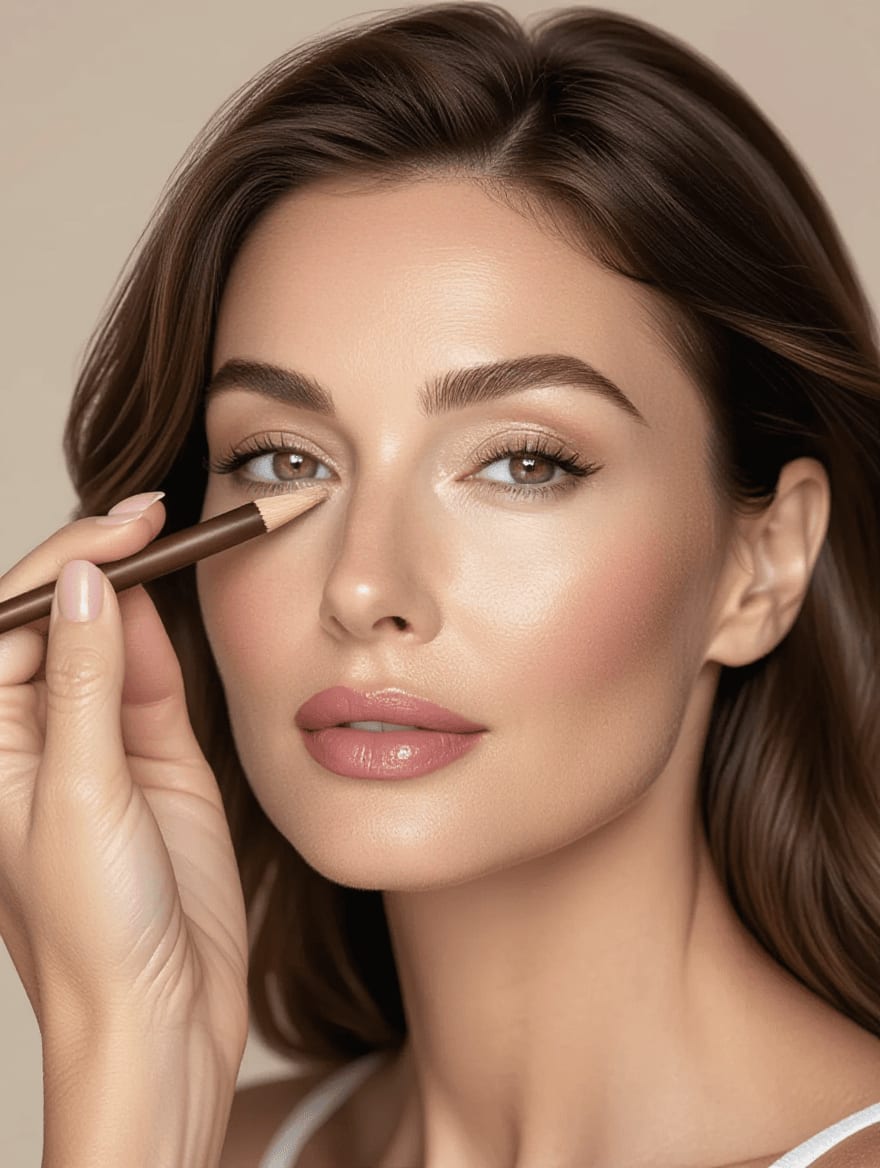
Why Black Eyeliner Creates Harsh Contrast on Aging Eyes
The question does black eyeliner make you look older has a nuanced answer: it depends entirely on application placement and your specific eye anatomy changes. Black eyeliner doesn't automatically age you, but the way most women apply it—tight against the lash line in a continuous, unbroken line—creates stark contrast that emphasizes the very features aging eyes develop. As eyelids lose elasticity and collagen, they become thinner and more translucent, revealing underlying vascular networks that create purple or brown undertones. When you place solid black liner directly against this newly delicate skin, the harsh contrast makes the translucency more apparent rather than less, drawing attention to the textural changes you're trying to minimize.
Here's what professional makeup artists understand about does eyeliner age you that beauty tutorials rarely explain: the issue isn't the color itself but the way black liner interacts with decreased lash density. Women over 50 experience approximately 30% lash thinning due to declining estrogen and natural aging of hair follicles. When you had thick, full lashes in your thirties, black liner created definition that your lashes softened and blended naturally. With sparser lashes, that same black liner now sits exposed against your skin, creating a graphic, harsh line that looks drawn-on rather than naturally defining. The liner that once enhanced your eyes now competes with them for attention.
The critical factor most advice misses: black eyeliner placement matters exponentially more than color choice. Lining your entire lower lash line with black closes off your eye, making it appear smaller—a significant problem when aging eyelids are already developing hooding that reduces visible lid space. This complete lower lining also creates a harsh horizontal line directly where aging eyes develop fine lines and crepiness, literally drawing a dark outline around the very texture you want to minimize. The same black liner applied only to the outer third of your lower lash line and softly smudged creates definition without the aging closed-off effect, proving it's not the black that ages you but the application strategy.
The Undertone Truth Nobody Mentions
Black eyeliner comes in three distinct undertones that behave completely differently on mature eyes: cool-toned blacks with blue or purple undertones, neutral true blacks, and warm-toned blacks with brown undertones. Most drugstore black liners are cool-toned because they photograph dramatically, but these blue-blacks create the harshest contrast against aging skin with warm yellow or olive undertones, making the liner look artificially dark and emphasizing every skin imperfection. If you're determined to wear black liner after 50, choose formulas explicitly labeled as warm black or blackened brown—these softer blacks blend more naturally with mature skin tones and thinning lashes.
What dermatologists observe but cosmetic companies rarely emphasize: the skin around your eyes thins by approximately 40% between ages 40 and 60, making it more susceptible to showing through whatever you apply. Heavy black liner on paper-thin lower lash line skin can actually appear to spread or bleed beyond where you applied it because the pigment shows through the translucent skin itself. This creates the appearance of smudged, messy liner even when you've applied it carefully—a problem that doesn't occur with softer, lighter liner shades that don't have enough pigment density to show through delicate aging skin.
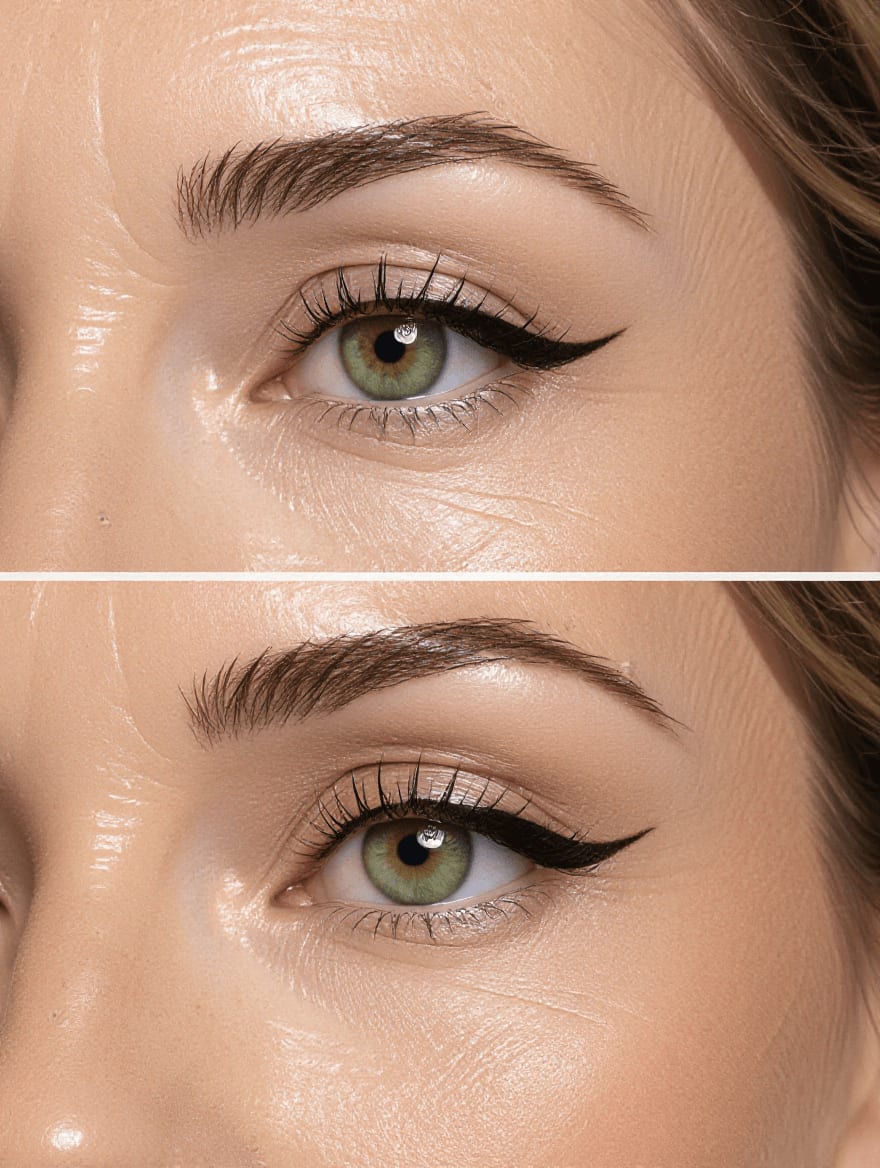
Which Eyeliner Colors and Techniques Actually Flatter Mature Eyes
The alternative to harsh black that professional makeup artists use on clients over 50 isn't one single replacement color but a strategic approach based on your natural coloring. For women with warm undertones and brown eyes, rich chocolate brown or espresso liner creates definition that reads as naturally darker lashes rather than obvious makeup. For cool-toned women with blue or green eyes, charcoal gray or slate provides similar depth to black but with softer edges that blend more forgivingly with aging skin texture. For very fair women with sparse blonde or white lashes, taupe or soft brown prevents the floating eyelid effect that occurs when liner is dramatically darker than natural coloring.
The formula shift that makes the biggest difference for mature eyes: switching from liquid or gel liner to pencil or shadow liner applied with a brush. Liquid and gel liners create precise, unforgiving lines that emphasize every wobble in application and every bump in aging eyelid texture—your hand isn't as steady as it was at 30, and your eyelid surface isn't as smooth. Pencil liners, especially those soft enough to smudge, create definition that looks intentionally soft-focused rather than accidentally imprecise. Powder shadow applied with a thin, damp brush provides even more forgiving results, creating a gradient effect that mimics natural shadow rather than drawn-on liner.
- Chocolate or espresso brown: Best for warm-toned mature eyes; defines without harsh contrast and complements thinning lashes naturally
- Charcoal or slate gray: Ideal for cool-toned mature eyes; provides depth softer than black without looking washed out
- Navy or deep plum: Excellent for brightening white or yellowed sclera; creates subtle color interest without obvious makeup look
- Taupe or soft brown: Perfect for very fair mature skin with light lashes; prevents harsh contrast while still defining eye shape
- Avoid: Solid black on entire lower lash line: Closes off eyes, emphasizes thinning lashes, and draws attention to under-eye texture and fine lines
The application technique that transforms how eyeliner wears on aging eyes: tightlining the upper waterline instead of applying liner on top of your lash line. This technique places color directly at the lash root, making sparse lashes appear fuller without any visible liner on the mobile eyelid that can crease, smudge, or settle into developing hood. Use a soft pencil in dark brown or charcoal, gently lifting your upper lid and running the pencil along the waterline between your lashes. This creates the illusion of definition and fuller lashes without the aging effects of traditional liner placement, and it doesn't migrate into the fine lines that develop on the mobile lid.
For comprehensive strategies on all eye makeup techniques specifically adapted for women over 40, including shadow placement, mascara selection, and brow grooming that work harmoniously with your liner choice, explore our complete eye makeup guide for mature eyes that addresses every aspect of creating youthful, flattering eye definition.
When the Standard Eyeliner Advice for Mature Women Completely Fails
The universal recommendation to abandon black eyeliner entirely after 50 fails for approximately 30% of mature women with naturally dark coloring—deep brown or black hair, olive or brown skin tones, and naturally dark lashes. On these women, switching to brown or gray liner can actually look washed out and create less definition than their natural features, making eyes appear tired rather than youthful. If you have naturally high contrast coloring, you can absolutely wear black liner after 50, but you must adjust the application technique rather than the color. Use black only on the outer two-thirds of your upper lash line, smudge it slightly with a brush, and skip the lower liner entirely or use a much softer shade below.
Another scenario where conventional wisdom backfires: women with significant hooding being told to extend liner past their outer corner in a wing to lift the eye. This classic advice assumes you have visible lid space to work with, but severe hooding from age-related volume loss means your extended wing disappears into the hood fold, creating a disconnected line that looks odd when you open your eyes. For hooded mature eyes, the most flattering approach involves using liner only in the outer corner where it remains visible, creating a subtle wedge shape that defines the eye without the aging drooped-wing effect that occurs when liner extends beyond what anatomy allows.
The critical contradiction between Instagram tutorials and real-world mature eye makeup: those dramatic wing tutorials are filmed with the model looking down or with eyes closed, showing perfect wings that completely disappear or distort when eyes open normally. Professional makeup artists working on mature clients prioritize how liner looks with eyes open and in natural facial positions—talking, smiling, looking straight ahead—rather than achieving the perfect closed-eye geometric shape. Apply your liner while looking straight into a mirror at eye level rather than looking down at a hand mirror, checking constantly how it appears with your eyes in their natural resting position.
What actually fails that nobody addresses: assuming liner that looked perfect in morning bathroom lighting will translate to other environments. Mature eyes with developing hollowing and shadowing around the orbital bone can make liner appear darker and more harsh in certain lighting conditions, particularly in overhead or fluorescent lighting that creates shadows. Test your liner in multiple lighting conditions—bathroom, natural window light, and the overhead lighting you'll encounter throughout your day. If your liner looks too strong in any of these conditions, you've gone too dark or too heavy. The goal is liner that defines consistently across all lighting situations rather than looking perfect in one specific scenario.
The hidden aging factor with eyeliner application: hand steadiness naturally declines with age, and the tremor you might not even notice in daily activities becomes glaringly obvious when trying to draw a precise line millimeters from your eyeball. This is why transitioning to smudgeable pencils or shadow-based liner applications becomes essential rather than optional after 50. These forgiving formulas allow you to create definition even if your line isn't perfectly straight because the soft, blurred edges look intentional rather than mistaken. If you're experiencing frustration with liner application that used to feel easy, the problem isn't your technique—it's that your tools and formulas haven't evolved with your changing needs.
For understanding how eyeliner fits into your complete makeup approach during hormonal transitions, including coordination with foundation, blush, and lip color choices that create cohesive, age-appropriate looks, see our comprehensive makeup guide for menopausal skin changes that addresses every product category and how they interact with declining estrogen's effects on skin and coloring.