
Why Estrogen Decline Causes Dry Mouth
Dry mouth (xerostomia) is a frequently overlooked menopause symptom that can affect quality of life, dental health, and comfort significantly. Women experiencing it often do not associate it with perimenopause and may spend considerable time pursuing dental or systemic investigations before the hormonal link is identified. Estrogen and salivary gland function: Salivary glands contain estrogen receptors, and estrogen actively supports both the volume and quality of saliva produced. As estrogen declines, the glands produce less saliva and what is produced changes in composition — becoming thicker, stickier, and less effective at protecting the teeth and oral mucosa. This is why menopausal dry mouth often comes with increased dental cavities and gum sensitivity even in women with excellent hygiene habits.
Medications commonly used in perimenopause can compound this significantly. Antihistamines, antidepressants (SSRIs and SNRIs), antihypertensives, and certain sleep medications all have dry mouth as a known side effect. Women on multiple medications introduced during perimenopause may have multiple compounding causes. The sensory changes of menopause extend beyond the mouth — our guide on menopause-related sensory symptoms covers related experiences in the ears and skin.
What Makes Dry Mouth Worse and Common Treatment Mistakes
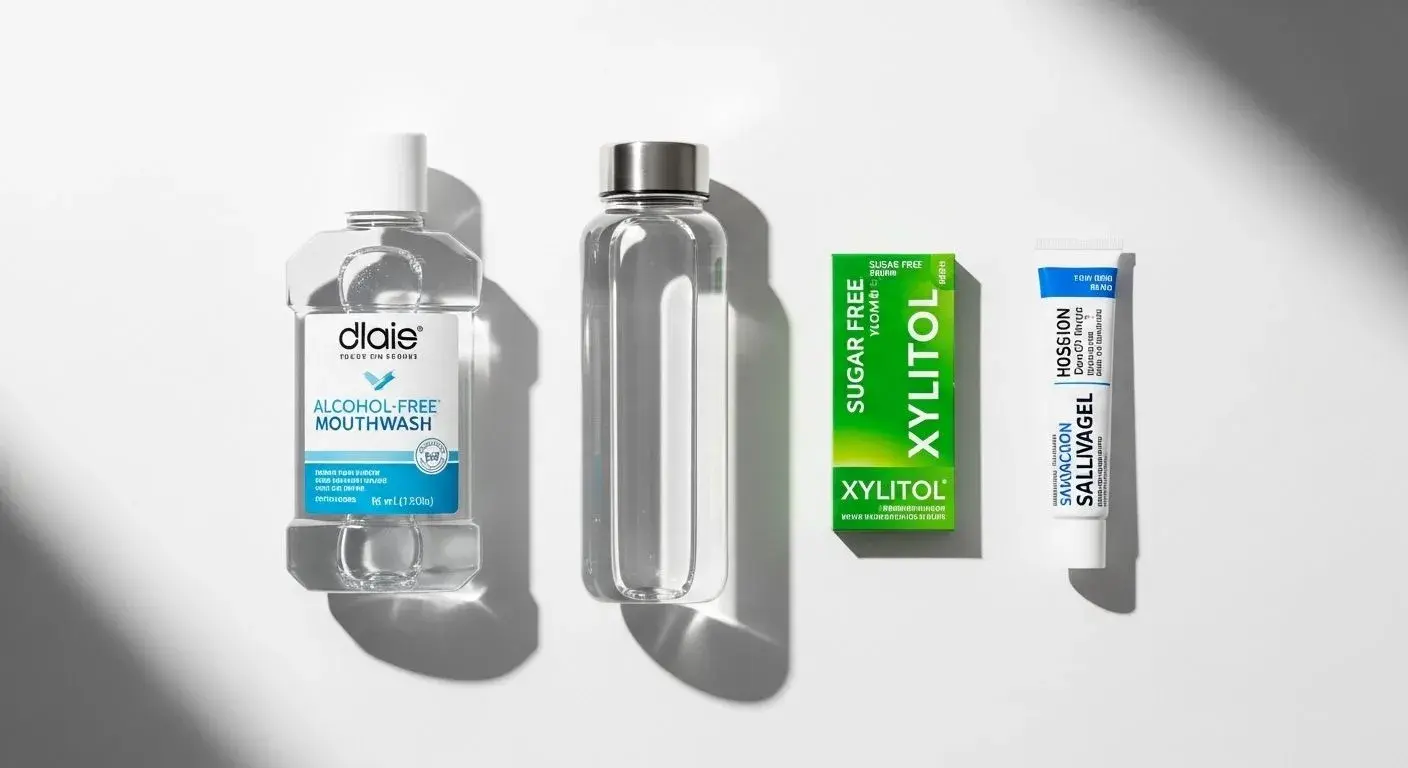
Misconception 1: Drinking more water fixes dry mouth. Water temporarily relieves the sensation but does not stimulate salivary gland function or restore saliva composition. Women who drink adequate water but still have chronic dry mouth are experiencing a glandular or hormonal issue, not simple dehydration.
Misconception 2: Dry mouth is just an inconvenience. Saliva is the mouth's primary defence against tooth decay, gum disease, and oral infections. Women with severe menopause-related xerostomia can develop multiple new cavities, oral candidiasis, and painful cracking at the corners of the mouth. Treating it seriously — not just tolerating it — is important for long-term dental health.
The trade-off: Many women turn to sugar-free sweets to stimulate saliva, which works via the chewing reflex. However, many sugar-free products contain citric acid as a flavour enhancer, which can erode tooth enamel already at risk from low-saliva conditions. Xylitol-sweetened products are preferable as xylitol also inhibits cavity-causing bacteria. The connection to scalp dryness and related conditions is explored in our article on menopause itchy scalp and dryness.
Effective Relief Strategies for Menopause Dry Mouth
- Saliva substitutes and moisturising gels: Over-the-counter products containing carboxymethylcellulose, hyaluronic acid, or glycerin mimic saliva and provide lasting relief. Apply before sleep when dryness is most pronounced.
- Switch to alcohol-free oral care products: Alcohol-based mouthwashes dramatically worsen dry mouth. Alcohol-free, fluoride-containing alternatives protect dental health without dehydrating the oral mucosa.
- Bedroom humidifier: Sleeping in dry air significantly worsens overnight mouth dryness. A humidifier maintaining 45-55% humidity reduces morning dryness and improves sleep comfort.
- Discuss HRT with a menopause specialist: Restoring estrogen levels has been shown to improve salivary gland function. For women with moderate-to-severe dry mouth alongside other menopausal symptoms, HRT can address multiple symptoms simultaneously.