
How Low Oestrogen Directly Causes Fatigue
The connection between oestrogen and energy is biological, not just anecdotal. Oestrogen receptors are found throughout the brain, including in the hypothalamus and brainstem — regions that regulate sleep architecture, body temperature, and alertness. When oestrogen declines, these systems become dysregulated in ways that directly produce fatigue.
The main mechanisms behind low oestrogen exhaustion include:
- Sleep fragmentation from night sweats: Vasomotor episodes disrupt deep, restorative sleep (slow-wave sleep), leaving women physically exhausted regardless of how many hours they spend in bed.
- Serotonin and noradrenaline depletion: Oestrogen upregulates serotonin receptor sensitivity and slows its breakdown. Falling oestrogen reduces serotonin availability, contributing to low mood and the kind of flat, heavy tiredness that is not relieved by sleep alone.
- Mitochondrial energy output: Oestrogen plays a role in mitochondrial biogenesis — the production of new mitochondria in cells. Declining levels are associated with reduced cellular energy production, which manifests as whole-body fatigue.
- Cortisol dysregulation: Oestrogen helps modulate the HPA (hypothalamic-pituitary-adrenal) axis. Without it, cortisol rhythms flatten, removing the morning cortisol peak that drives wakefulness. This is why many perimenopausal women feel groggy for hours after waking.
This fatigue is frequently misattributed to depression, anaemia, or simply 'being busy.' It is worth noting that chronic stress and menopause compound each other — elevated cortisol from ongoing stress accelerates the hormonal disruption that causes fatigue, creating a cycle that lifestyle changes alone may not break.
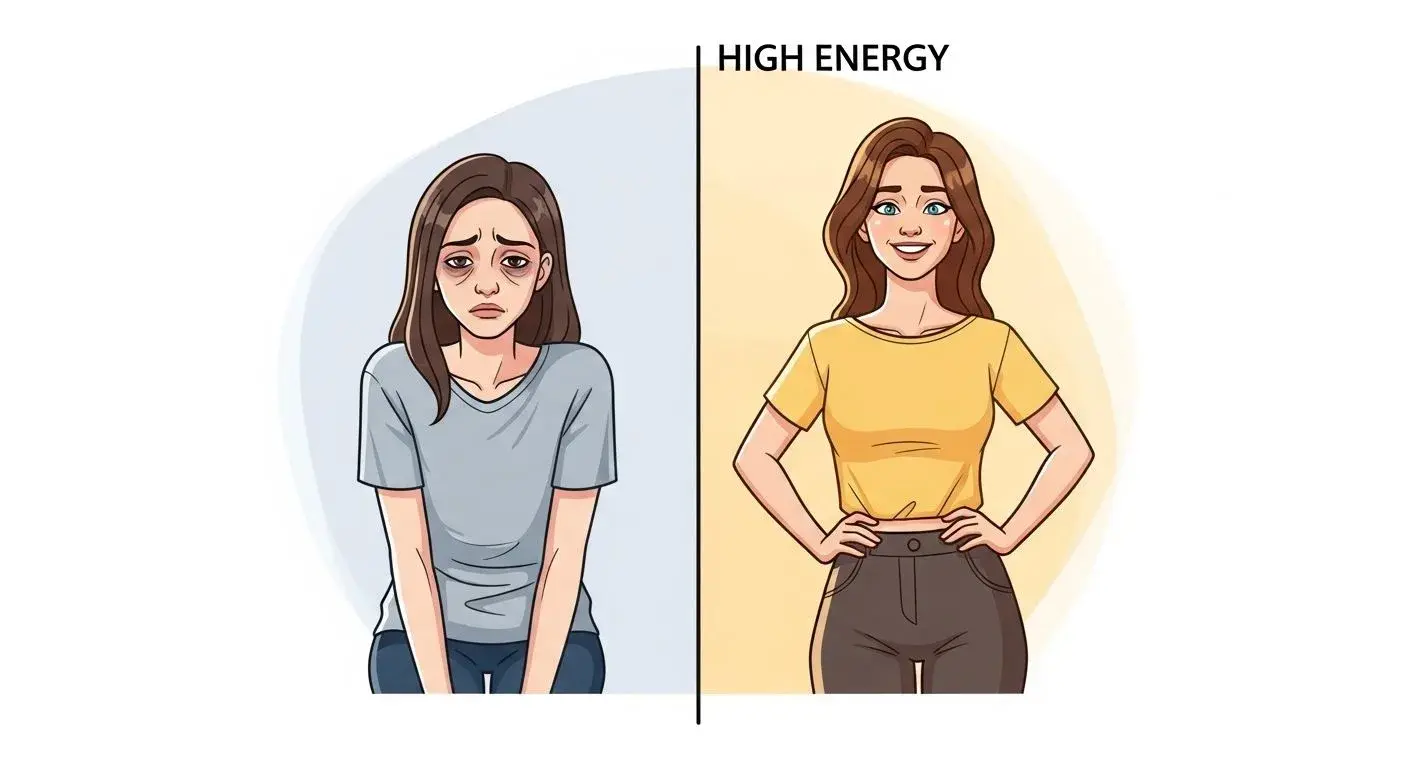
Can HRT Make You Tired? What 'Still Exhausted on HRT' Actually Means
One of the most common and frustrating experiences reported by women starting HRT is: 'I started it three months ago and I am still exhausted.' This is not evidence that HRT is wrong for you — it is usually a signal that something specific needs to be adjusted.
The key reasons HRT may not resolve fatigue, or may temporarily worsen it:
- Dose is too low: Starting doses are deliberately conservative. If night sweats persist, sleep remains disrupted — and fatigue continues. A dose review is appropriate after 8–12 weeks.
- Progesterone is the culprit: Synthetic progestogens (like norethisterone or medroxyprogesterone acetate) can cause marked fatigue and low mood in sensitive women. Switching to micronised progesterone (body-identical) often resolves this. This is the specific trade-off most women are not warned about.
- A concurrent condition remains unaddressed: HRT does not treat anaemia, hypothyroidism, sleep apnoea, or chronic fatigue syndrome — all of which frequently co-occur with perimenopause. These need independent assessment.
- Testosterone deficiency: Standard HRT replaces oestrogen and progesterone but not testosterone. Low testosterone in women is strongly associated with energy depletion and cognitive fatigue, yet it is rarely checked in routine menopause care.
The misconception to challenge: HRT is not a sleep medication and will not directly sedate you or boost energy overnight. It works by removing the hormonal triggers of sleep disruption — but the sleep debt accumulated over months or years of poor sleep takes additional time to recover. Many women see meaningful fatigue improvement only at the 3–6 month mark, not in weeks.
Sleep quality itself can also be undermined by vivid, disturbing dreams that are a recognised symptom of hormonal change. If this applies to you, understanding the link between nightmares, perimenopause, and vivid dreams during menopause can help you distinguish sleep disruption that HRT will address from disruption that needs other management.
Practical Steps to Address Oestrogen-Related Fatigue
Whether you are not yet on HRT, currently on HRT, or cannot take it, these evidence-informed strategies target the specific mechanisms of hormonal fatigue — not generic tiredness advice:
- Prioritise sleep architecture, not just duration: A cool bedroom (under 18°C), blackout curtains, and consistent sleep and wake times support slow-wave sleep recovery. Time in bed does not equal restorative sleep.
- Request a full blood panel: Ask for ferritin (not just haemoglobin), TSH, vitamin D, vitamin B12, and fasting glucose. Deficiencies in any of these independently cause fatigue and will not be addressed by HRT.
- Consider magnesium glycinate at night: Magnesium supports GABA pathways involved in sleep onset and has a reasonable evidence base for reducing sleep latency and improving sleep quality in perimenopausal women.
- Review progesterone type if on HRT: If you started HRT and fatigue worsened, discuss switching to Utrogestan (micronised progesterone) with your prescriber before assuming HRT is not working.
Where the standard approach falls short: blanket advice to 'exercise more for energy' often backfires during perimenopause. Women with high cortisol, disrupted sleep, and hormonal flux can experience post-exertional fatigue from high-intensity training. Low-impact strength work and walking have stronger evidence for this cohort than cardio-heavy programmes. Hormonal fatigue requires hormonal context — not a generic wellness prescription.