
Why Estrogen Matters for Hair — And What Changes at Menopause
Hair follicles are hormone-sensitive structures. During reproductive years, estrogen extends the anagen (growth) phase of the hair cycle, keeping more follicles actively producing hair at any given time. When estrogen levels fall sharply at perimenopause and menopause, that protective effect disappears — and many women notice shedding, reduced density, and slower regrowth seemingly overnight. The mechanism is not estrogen directly 'building' hair, but rather estrogen counterbalancing androgens like DHT that actively miniaturize follicles. When estrogen falls, the androgen-to-estrogen ratio shifts, and DHT becomes relatively dominant — even if your androgen levels have not risen.
The key misunderstanding: Most women assume hair loss at menopause means they simply need 'more estrogen.' In reality, the pattern of loss — diffuse thinning across the crown or a widening part — is driven by androgenetic alopecia becoming unmasked once estrogen's buffering effect is gone. Restoring estrogen helps, but it is not the complete solution, and the response varies significantly from person to person.
Thyroid dysfunction, iron deficiency, and chronic stress all produce hair loss patterns that look identical to hormonal thinning. Starting HRT without ruling these out is a common clinical mistake. If your hair is shedding heavily and diffusely all over the scalp rather than thinning at the crown, telogen effluvium from nutrient deficiency or stress is far more likely than estrogen deficiency alone. Consider reading about how stress compounds menopause symptoms before assuming hormones are the sole culprit.
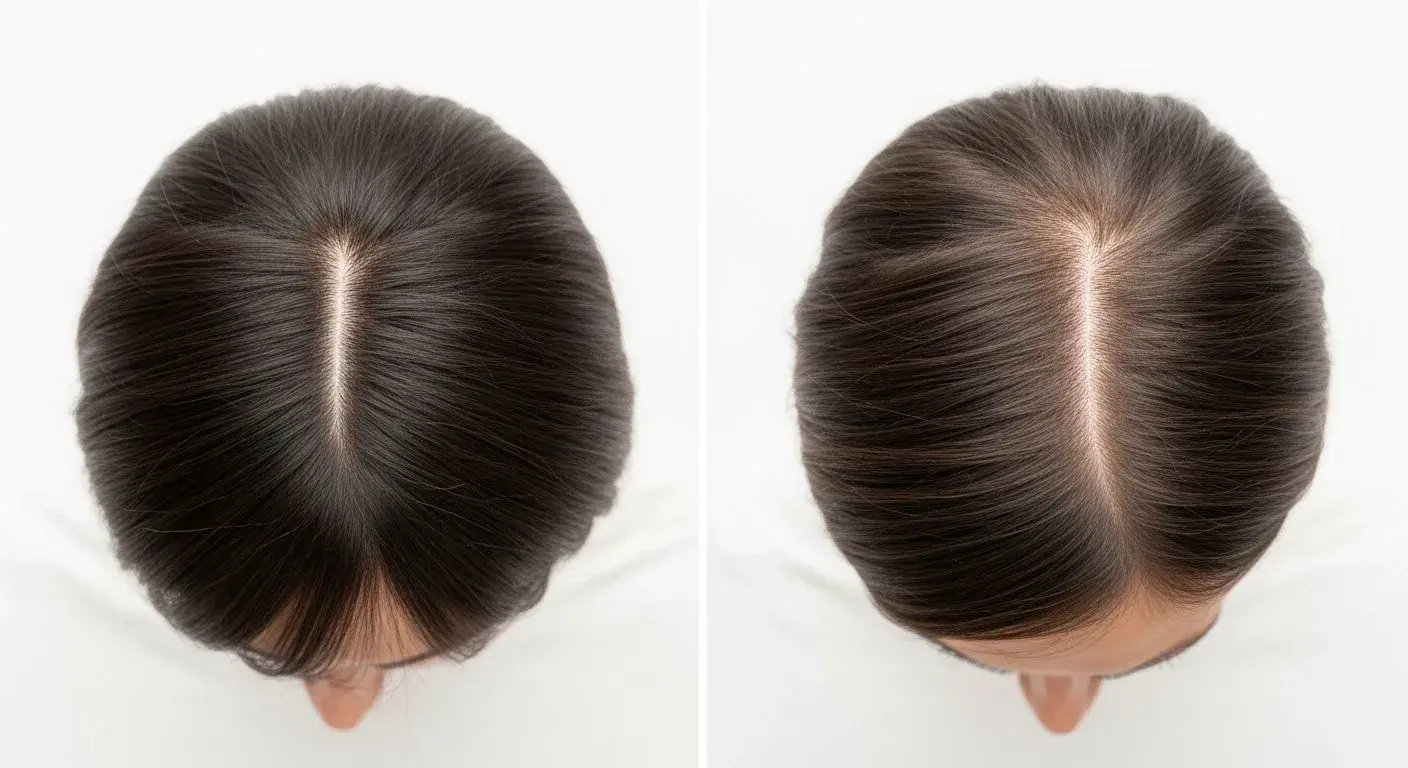
Does Estradiol or HRT Actually Stop Hair Loss? The Honest Evidence
Estradiol (the primary form used in HRT) has shown benefits for hair retention in observational studies, but the clinical picture is more complicated than 'take estrogen, keep your hair.' Some women on systemic HRT report clear improvements in thickness and reduced shedding within 6–12 months. Others on identical regimens see no hair benefit at all. The follicle-level response depends on individual androgen receptor sensitivity, genetics, and how long thinning has been progressing before HRT begins.
When HRT can make hair loss worse: The type of progestogen combined with estrogen matters enormously. Synthetic progestogens with androgenic activity — such as norethisterone or levonorgestrel — can actively worsen follicle miniaturization in androgenetically prone women. This is a well-documented but under-discussed trade-off. Women who notice increased shedding after starting combined HRT should ask their prescriber specifically about switching to a progestogen with low androgenic activity, such as dydrogesterone or micronised progesterone.
Misconception 1: 'High estrogen causes hair loss.' Elevated estrogen alone rarely causes alopecia in perimenopausal women. Fluctuating estrogen — the sharp drops and peaks of perimenopause — triggers telogen effluvium through hormonal instability, not through estrogen being inherently damaging to follicles.
Misconception 2: 'More estrogen means more hair.' Supraphysiologic estrogen doses do not produce proportionally greater hair retention. Once follicles are stabilized, additional estrogen has diminishing returns for hair — while increasing the risk of other side effects. Dose should be titrated for overall menopausal symptom management, not specifically for hair.
Practical Strategies: What Actually Moves the Needle on Hair Retention
If you are already on HRT and still experiencing thinning, layering additional targeted approaches alongside hormonal support produces better outcomes than escalating estrogen dose. Clinically validated options include:
- Topical minoxidil (2–5%): The only topical treatment with strong randomised trial evidence for female pattern hair loss. Requires consistent daily use and takes 4–6 months to show visible results.
- Micronised progesterone (oral or topical): Shows weaker androgenic activity than synthetic progestogens and may modestly support hair in some studies when used as part of HRT.
- Iron and ferritin optimisation: Serum ferritin below 70 ng/mL correlates with hair shedding independently of anaemia. Many women in perimenopause are borderline-low without knowing it.
- Scalp health and styling choices: Chronic mechanical tension (tight updos, extensions) causes traction alopecia that mimics hormonal loss at the temples and hairline. Switching to lightweight, volumising haircare products formulated for thinning hair reduces physical stress on already fragile follicles.
When choosing cosmetic support — from volumising shampoos to coverage foundations for scalp visibility — look for products free from heavy silicones and alcohols, which can further dehydrate menopausal hair. Pairing hair-focused skincare with broader menopausal skin management is often useful; see our guide on the best menopause skincare for mature skin for overlapping skin and scalp concerns. For days when thinning is visible at the scalp, a foundation formulated for mature skin can also help conceal exposed scalp at the hairline until regrowth catches up. Always consult your healthcare provider before starting or changing any hormone therapy.