
Understanding Frozen Shoulder: Why Exercise Must Match the Stage
Adhesive capsulitis — frozen shoulder — progresses through three distinct stages, and matching your exercise programme to the correct stage is not optional: it is the single most important variable that determines whether exercise helps or harms you. The three stages are the freezing phase (pain-dominant, 6 weeks to 9 months), the frozen phase (stiffness-dominant, 4 to 12 months), and the thawing phase (gradual recovery, 5 to 24 months). Exercises appropriate for the thawing phase can cause severe flares if attempted in the freezing phase.
The shoulder capsule — a sleeve of fibrous tissue surrounding the glenohumeral joint — becomes inflamed, contracted, and eventually scarred in a predictable pattern. Exercises work by gently stressing the capsule to promote remodelling and elongation of the scar tissue. Too little stress prolongs the condition; too much stress provokes inflammation and worsens contraction. This is the therapeutic window that every exercise choice must target. Perimenopause body aches and joint pain frequently occurs alongside frozen shoulder in menopausal women, driven by the same oestrogen-related changes in connective tissue.
A key misconception is that resting the shoulder completely during the freezing phase is protective. In reality, prolonged immobility accelerates capsular contraction. Gentle, pain-guided movement — even in the acute phase — is recommended by physiotherapy guidelines worldwide. The goal is not aggressive stretching; it is preventing further loss of range while managing pain appropriately.
Stage-by-Stage Exercise Protocol for Adhesive Capsulitis
The following protocol reflects current physiotherapy practice for adhesive capsulitis. Always confirm your stage with a physiotherapist before beginning, especially if pain is severe or waking you at night.
Phase 1 — Freezing Stage: Gentle Pain-Guided Movement
- Pendulum (Codman) exercise: Lean forward with the unaffected hand on a table. Let the affected arm hang freely. Use gentle body momentum — not muscle force — to swing the arm in small circles. 20 to 30 seconds, 2 to 3 times daily. This is the most important exercise of the freezing phase.
- Assisted forward flexion: Lying on your back, use the unaffected arm to lift the affected arm overhead as far as comfort allows. Hold 15 seconds, release slowly. 5 to 10 repetitions, twice daily.
- Finger-walk wall exercise: Stand facing a wall. Walk the fingers of the affected arm up the wall to the edge of comfortable range. Do not force. Hold 10 seconds at the end range and slowly walk the fingers back down.
Phase 2 — Frozen Stage: Capsular Stretching
- External rotation stretch with cane: Hold a cane horizontally, elbow bent at 90 degrees, tucked to your side. Use the unaffected arm to gently push the cane outward, rotating the affected shoulder externally. Hold 20 to 30 seconds. This targets the anterior capsule — the most commonly tight structure.
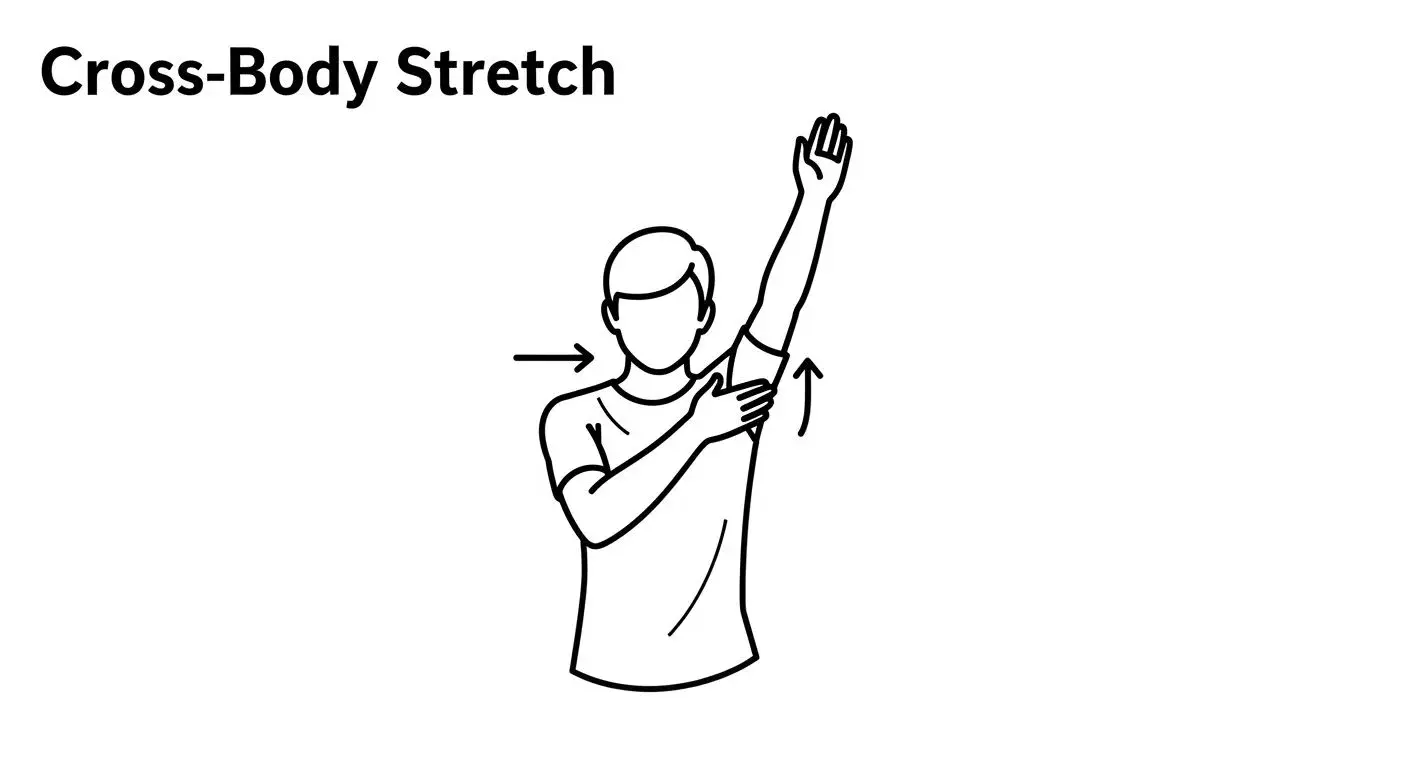
- Cross-body adduction stretch: Bring the affected arm across the chest with the unaffected arm supporting at the elbow. Hold 20 to 30 seconds. This stretches the posterior capsule.
- Towel internal rotation stretch: Hold a towel behind your back with the unaffected arm pulling upward from above, gently stretching the affected arm internally. Hold 15 to 20 seconds.
Phase 3 — Thawing Stage: Strength Restoration
- Isometric strengthening: Press the back of the affected hand against a wall without moving the shoulder. Hold 10 seconds. Repeat in forward flexion, abduction, and rotation directions. Rebuilds rotator cuff strength without stressing the still-healing capsule.
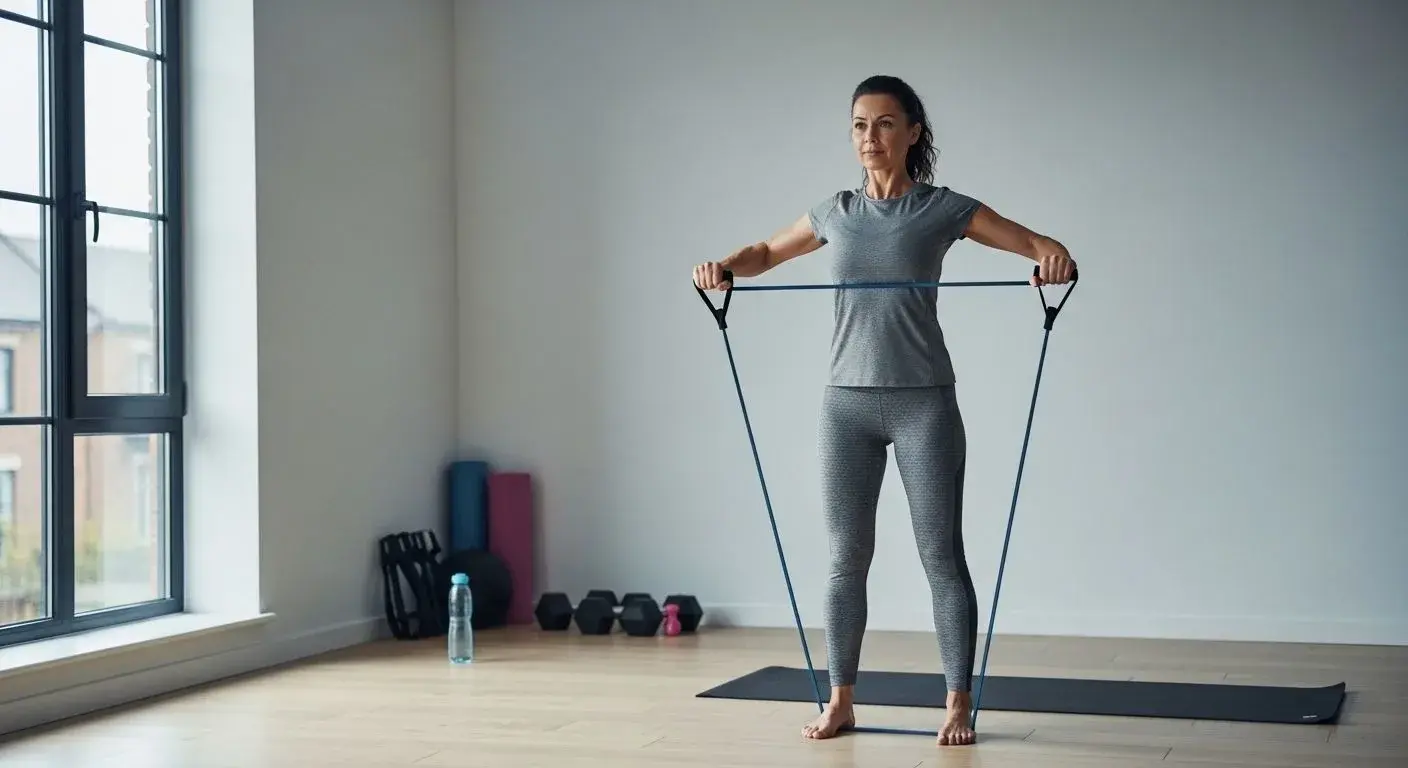
- Resistance band external rotation: Elbow bent 90 degrees, light resistance band attached to a door. Rotate the arm outward against gentle resistance. 3 sets of 12 to 15 repetitions.
- Scapular stabilisation exercises: Wall slides, prone Y-T-W lifts, and serratus anterior activation exercises restore the scapulohumeral rhythm that frozen shoulder disrupts.
Common Myths vs. What Actually Works
Several widely circulated beliefs about frozen shoulder exercises are either inaccurate or incomplete.
- Myth: 'Push through the pain to break up the scar tissue': This is actively harmful advice. Aggressive stretching through significant pain triggers protective muscle guarding and worsens capsular inflammation. Working at the edge of comfortable range — mild discomfort, not pain — is the correct approach.
- Myth: 'Any shoulder exercise is better than none': Overhead pressing, loaded external rotation, and push-up variations can provoke severe flares in the freezing and frozen stages. Exercise selection must be stage-appropriate.
- Myth: 'Frozen shoulder always resolves on its own': Most cases improve, but up to 40 percent of patients have residual stiffness and reduced function at 3 years without treatment. Active rehabilitation shortens recovery significantly.
- What actually works — heat before stretching: Applying a heat pack to the shoulder for 10 minutes before each stretching session increases collagen extensibility and significantly improves the effectiveness of each stretch. This simple step is underused in home programmes.
For menopausal women specifically, hormonal context amplifies both the risk and the recovery trajectory. Addressing oestrogen decline alongside rehabilitation is increasingly recommended by specialists working at the intersection of menopause medicine and orthopaedics. Back and hip pain during menopause is part of the same hormonal picture and often co-exists with frozen shoulder.
Frequently Asked Questions
How often should I do frozen shoulder exercises?
Do frozen shoulder exercises 2 to 3 times daily, with each session lasting 10 to 15 minutes. Consistency over intensity is what drives recovery. A short, regular session every day produces better results than one long session performed occasionally.
Can I exercise frozen shoulder at home without a physiotherapist?
Yes, home exercises are effective for frozen shoulder, but an initial physiotherapy assessment is strongly recommended to confirm your stage and learn correct technique. The pendulum, finger-walk, and assisted flexion exercises are well-suited to home practice once you have been shown the correct form.
What exercises should I avoid with frozen shoulder?
Avoid overhead pressing, pull-ups, push-up variations, and any loaded activity that causes immediate pain during the freezing and frozen stages. Swimming strokes that involve significant shoulder rotation can also provoke flares. All loaded strength exercises should wait until the thawing phase.
How long does frozen shoulder rehabilitation take?
With consistent exercise and appropriate treatment, most people achieve significant improvement in 6 to 18 months. The full natural course without treatment can last 2 to 3 years. Starting an appropriate exercise programme early in the freezing phase shortens the overall timeline considerably.
Does menopause make frozen shoulder exercises less effective?
Low oestrogen reduces the body's ability to remodel scar tissue efficiently, which can slow the response to rehabilitation. Menopausal women often benefit from combining exercise with hormonal support. Speak with a menopause specialist and your physiotherapist together about the most effective combined approach.
Sources
- Physiotherapy for Adhesive Capsulitis: A Systematic Review. pubmed.ncbi.nlm.nih.gov — PubMed / NIH
- Frozen Shoulder: Exercises and Self-Care. nhs.uk — NHS
- Adhesive Capsulitis: Diagnosis and Treatment. mayoclinic.org — Mayo Clinic
- Oestrogen and Connective Tissue Repair in Musculoskeletal Conditions. menopausesociety.org — The Menopause Society