
Understanding How Glow Sprays Interact with Menopausal Skin
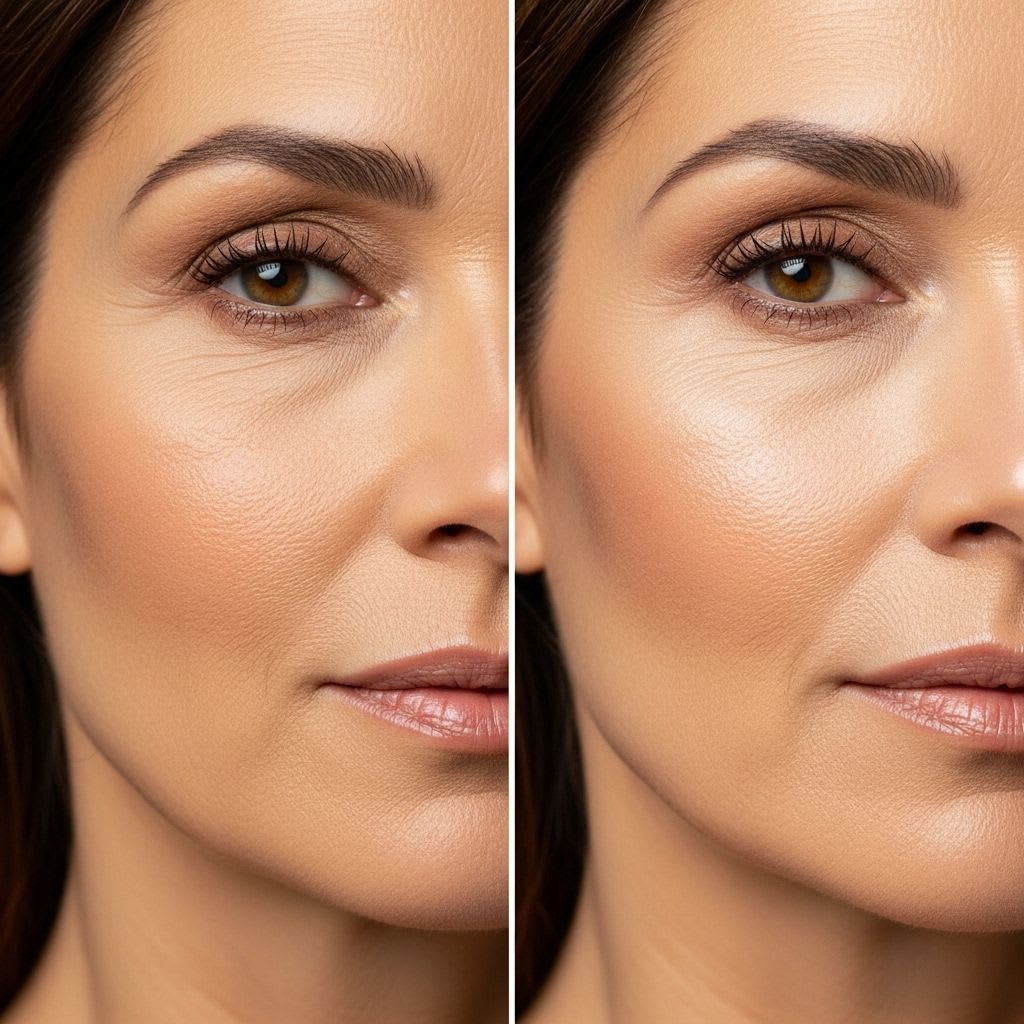
Face glow sprays promise to add radiance and dewiness to makeup, but their performance on menopausal skin creates a paradox: the skin type that most needs luminosity often responds worst to these products. Glow sprays work by depositing light-reflecting particles and hydrating agents onto the skin's surface, theoretically creating a fresh, lit-from-within appearance. However, menopausal skin's texture changes—increased dryness, fine lines, and uneven surface—cause these particles to settle irregularly, sometimes emphasizing exactly what you're trying to minimize.
The confusion stems from marketing that shows glow sprays on young, smooth skin where particles distribute evenly. On skin experiencing hormonal changes, the same spray can highlight dry patches, settle into wrinkles, or create an oily appearance on combination areas while leaving dehydrated zones looking chalky. Estrogen decline reduces sebum production by up to 40%, creating skin that's simultaneously dry overall but occasionally oily in the T-zone—a combination that makes universal glow application problematic.
What beginners don't realize: glow sprays don't actually hydrate skin despite feeling refreshing. Most contain glycerin or hyaluronic acid in low concentrations that provide temporary surface moisture but evaporate within 20-30 minutes, sometimes pulling moisture from deeper skin layers and leaving makeup looking worse than before application. The glow comes from shimmer particles or light-diffusing silicones, not genuine skin health improvement. Understanding your skin's changing needs during menopause helps navigate these products effectively—explore more in our complete makeup guide for menopausal skin changes.
The timing of glow spray application dramatically affects results. Spraying immediately after makeup application can disturb foundation and powder, creating patches and streaks. Waiting 5-10 minutes allows makeup to set, but then the spray sits on top rather than melding with products, creating a separate layer that wears off unevenly. This technical challenge has no perfect solution—only trade-offs between integration and disruption.
Common Myths vs. What Actually Works
Myth: Glow Spray Fixes Matte Makeup That Looks Too Flat
The common advice to spray glow products over matte foundation to add dimension catastrophically fails on menopausal skin. Matte formulas work by absorbing oils and creating a flat finish—when you spray moisture and shimmer particles over this absorbent surface, products soak in unevenly, creating patches of shine amid matte zones. The contrast looks unnatural and emphasizes texture irregularities. Within an hour, the absorbed spray causes matte makeup to break down, especially around nose and chin where menopausal skin may still produce some oil.
What works instead: choose luminous or satin-finish foundations from the start rather than trying to transform matte formulas with spray. If you've already applied matte makeup, add glow through cream highlighters on specific points (cheekbones, brow bones) rather than all-over spray. This targeted approach gives you control over where light hits without the uneven absorption problem. The honest limitation is that once matte makeup is set, glow sprays rarely improve it—they just create different problems.
Myth: All Glow Sprays Provide the Same Luminosity
Glow sprays range from subtle light-diffusing mists to heavy shimmer bombs, and menopausal skin requires the former, not the latter. Products with visible glitter particles or obvious shimmer settle into fine lines and create a disco ball effect on textured skin—each wrinkle becomes a sparkle line that's visible across a room. These formulas work on young, taut skin where particles sit uniformly but catastrophically age mature skin by highlighting every imperfection.
The evidence-based choice: look for sprays labeled 'subtle radiance,' 'soft focus,' or 'pearl finish' rather than 'intense glow' or 'high shimmer.' The best formulas for menopausal skin contain light-diffusing technology rather than actual shimmer particles—ingredients like synthetic fluorphlogopite or mica in extremely fine particles that blur imperfections optically without creating visible sparkle. Test sprays on your hand first—if you can see individual glitter particles, it's too intense for face application over 50.
Practical Application Strategies and When to Skip the Glow
When glow sprays do work on menopausal skin, application technique determines success. Hold the bottle 10-12 inches from face (farther than you think necessary) and mist in an X-pattern from forehead to chin, then chin to forehead. This creates even distribution without heavy deposits. Close eyes and mouth, spray once, wait 10 seconds, then spray a second time if needed. The first layer allows you to assess coverage before committing to more product.
Strategic application means avoiding problem areas entirely. Skip glow spray on the forehead if you have deep horizontal lines—moisture and shimmer particles collect in these grooves, making them more prominent. Skip the under-eye area where crepey skin and fine lines will catch particles awkwardly. Instead, focus spray on smooth zones: cheeks, bridge of nose, and chin if these areas are relatively line-free. This selective approach gives you luminosity without emphasizing texture problems.
Timing matters critically: use glow spray only after makeup has fully set (minimum 5 minutes, ideally 10-15 minutes after final powder or setting spray). If using both setting spray and glow spray, apply setting spray first, wait 3-5 minutes, then add glow as the absolute final step. Never spray before powder—the moisture will cause powder to cake and separate. Many experienced users find better results applying glow spray before leaving home, then carrying it for strategic mid-day touch-ups only on areas that have gone flat, rather than re-spraying the entire face.
The edge case where standard advice fails: extremely dehydrated menopausal skin should skip glow sprays entirely during flare-ups. When your skin is so dry that foundation cracks within an hour, adding glow spray just highlights the cracking and creates muddy patches where spray mixes with degrading makeup. In these periods, focus on intensive hydration and consider makeup formulas with built-in luminosity rather than adding glow as a separate step. For age-appropriate product recommendations, see our best makeup for women in their 40s and beyond. The honest trade-off: glow sprays work beautifully on healthy, well-hydrated menopausal skin but often worsen the appearance of skin going through rough hormonal patches. Knowing when to skip the glow is as important as knowing how to apply it.