
What Is Formication and Why Does Perimenopause Cause It?
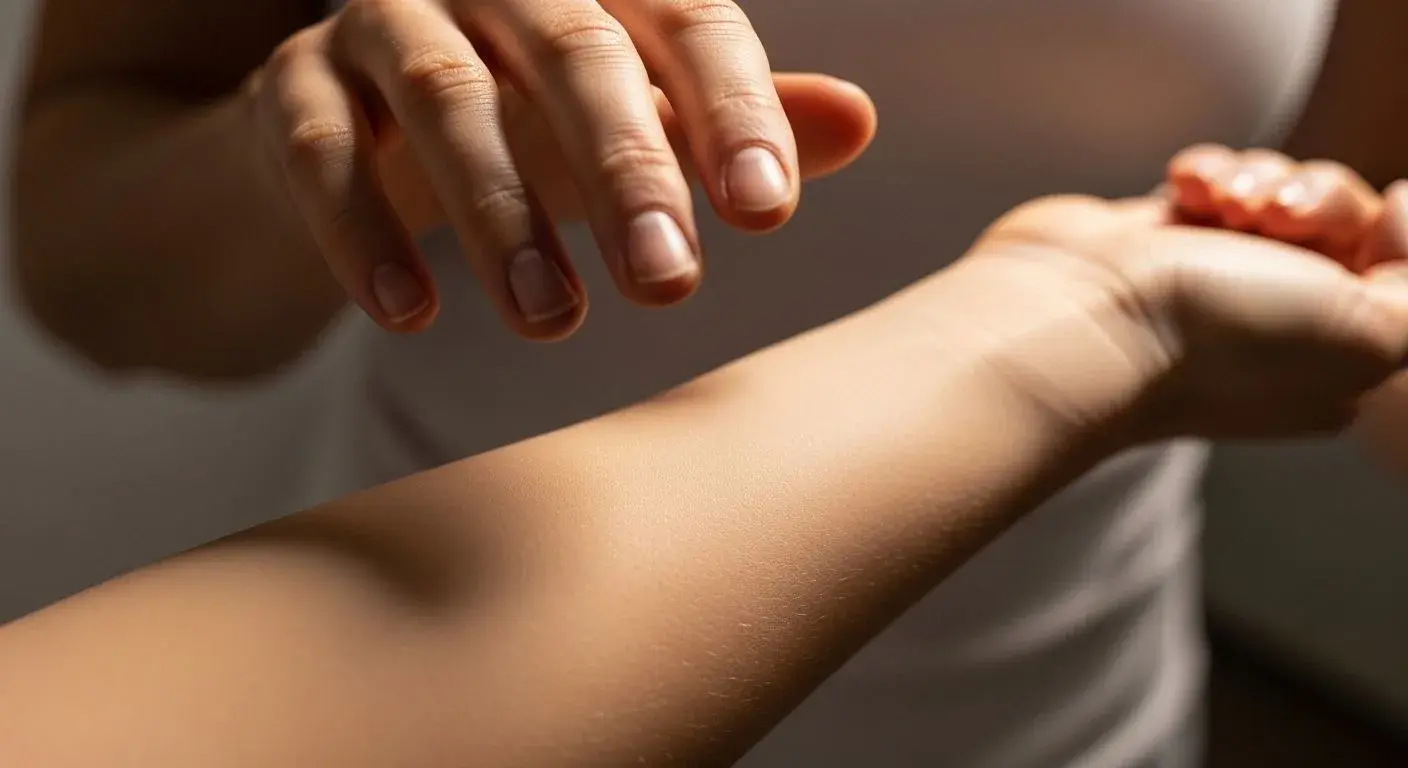
Formication is a tactile hallucination — the sensation of insects crawling on or just beneath the skin, without any physical cause. The name comes from 'formica,' the Latin word for ant. During perimenopause, it is a genuine neurological symptom driven by estrogen's role in regulating peripheral nerve sensitivity and skin receptor activity.
Estrogen affects the skin's sensory nerve fibres directly, as well as the body's pain and touch processing pathways. As estrogen fluctuates and declines, sensory thresholds change. Nerve endings in the skin become more reactive, firing signals that the brain interprets as crawling, tingling, burning, or itching — often with no external stimulus at all. Some women describe it as a constant crawl; others notice it primarily at night or during rest, when there are fewer competing sensory inputs to override the errant nerve signals.
Formication often occurs alongside other skin symptoms. Women experiencing it frequently also report scalp itching or changes in skin texture — symptoms with similar hormonal roots explored in menopause itchy scalp causes and relief and menopause itchy ears treatment.
What Makes Formication Worse — and What Is Commonly Mistaken
The most serious misunderstanding about formication is that it is always a psychiatric symptom. Formication is strongly associated in medical literature with drug withdrawal, psychosis, and cocaine use — contexts that cause genuine alarm when a perimenopausal woman reports the same sensation. Many women are questioned about drug use or referred to psychiatric services before anyone considers hormonal causes. This is a significant diagnostic failure.
Factors that reliably worsen perimenopausal formication include:
- Fatigue and sleep deprivation: Tired nervous systems have lower sensory filtering capacity, making errant nerve signals more intrusive.
- Caffeine and alcohol: Both sensitise the nervous system and lower the threshold for sensory disturbance.
- Heat: Hot showers, hot environments, and hot flashes temporarily worsen the sensation in most women.
- Skin dryness: Dehydrated skin has compromised barrier function and altered nerve responsiveness — moisturising the skin directly reduces the frequency and intensity of formication for some women.
One important edge case: formication that is persistent, severe, involves one specific area of the body, or is associated with other neurological symptoms (weakness, coordination changes, visual disturbance) requires medical evaluation. In this presentation it can indicate vitamin B12 deficiency, peripheral neuropathy, or MS — all of which have independent causes and require investigation beyond hormonal management.
How to Treat Formication During Perimenopause
Topical approaches work well for many women. Rich emollient creams applied consistently — especially those containing ceramides, colloidal oatmeal, or niacinamide — improve skin barrier function and reduce the peripheral nerve reactivity that drives the sensation. Cooling gels (containing menthol or aloe) provide temporary symptom relief for acute episodes.
Systemic approaches that address the hormonal root cause include HRT, which in clinical practice consistently reduces formication when it is part of a broader perimenopausal sensory symptom pattern. The response is typically noticeable within 4–8 weeks of stable estrogen levels.
For women not using HRT, omega-3 supplementation supports skin barrier lipid function, and vitamin B complex (particularly B12 and B6) supports peripheral nerve health. Gabapentin is used off-label in severe cases where sensory disturbance significantly impairs quality of life — this is a clinical decision requiring a prescriber. Self-care strategies such as cool showers, breathable natural-fibre clothing, and avoiding known triggers reduce daily symptom burden while systemic approaches take effect.