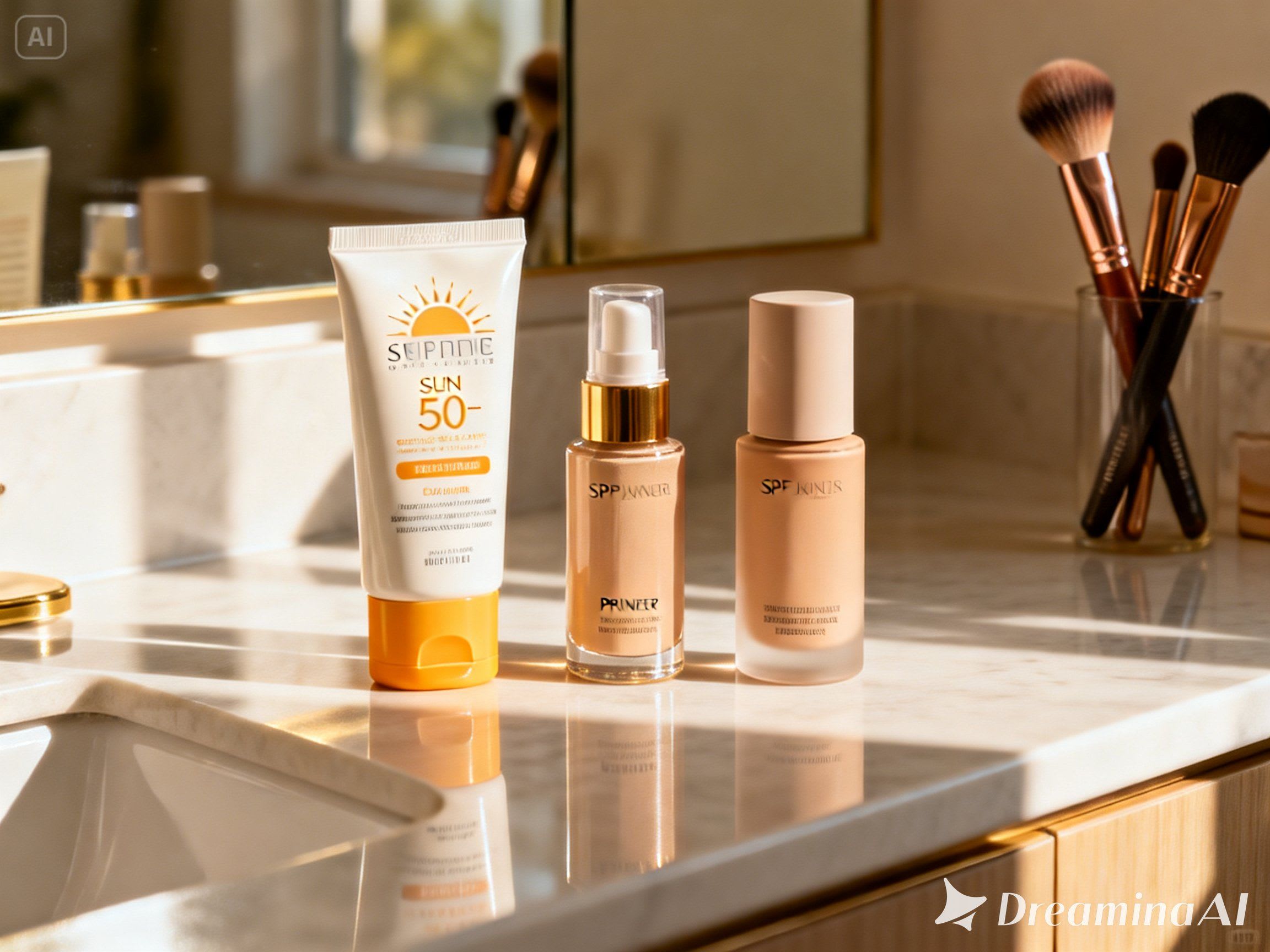
The SPF Problem Nobody Mentions in Foundation
Searching for foundation without sunscreen isn't about rejecting sun protection—it's about understanding that SPF in foundation creates a false sense of security while delivering inadequate coverage. Dermatologists confirm you need 1/4 teaspoon of sunscreen for facial protection, roughly the amount that would fill a shot glass if applied to your entire body. Nobody applies that much foundation. Most women use 1/8 to 1/10 of the required amount, meaning your SPF 30 foundation delivers approximately SPF 3-5 in actual practice. You're getting the ingredient complications of sunscreen filters without meaningful UV protection.
The real issue with foundation makeup without titanium dioxide extends beyond sun protection math. Titanium dioxide and zinc oxide—the physical UV filters in most foundation SPF formulas—create the dreaded white cast in flash photography that makes you look ghostly in wedding photos, video calls, and any situation with direct lighting. Chemical sunscreen filters like avobenzone and octinoxate don't cause flashback but frequently trigger sensitivity reactions, especially in menopausal skin experiencing increased reactivity. When you separate your sunscreen from your foundation, you control exactly which UV filters touch your skin and can reapply proper sun protection throughout the day without disrupting your makeup.
Here's what dermatologists practicing functional skincare know: layering dedicated SPF under makeup without sunscreen allows each product to perform its specific function optimally. Your sunscreen can use the most photostable, broad-spectrum filters at proper concentrations. Your foundation can focus exclusively on color correction, coverage, and skin-improving ingredients without compromising formula texture to accommodate UV filters. This separation also solves the reformulation problem—when sunscreen regulations change or certain filters get restricted, your foundation doesn't become obsolete or require switching to a completely different product.
Why Titanium Dioxide Specifically Causes Problems
The quest for foundation without titanium dioxide addresses multiple concerns that mainstream beauty advice dismisses. Beyond flash photography issues, titanium dioxide in nano-particle form has documented penetration through compromised skin barriers—exactly what many menopausal women experience as estrogen declines. While larger particle titanium dioxide sits safely on skin surfaces, many foundations use nano-sized particles for cosmetic elegance, creating a sheer finish instead of the chalky appearance of traditional mineral sunscreens. Women seeking truly foundations without SPF and titanium dioxide often have specific health concerns about nanoparticle exposure or have experienced persistent skin reactions they've finally traced back to mineral UV filters.
The contradiction nobody addresses: titanium dioxide serves dual purposes in foundation formulas—it's both a UV filter and an opacifying pigment that helps create coverage. This is why powder foundation without titanium dioxide formulas are especially rare. Powder foundations rely heavily on titanium dioxide for both sun protection claims and the opacity needed to even skin tone. When you eliminate it, formulators must use alternative minerals like mica, silica, and iron oxides to achieve similar coverage, which changes the entire texture and finish. SPF-free powder foundations often appear more translucent and require different application techniques to build adequate coverage.
Strategic Layering for Actual Sun Protection
The proper approach to foundation without SPF requires building a deliberate skincare-to-makeup system. Start with a dedicated facial sunscreen at the correct 1/4 teaspoon amount, allowing it to set for 15 minutes before any makeup application. Modern sunscreen technology has eliminated the heavy, greasy formulas that once made this layering impossible—look for gel-cream or serum textures with silicone-based formulations that dry to an almost imperceptible finish. This base layer provides legitimate broad-spectrum protection that foundation SPF can never deliver.
Once your sunscreen sets, SPF-free foundation applies more smoothly because it's not fighting against the mineral particles already on your skin. You avoid the pilling, balling, or uneven texture that happens when layering one SPF product over another—a common problem when women apply sunscreen under foundation that also contains UV filters. The foundation makeup without sunscreen category includes virtually every high-performance formula preferred by makeup artists because these foundations prioritize adhesion, color accuracy, and longevity without the constraints of incorporating sun protection.
- For photography or video: SPF-free foundation eliminates white cast from flash or ring lights while allowing proper sun protection underneath
- For sensitive skin: Removing UV filters from foundation reduces potential irritants when you're already using dedicated sunscreen
- For proper reapplication: Use SPF powder or setting spray over SPF-free foundation to refresh protection without removing makeup
- For ingredient control: Choose your preferred UV filter type separately from your foundation formula preferences
The misconception that drives poor purchasing decisions: believing that foundation with SPF provides adequate protection for outdoor activities or extended sun exposure. Even if you applied the full 1/4 teaspoon of SPF foundation required for labeled protection, you'd need to reapply every two hours during sun exposure—which means completely removing and reapplying your makeup throughout the day. This impractical requirement is why dermatologists universally recommend separate sunscreen under SPF-free foundation, with touch-up options like powder sunscreen for reapplication without disturbing your base.
If you're building a complete clean beauty routine, pair your SPF-free foundation with our guide to non-toxic foundation options for menopausal skin that addresses both ingredient safety and hormonal skin changes without the complication of built-in sun protection.
When SPF-Free Foundation Strategy Backfires
The advice to always choose foundation without SPF fails for one specific group: women who genuinely won't apply separate sunscreen. If your realistic behavior pattern involves applying only foundation in the morning with no additional skincare steps, then foundation with SPF—despite its inadequate protection level—still provides more UV defense than nothing. The dermatologically perfect routine of dedicated sunscreen plus SPF-free foundation only works if you'll actually execute both steps consistently. Some protection always beats zero protection, even when that protection falls short of ideal.
Another scenario where conventional SPF-free advice creates problems: extremely sensitive skin that reacts to every dedicated sunscreen formula you've tried. Some women discover that the only sunscreen they tolerate is the minimal amount incorporated into tinted moisturizers or foundation formulas. While this doesn't provide adequate protection, it may represent the maximum UV defense achievable for someone with severe rosacea, eczema, or post-procedure skin that cannot tolerate standard sunscreen concentrations. In these cases, foundation with light SPF becomes harm reduction rather than optimal skincare.
The practical limitation nobody mentions about the separate sunscreen strategy: it adds 15-20 minutes to your morning routine. Sunscreen requires proper drying time before foundation application to prevent pilling and ensure both products perform correctly. Women with young children, demanding jobs, or limited morning bandwidth may find this timing requirement makes the theoretically superior approach practically impossible. If choosing between rushing the layering process—which compromises both sun protection and makeup application—versus using foundation with SPF applied correctly, the latter might deliver better real-world results despite theoretical disadvantages.
The critical trade-off between ideal and achievable: dermatologists recommend SPF-free foundation with dedicated sunscreen because it delivers superior, reapplicable protection. Makeup artists prefer SPF-free foundation because it performs better in all lighting conditions and allows greater formula sophistication. But individual circumstances—your skin's tolerance, your realistic morning routine, your specific sensitivity triggers—may make foundation without sunscreen the wrong choice for your situation. The goal is adequate sun protection you'll actually use consistently, not theoretical perfection you'll abandon after a week because it doesn't fit your life.
For comprehensive guidance on foundation selection that considers all variables including finish, coverage, and skin type alongside SPF decisions, explore our complete makeup guide for menopausal skin changes that addresses the full spectrum of product choices for hormonally changing skin.