
The Truth About 'Frozen Shoulder Cures in 1 Minute'
Search engines are flooded with 'frozen shoulder cures in 1 minute' and '5 exercises for instant relief' content — and most of it causes harm. Adhesive capsulitis is a condition involving progressive fibrosis of the shoulder joint capsule. No single movement, manipulation, or stretch resolves this structural change in 60 seconds. What these viral claims typically demonstrate is a technique that temporarily reduces muscle guarding or activates a pain-gate response, producing a brief sensation of relief that disappears within minutes to hours.
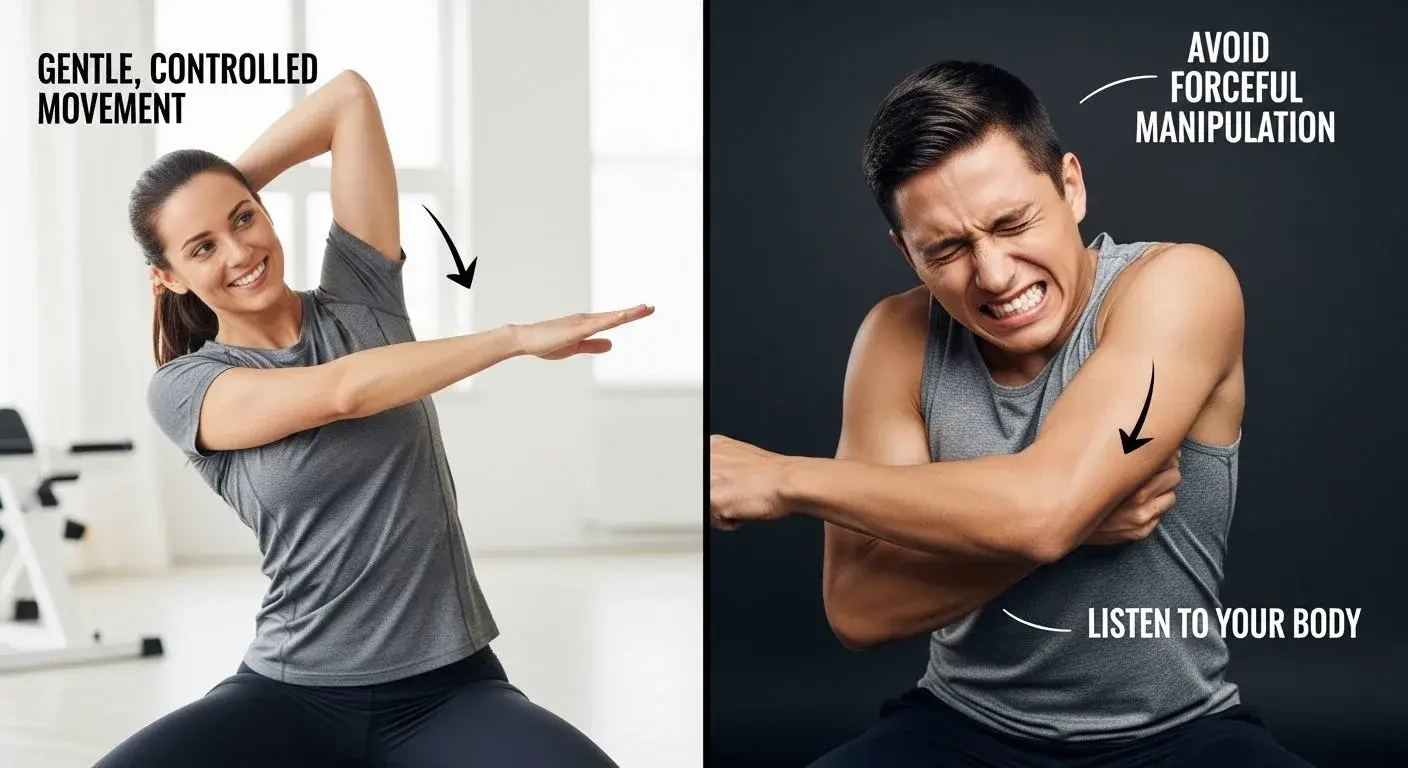
The real danger is that these high-force, rapid techniques can provoke a severe inflammatory flare that worsens your condition for days or weeks. Multiple clinical case reports document patients requiring corticosteroid injections or hospitalisation after attempting 'miracle' frozen shoulder manipulations from unqualified online sources. Rapid manipulations that force the joint past its pain threshold are at the far end of the risk spectrum.
There are, however, techniques that provide genuine rapid relief within a session — not by 'curing' the condition but by managing pain effectively enough to restore daily function while the long-term rehabilitation proceeds. This is a crucial distinction. Perimenopause body aches and joint pain often accompanies frozen shoulder and benefits from the same pain management strategies.
5 Techniques That Provide Genuine Fast Relief Without Making It Worse
The following approaches can meaningfully reduce pain within a single session. None of them cure frozen shoulder — but all of them are safe and evidence-supported for rapid symptom management.
- Moist heat application (10 minutes): Applying a damp heat pack or warm towel to the shoulder before any movement reduces muscle guarding and increases collagen extensibility. This alone provides meaningful pain relief and makes subsequent gentle movement more effective.
- Pendulum exercise (Codman): Hanging the arm freely and allowing small gravity-driven circles uses minimal muscle activation, avoids impingement, and gently unloads the joint. Many people report significant relief after just 3 to 5 minutes of pendulum movement.
- Transcutaneous electrical nerve stimulation (TENS): A TENS unit applied to the shoulder region activates the pain-gate mechanism at the spinal cord level, providing short-term relief that can last 30 to 60 minutes — enough to sleep more comfortably or complete a rehabilitation session.
- Supported arm positioning: Sitting with the affected arm resting on a pillow at a 45-degree forward angle takes the shoulder out of the pain-provoking position and can resolve sharp resting pain within minutes.
- Short-term corticosteroid injection: Not a home remedy, but the most evidence-backed intervention for rapid pain reduction in the freezing stage. A single injection can reduce pain by 50 to 70 percent within 48 to 72 hours, creating a window to begin rehabilitation effectively.
Working out with frozen shoulder is possible but requires careful exercise selection. Lower body training, cardiovascular walking, and core work can continue without restriction. Upper body work should be limited to pain-free ranges and completely avoid overhead loading. Back and hip pain during menopause — which often coexists with frozen shoulder — should also be factored into your modified training plan.
Frequently Asked Questions
Is there a frozen shoulder exercise that gives instant relief?
No exercise cures frozen shoulder instantly, but the pendulum exercise relieves pain fastest for most people. Letting the arm hang loosely in small gravity-driven circles for 3 to 5 minutes after applying moist heat reduces joint compression and muscle guarding, often providing noticeable relief within the session.
Can I still go to the gym with frozen shoulder?
Yes, the gym is safe with frozen shoulder as long as you avoid overhead pressing, pull-up variations, and any movement causing pain during or after the session. Lower body training, cardio, and core work are unrestricted. Your physiotherapist can create a modified gym plan appropriate for your current stage.
What is the fastest way to fix a frozen shoulder?
The fastest clinical pathway is a corticosteroid injection (to reduce acute inflammation) followed immediately by physiotherapy (to restore range of motion). In severe or treatment-resistant cases, hydrodilatation or shoulder manipulation under anaesthesia shortens recovery further. None of these are instant — but they represent the fastest evidence-backed timeline.
Is frozen shoulder pain worse during menopause?
Yes, pain perception can be amplified during menopause. Low oestrogen increases central pain sensitisation, meaning the nervous system registers pain signals at lower thresholds. Women in perimenopause or menopause may experience frozen shoulder as more severe than the same degree of inflammation would produce at a younger age.
Sources
- Corticosteroid Injections for Frozen Shoulder: Clinical Evidence. pubmed.ncbi.nlm.nih.gov — PubMed / NIH
- Frozen Shoulder Treatment Overview. nhs.uk — NHS
- Pain Sensitisation and Estrogen: Central Nervous System Pathways. pubmed.ncbi.nlm.nih.gov — PubMed / NIH