
Green eyeshadow has moved well past its 90s reputation for being loud or hard to wear. Used the right way, it's one of the most flattering shades on the wheel — it plays off warm and cool eye colors alike, and it ranges from a barely-there sage wash to a full smoky emerald that holds its own at night. This guide walks through the main green eye makeup looks worth trying, how to actually apply them, and which shades to pair with green so the color reads intentional instead of overdone.
Why Green Eyeshadow Works So Well
Green sits opposite red-brown tones on the color wheel, which is why it makes brown eyes look warmer and richer, and why it adds contrast to hazel and blue eyes without fighting them. It's also a color with a lot of range: cool-toned pine and forest greens read more sophisticated and are easy to wear during the day, while warm olive and khaki shades feel more neutral and blend easily into a everyday eye makeup routine. Because green eyeshadow spans so many undertones and intensities, most of the work is choosing the right shade family for the look you want, not forcing a single 'correct' way to wear it.
Green Eyeshadow Looks to Try
Green eye makeup isn't one look — it's a family of looks that share a shade but land very differently depending on placement and intensity. Here are the four that come up most often, from the easiest to wear to the most dramatic.
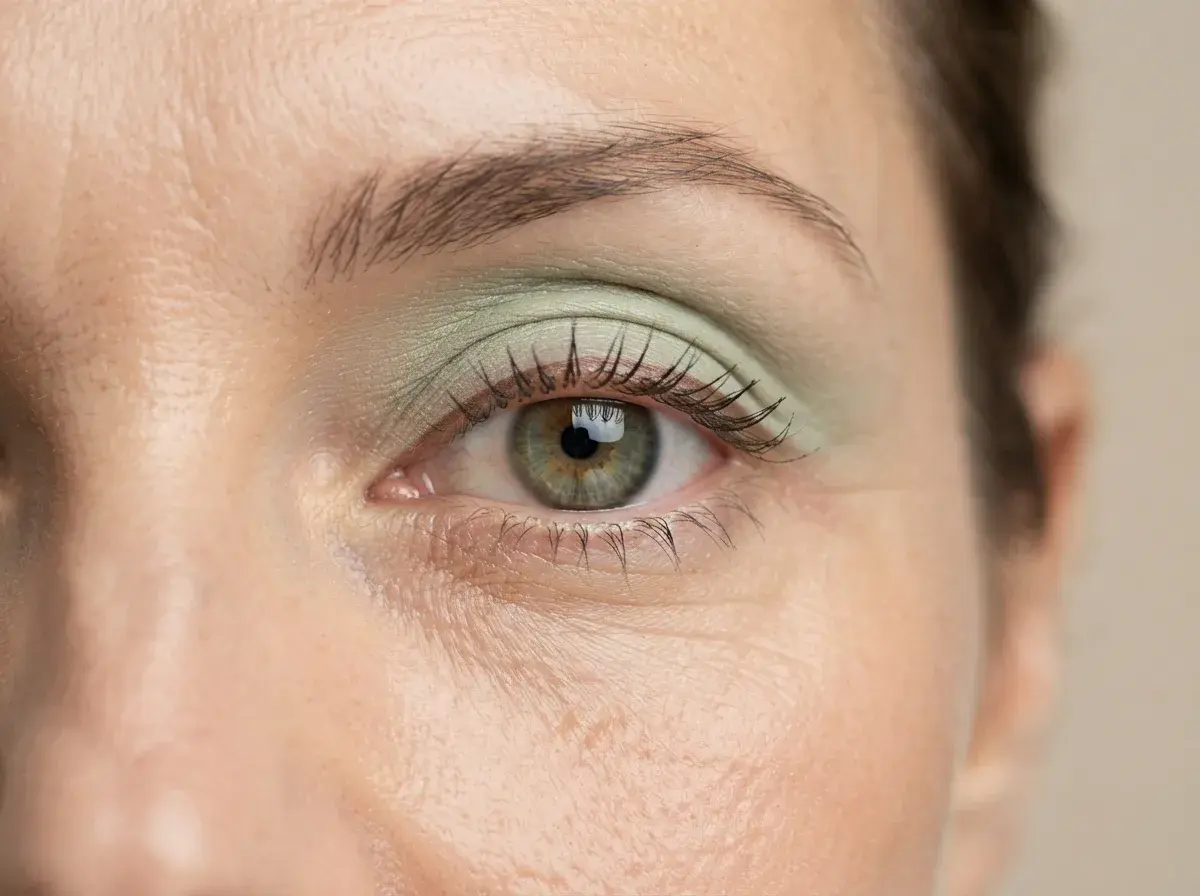
Soft Green Eyeshadow
A soft green look uses a pale, slightly desaturated green — think sage, mint, or celadon — swept across the lid with a neutral transition shade in the crease. Keep the green concentrated on the center of the lid rather than carrying it all the way to the brow bone, so it reads as a wash of color rather than a solid block. This is the easiest entry point if you haven't worn colored eyeshadow before, since it behaves more like a neutral than a statement shade.
Olive Green Eyeshadow
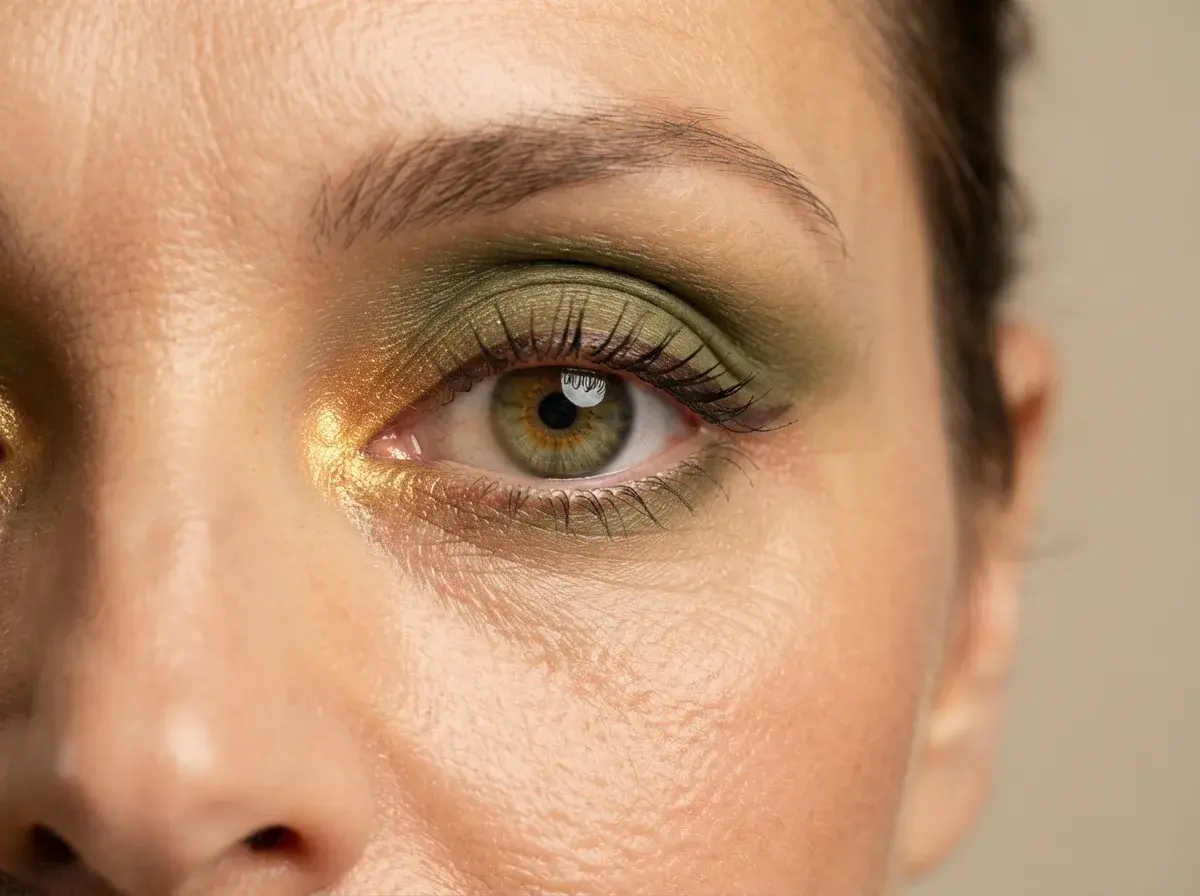
Olive green leans warmer and more muted than a true green, closer to khaki with a gray undertone. It works especially well as an all-over lid shade for hazel and brown eyes, since the warmth in the shadow pulls out warmth in the iris. Pat it on with a flat shader brush for more saturation, or buff it in with a fluffy brush for a softer, more diffused finish.
Dark Green Eyeshadow
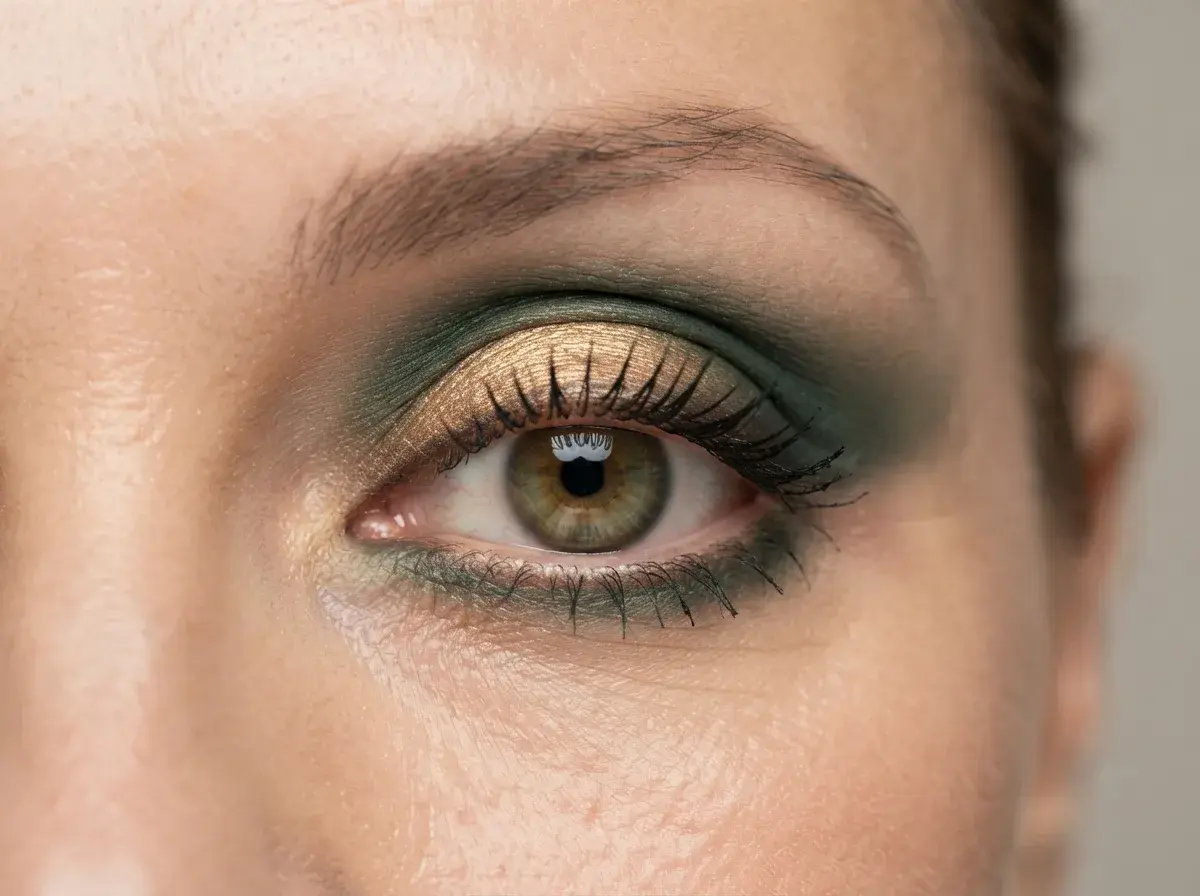
Deep forest, hunter, or emerald green eyeshadow gives the same definition a dark brown or black shadow would, but with more depth. Concentrate the darkest shade along the upper lash line and just into the outer corner, then blend upward and outward so the edge softens rather than stopping in a hard line. Dark green also works well as a subtler alternative to black eyeliner along the lower lash line.
Green Smokey Eye
A green smokey eye takes the dark green placement above and extends it into a full smoky shape: a mid-tone green through the crease, a darker green or brown-black in the outer corner and lower lash line, and a lighter shimmer in the center of the lid to keep it from looking flat. The technique is the same as a traditional smokey eye — build in thin layers and blend at every step — the color is just doing the work that gray or brown usually does. If your eyelids are hooded, the placement needs a small adjustment so the color stays visible once your eyes are open; our
smokey eye guide for hooded eyes walks through exactly where to shift the crease color.
How to Apply Green Eyeshadow: Step-by-Step Tutorial
- Prime the lid and set it with a thin layer of translucent powder or a neutral eyeshadow close to your skin tone — this keeps green shadow from oxidizing or looking patchy once it's blended.
- Place a neutral transition shade — a soft taupe or brown — in the crease first and blend it back and forth until the edges disappear. This gives the green somewhere to fade into instead of stopping abruptly.
- Pack your chosen green onto the lid with a flat brush, starting at the center and working outward. Packing rather than swiping keeps the pigment saturated instead of streaky.
- If you're building a smokey or dark green look, add a deeper green or brown-black to the outer third of the lid and just under the lower lash line, then blend where the two colors meet with a clean fluffy brush until you can't see a line.
- Add a touch of shimmer or a lighter shade to the center of the lid to catch the light and keep the eye from looking flat, then finish with liner and mascara.
If your eyes are hooded, place the transition shade and any crease color slightly above your natural fold, not inside it. On hooded eyes, color placed only in the crease can disappear once the eye opens. For a full breakdown of placement, blending order, and mistakes specific to this eye shape, see our complete
Green Eyeshadow for Everyday Wear
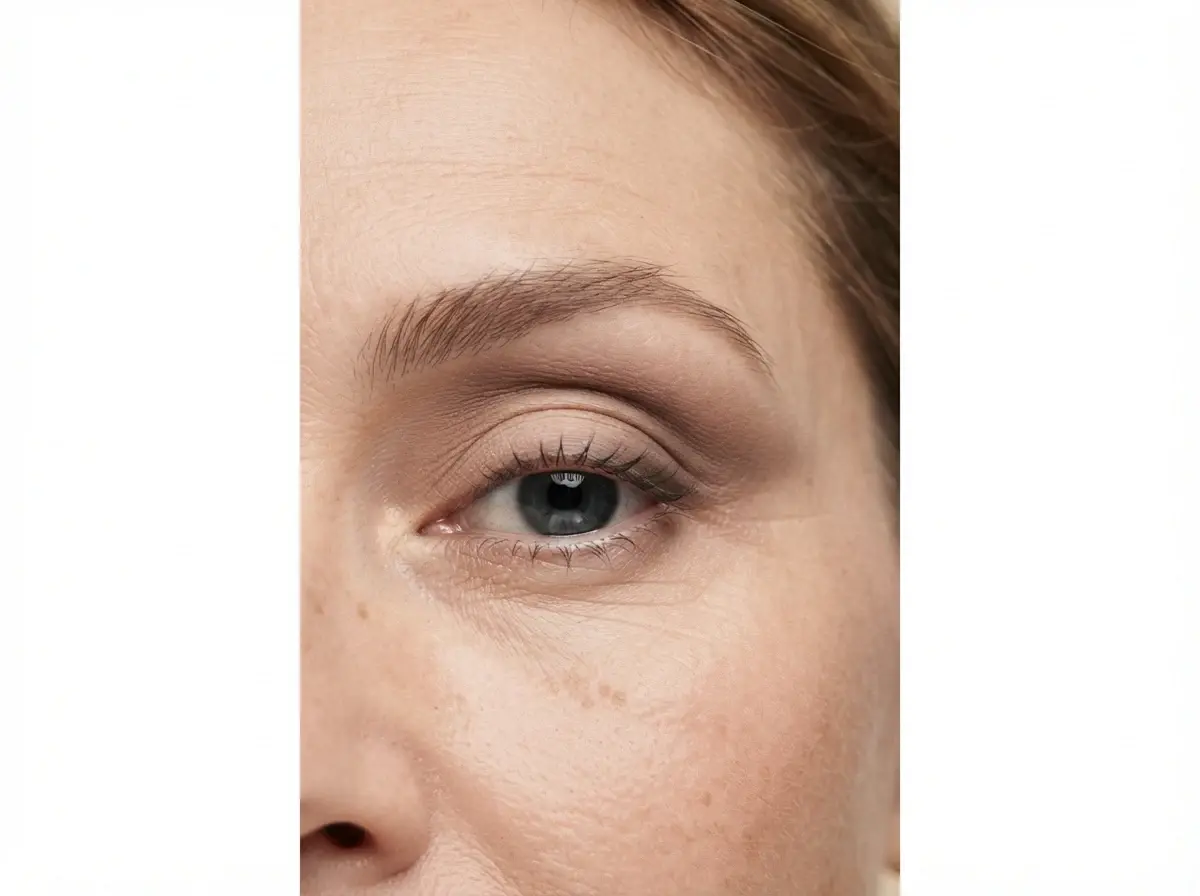
For daytime, keep the green muted and the placement simple. A single wash of sage, olive, or soft khaki across the lid, blended with a neutral transition shade and finished with brown or dark brown liner instead of black, reads as polished rather than costume-like. Matte and satin finishes work better than heavy shimmer for daytime, since they photograph and hold up better under office lighting.
Green Eyeshadow for Evening Looks
For evening, this is where the deeper, more saturated greens and full smokey placement come in. Add a metallic or shimmer green to the center of the lid, deepen the outer corner and lower lash line, and consider a thin strip of black or dark green liner along the upper lash line to sharpen the shape. A touch of gold or copper on the inner corner brightens the whole eye and keeps a dark green look from feeling heavy.
Green Eyeshadow Color Combinations
Green rarely looks best worn completely alone. A few pairings that consistently work:
- Green and gold — warms up a cool green and adds shine to the center of the lid.
- Green and brown — the easiest, most everyday-friendly pairing; brown in the crease keeps green from looking isolated on the lid.
- Green and copper — copper in the outer corner adds warmth and depth without competing with the green.
- Green and navy — a cooler pairing that works well for a moodier evening look, with navy deepening the outer corner instead of black.
- Green and champagne — a pale champagne shimmer on the lid or inner corner lightens a dark green look for daytime wear.
Common Green Eyeshadow Mistakes to Avoid
- Skipping the transition shade, which leaves a hard, unblended edge where the green stops.
- Using the same intensity of green all over the lid instead of building it up in the crease and outer corner, which flattens the shape of the eye.
- Pairing a very saturated green with black eyeliner and dark brows without any warm tone nearby, which can look harsh rather than polished.
- Applying color only inside the crease on hooded eyes, where it becomes invisible once the eyes are open.
What You Need to Get Started
You don't need a huge green-focused palette to build these looks. A neutral transition shade, one mid-tone green, one deeper green or brown-black, and a shimmer shade cover soft, olive, dark, and smokey looks between them. A flat shader brush for packing on color, a fluffy blending brush, and a smaller pencil brush for the lower lash line are the only tools that really matter — technique and blending do more work than the number of shadows in the palette.
Frequently Asked Questions
What eyeliner goes with green eyeshadow?
Brown or dark brown liner keeps the look softer and more daytime-friendly, while black or dark green liner adds more definition for evening. Avoid pairing a very saturated green with heavy black liner on both the upper and lower lash line, since it can overwhelm the color.
Is green eyeshadow hard to wear during the day?
Not if the shade is muted and the placement is kept simple. A soft sage or olive wash with a neutral crease and brown liner reads as an everyday neutral rather than a statement look.
Does green eyeshadow work on hooded eyes?
Yes, with one adjustment: place the crease and transition color slightly above your natural fold rather than inside it, so the color stays visible with your eyes open. Our hooded eye makeup guide covers this placement in more detail.
What colors make a green smokey eye look less harsh?
Warm tones nearby soften a dark green smokey eye — a gold or champagne shimmer on the lid, or a swipe of copper in the outer corner, both keep the look from feeling too cool or heavy.
Can green eyeshadow be worn with any eye color?
Yes. Warmer olive and khaki greens tend to flatter brown and hazel eyes especially well, while cooler forest and emerald tones add contrast to blue and gray eyes, but the shade family matters more than matching it to a specific eye color.
Related Eye Makeup Guides
For more on shaping and blending techniques that pair well with color, see our
hooded eye makeup guide and our smokey eye for hooded eyes tutorial.
Final Takeaway
Green eyeshadow works best when it's treated like any other eyeshadow family — built up in layers, given a transition shade to blend into, and paired with a warm or cool tone that suits the depth of green you're using. Start with a soft, muted shade if you're new to wearing color, and move toward a full green smokey eye once the blending technique feels comfortable.