
Green eyeshadow is one of the easiest ways to make a makeup look feel deliberate without leaving wearable territory. A soft sage wash on the lid reads almost like a neutral. Olive turns into an earthy, smudged everyday eye. Emerald and forest green take the same eye somewhere far more dramatic. The difference is rarely the product itself. It comes down to the shade of green, the finish, and where you place it.
This guide collects 15 green eyeshadow looks, each built around a different color, finish or placement, so you can choose one that suits the occasion and your comfort level. After the gallery you will find a guide to choosing between sage, olive, emerald and forest green, a color-combination reference, a beginner-friendly application tutorial, and fixes for the most common problems.
15 Green Eyeshadow Looks to Try
Each look below notes the main colors, the finish, where the color sits on the eye and when it works best. The looks are easy to adjust: a matte green can usually be swapped for a shimmer, and most looks soften with extra blending or intensify when you build color in thin layers.
1. Soft Sage Green Wash
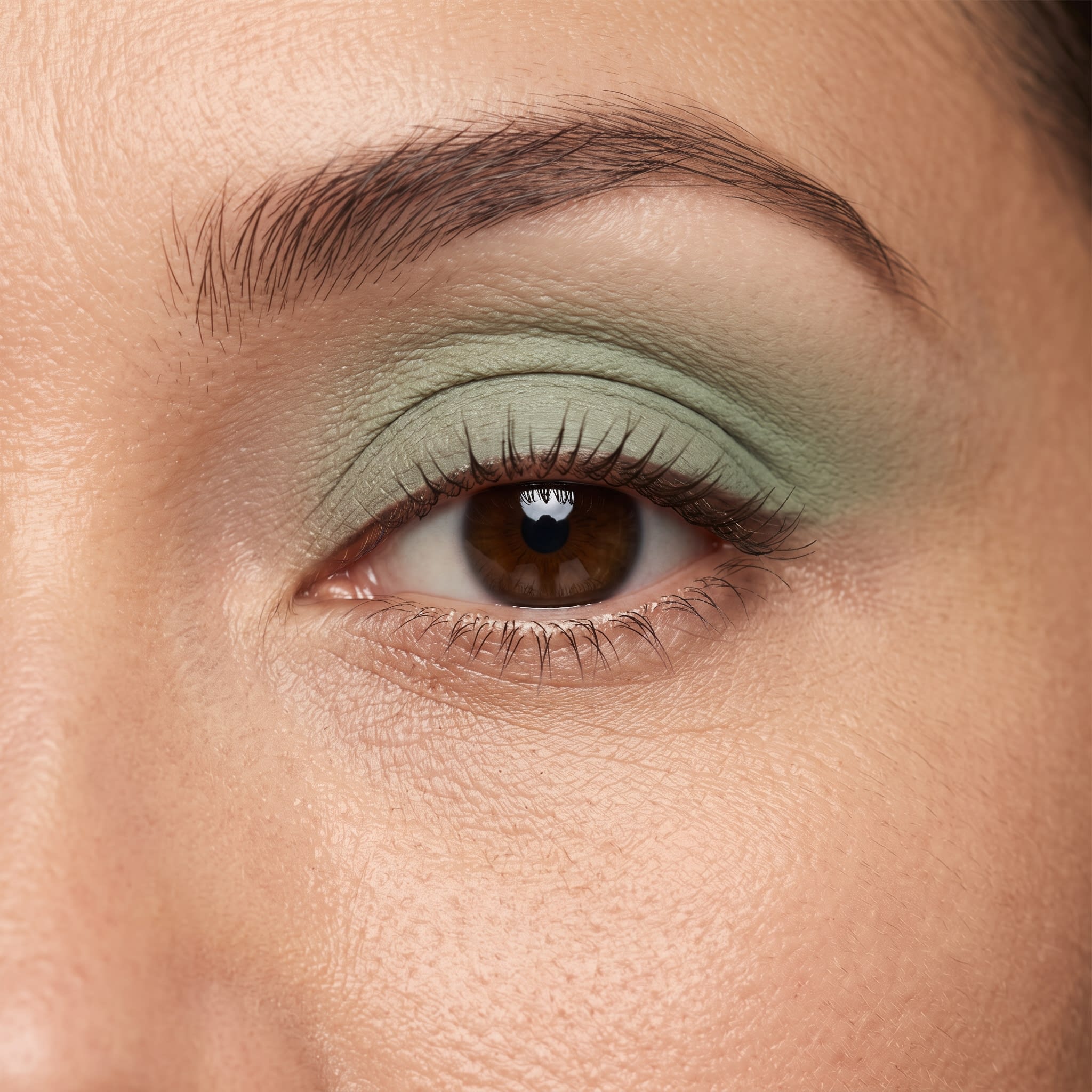
Sage is a gray-leaning, muted green, which is why it works so well as a first step into color. Sweep a matte or satin sage across the mobile lid with a flat shader brush, then blend the upper edge into the crease with a fluffy brush so no hard line remains. Finish with a thin brown-black line close to the upper lashes and a coat of mascara. The result reads as a soft tint rather than a statement. Best for everyday wear, daytime events and anyone trying green for the first time.
2. Olive Green Everyday Eyes
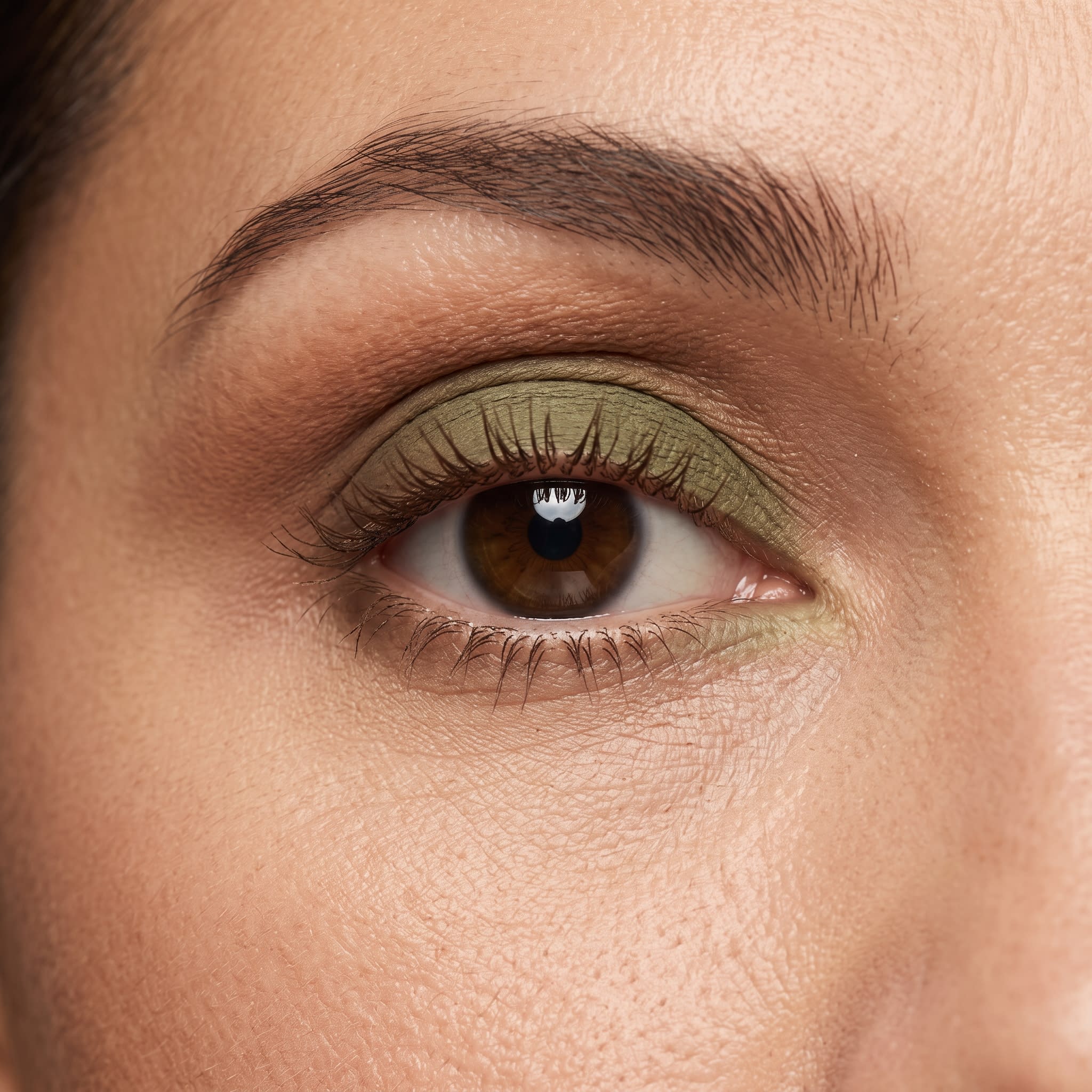
Olive has a yellow-brown base, so it sits somewhere between a neutral and a color. Pat a matte olive over the lid, then place a warm brown just above and slightly past the outer corner to give the eye shape. Smudge a little of the same olive along the lower lash line. Because olive shares so much with brown, it tends to look intentional instead of costume-like. Best for work, errands and a polished look with minimal effort.
3. Emerald Green Glam
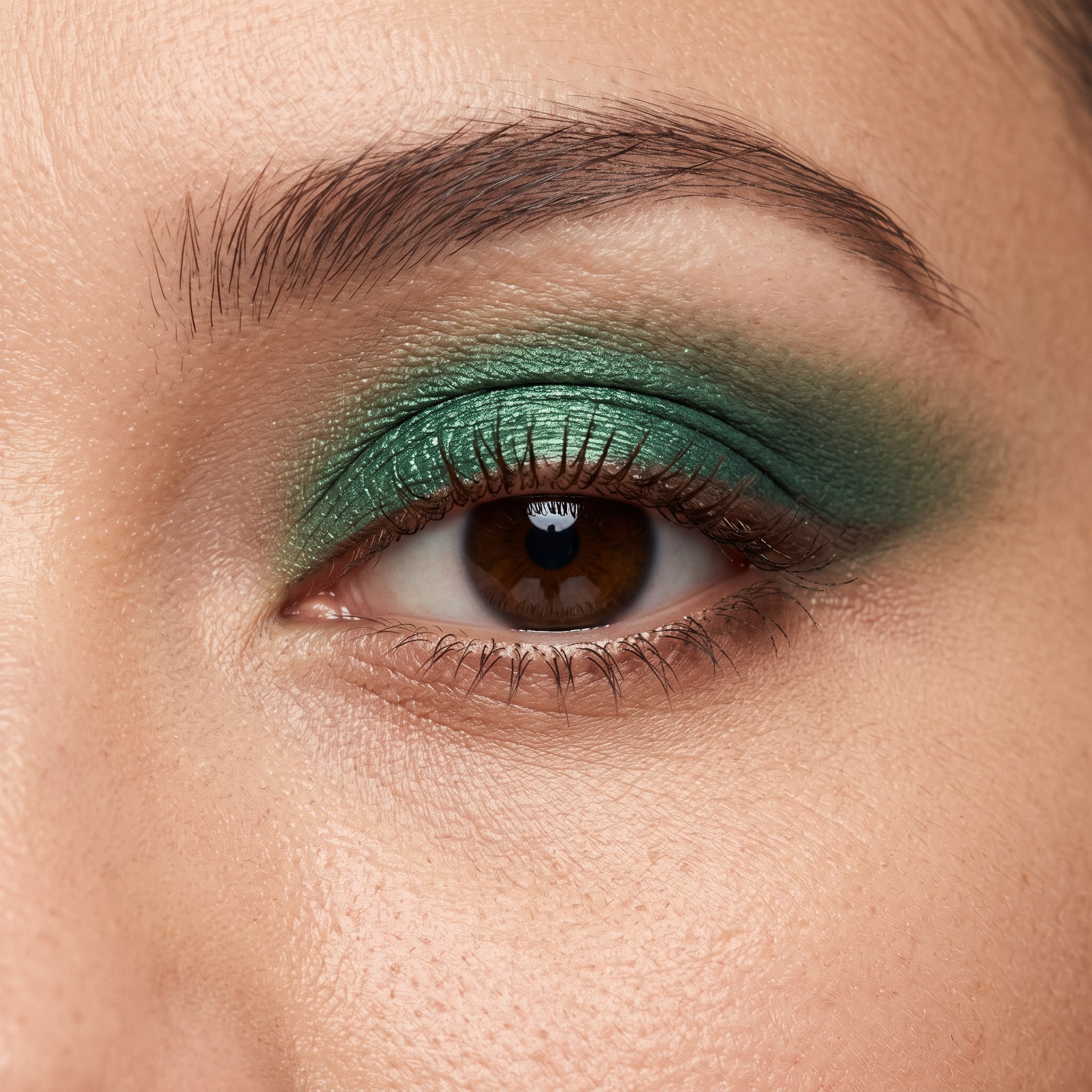
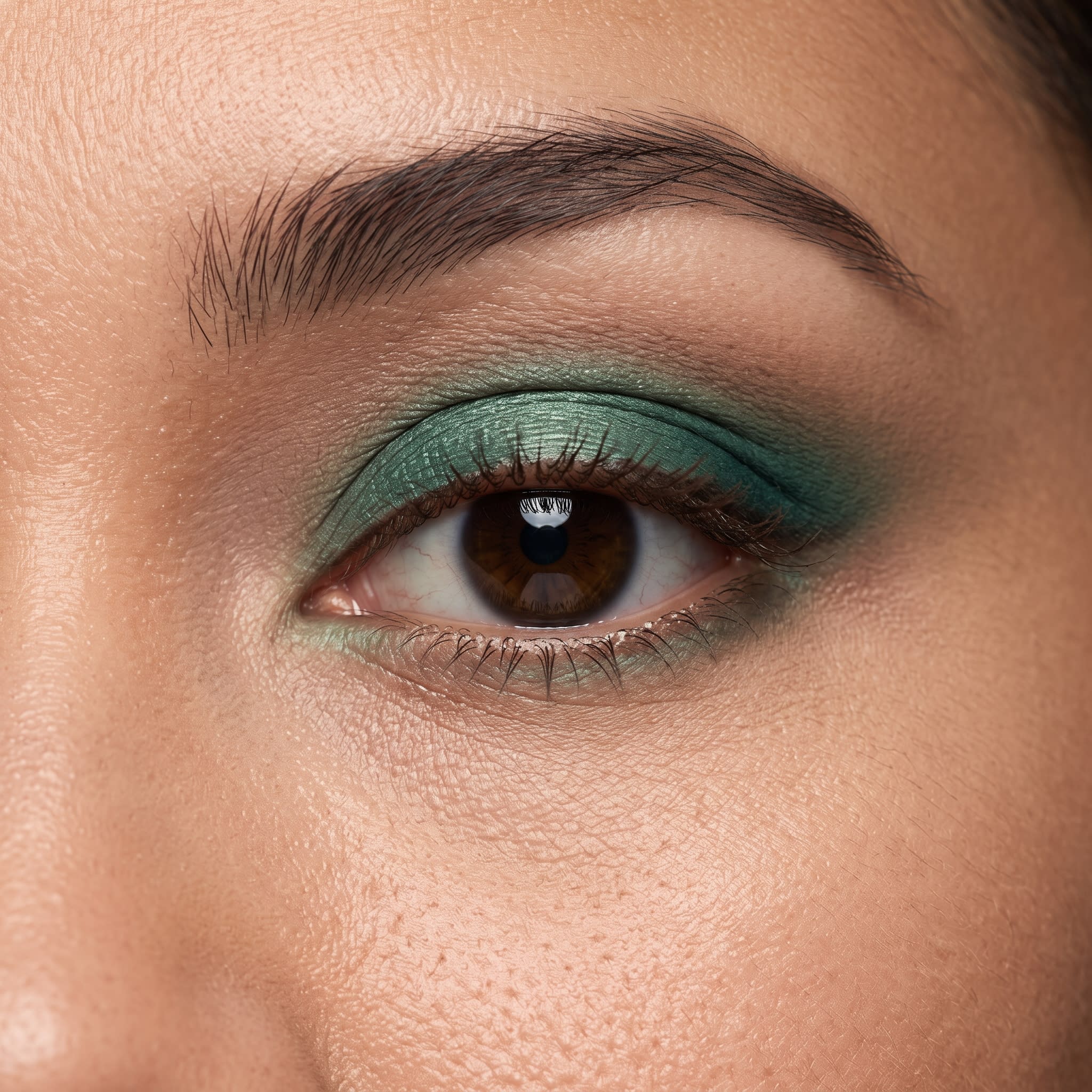
Emerald is a saturated, blue-leaning green with real depth. Press a creamy or foiled emerald shimmer onto the center and outer half of the lid with a fingertip or dense brush for the strongest payoff, then blend a deeper green into the outer corner. Keep everything else restrained: soft brown liner, clean lashes and neutral cheeks. Best for weddings, parties and evenings when you want one clear focal point.
4. Forest Green Smokey Eye
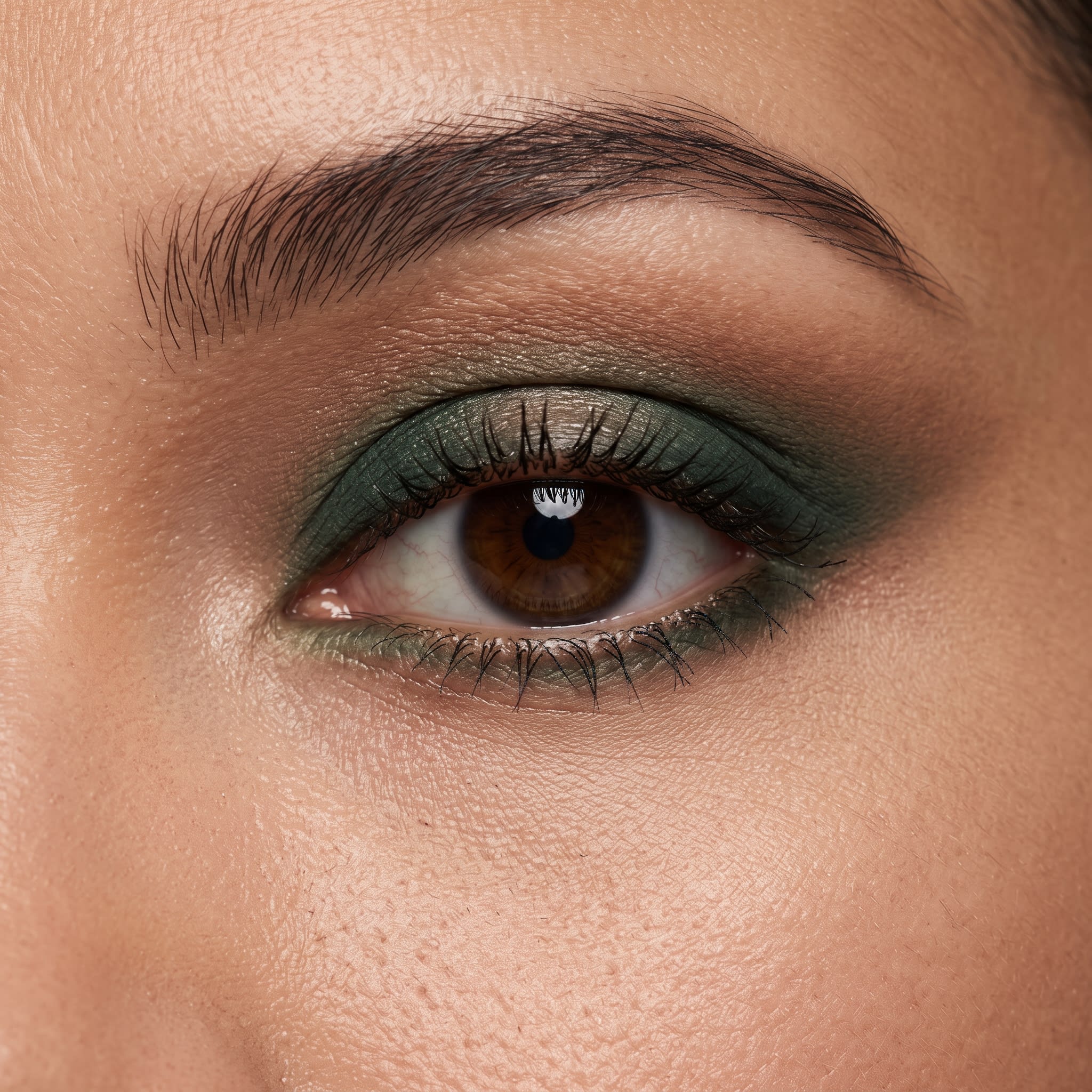
Forest green is a softer, less severe alternative to black in a classic smokey eye. Build a dark green along the upper lash line and outer third, smoke it up and outward, and repeat a thinner version along the lower lash line. A warm brown in the crease blurs the edges. Keep the center of the lid slightly lighter if you want the eye to look open. For a full walkthrough of the smokey technique on lids with less visible space, see our smokey eye for hooded eyes tutorial. Best for evenings and cooler-weather makeup.
5. Green and Gold Eyeshadow
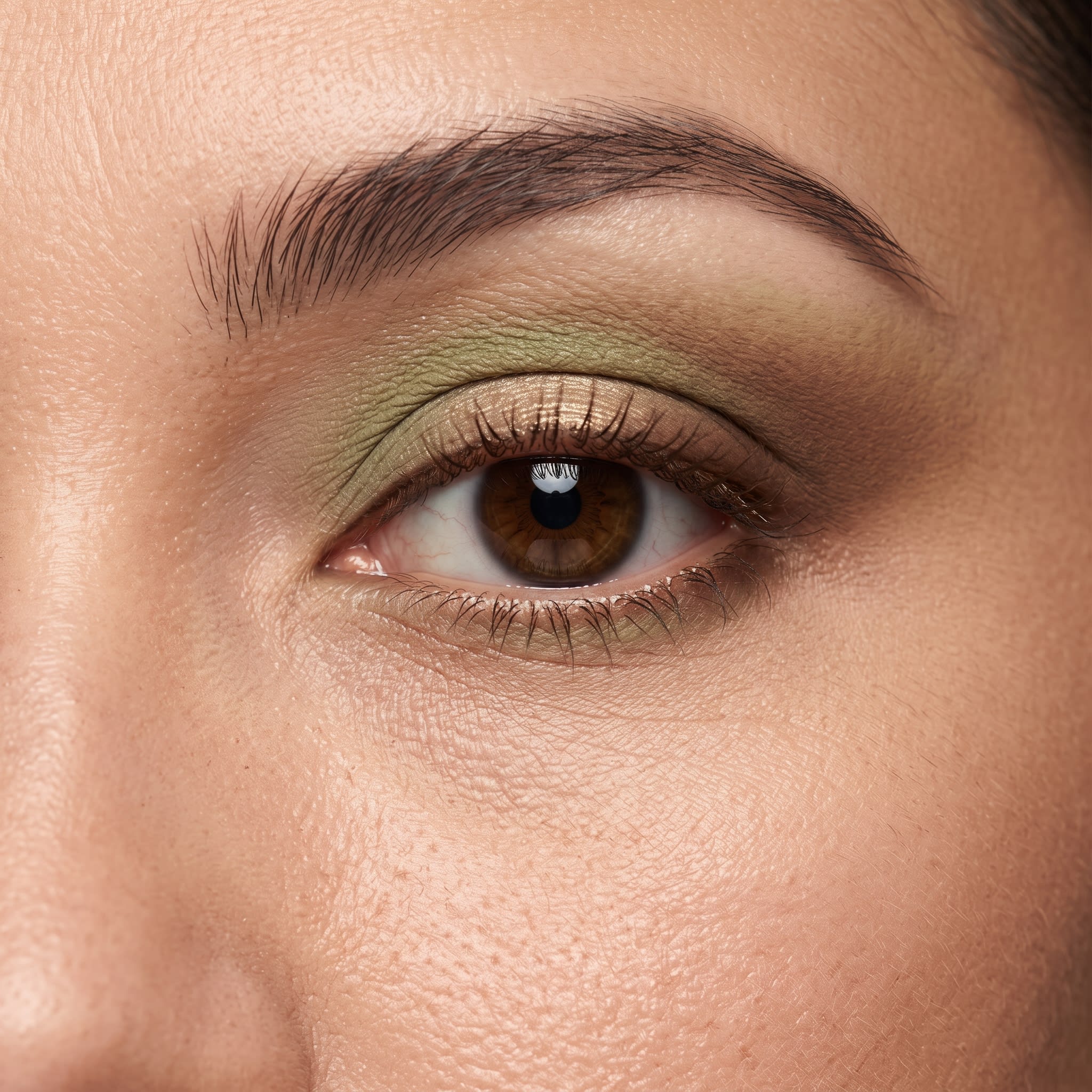
Gold is one of the most flattering partners for green because its warmth lifts both muted and deep shades. Place a medium olive or emerald on the outer two-thirds of the lid and tap a gold shimmer onto the center of the mobile lid, blending where the two meet. Add a touch of gold to the inner corner. The colors catch light differently, which gives the lid dimension without any extra products. Best for parties, holidays and photos.
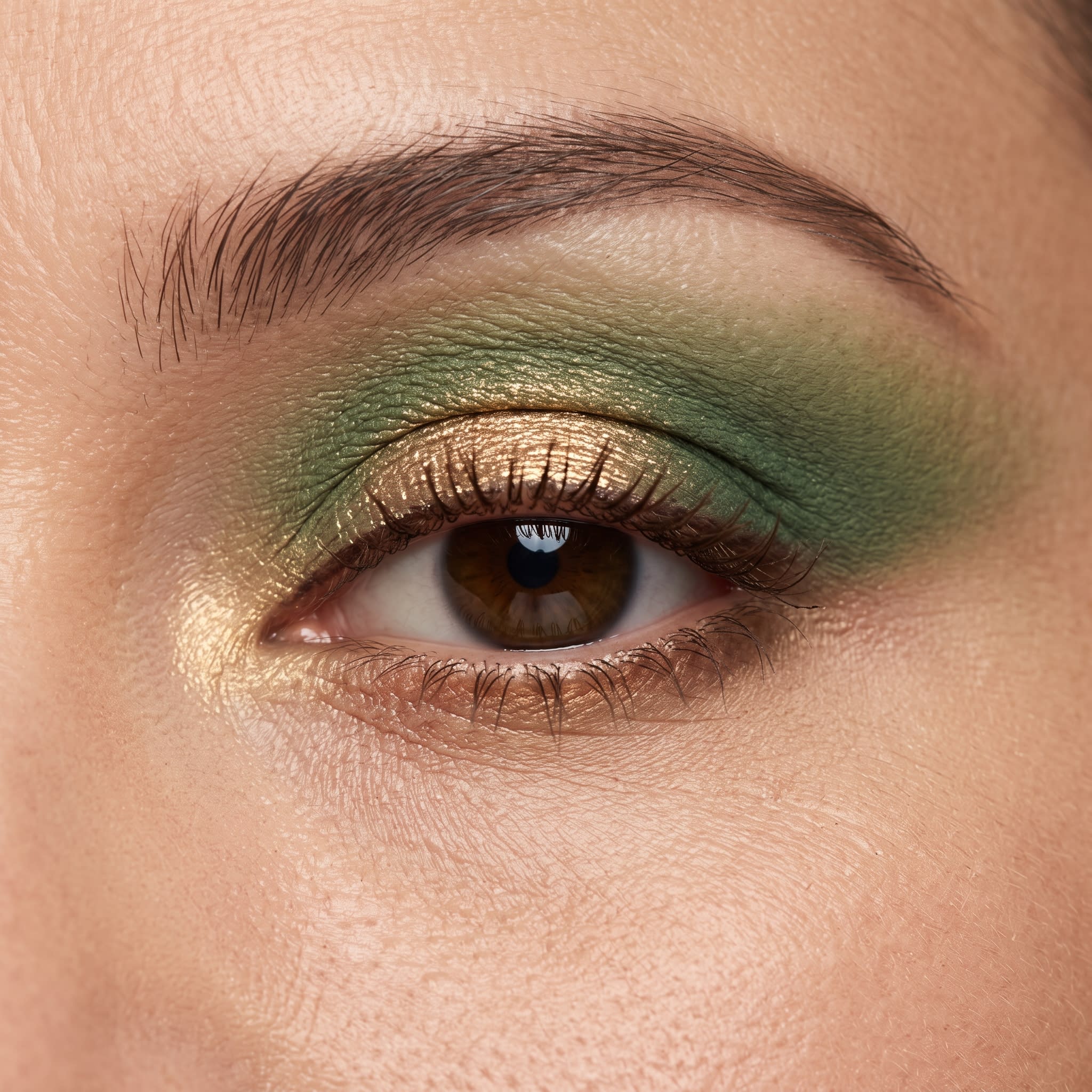
6. Green and Bronze Eyeshadow
Bronze keeps green warm and earthy. Sweep a satin bronze through the crease and outer corner, then place a mossy green across the lid and blend where they meet so the transition looks like a single gradient. Define the upper lash line with deep brown liner. Compared with the gold version, this look is deeper and quieter. Best for autumn and for anyone who prefers warm, earthy color.
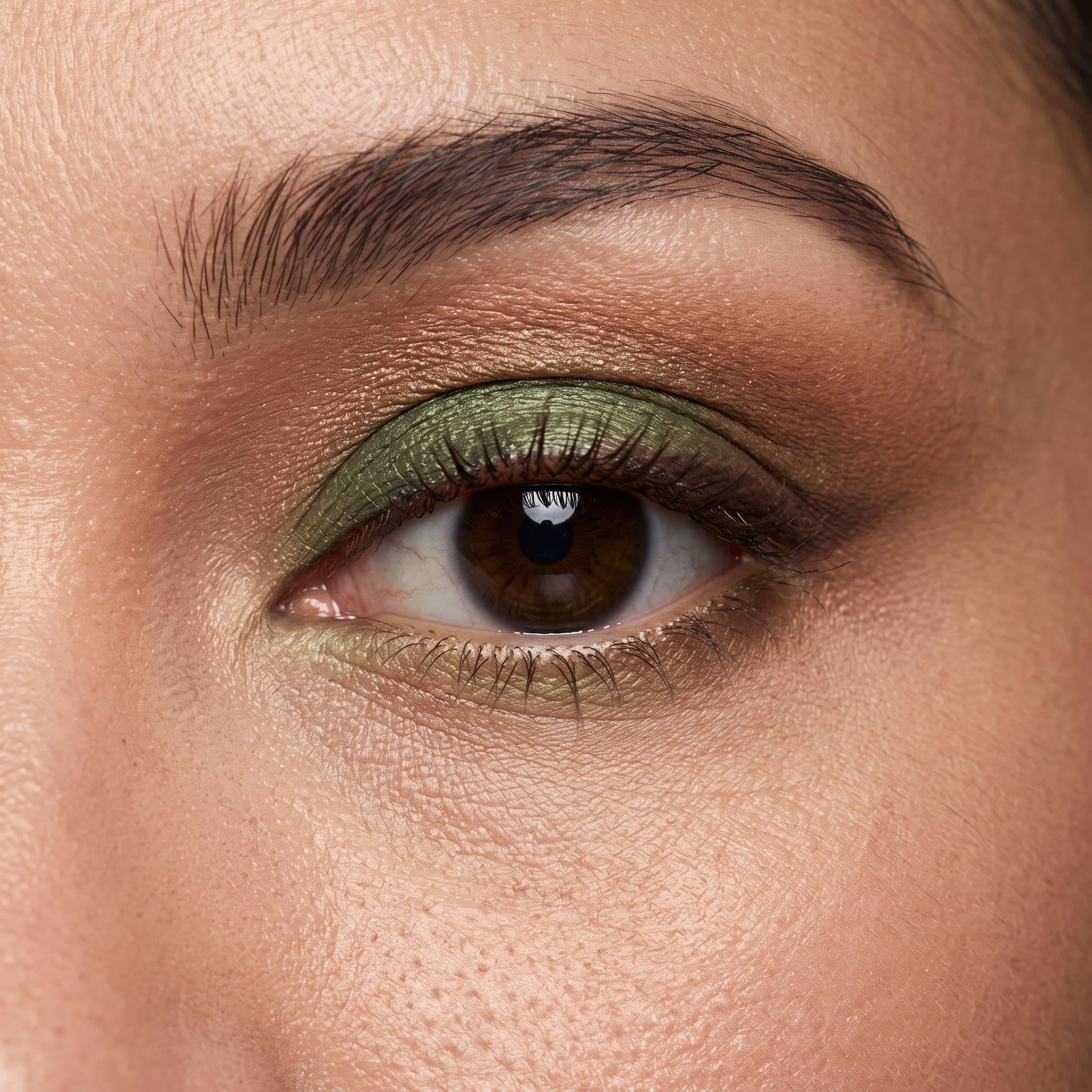
7. Subtle Green Shimmer
Sometimes one shimmery shade is enough. Choose a finely milled green shimmer in a pale to medium depth and pat it onto the lid with a fingertip so the sparkle sits evenly instead of scattering. Skip the crease color and keep the rest of the face simple. The shimmer does the work in daylight and in photos. Best for brunches, low-effort days and a hint of color.
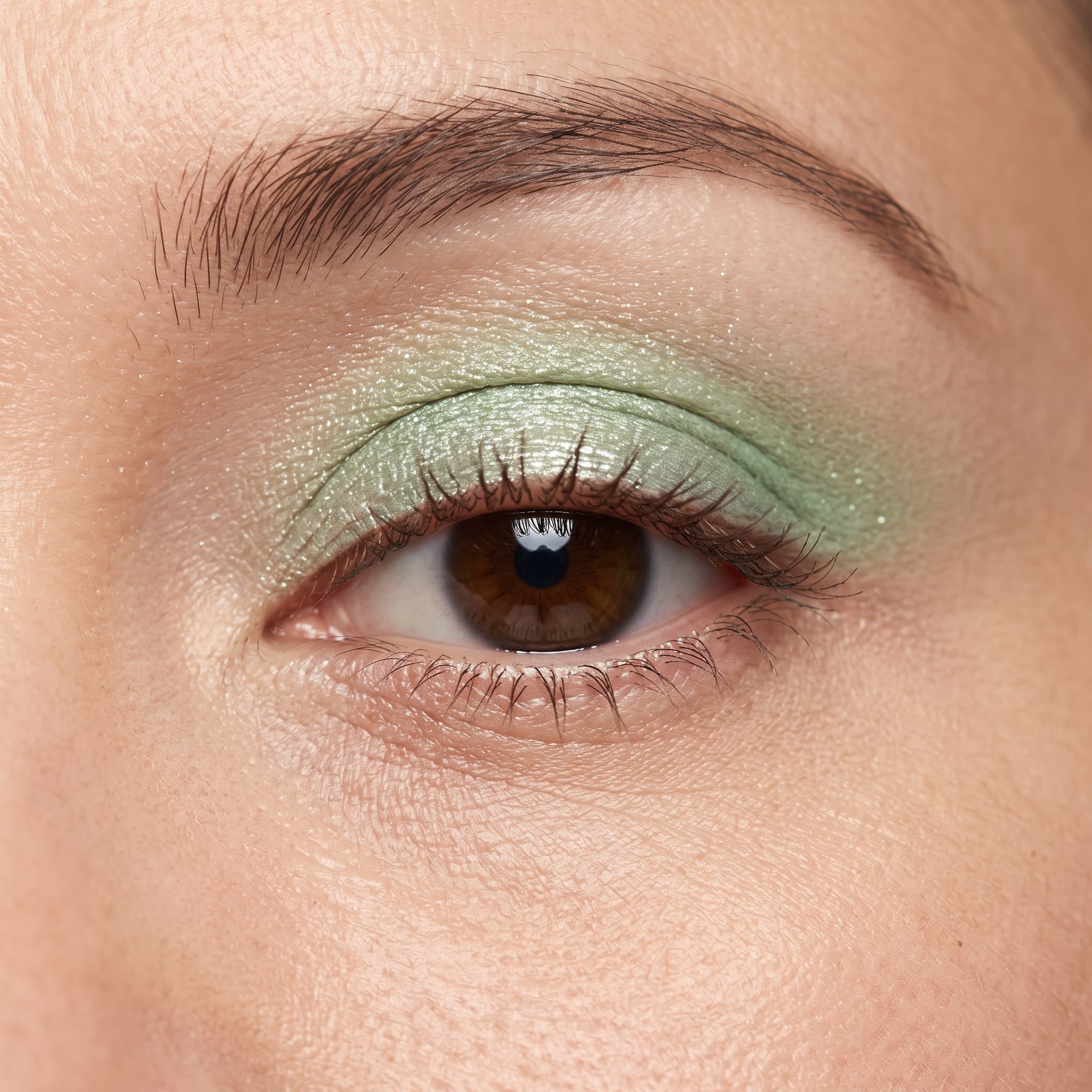
8. Matte Green Monochrome
A monochrome look uses one matte green in different depths. Choose a mid-tone such as moss or fern, wash a lighter layer across the lid, then build a deeper layer of the same shade at the outer corner and along the lower lash line. With no shimmer, the focus stays on color and blending. Use a clean fluffy brush to soften the edges. Best for a modern, soft-graphic effect and for anyone who prefers matte formulas.
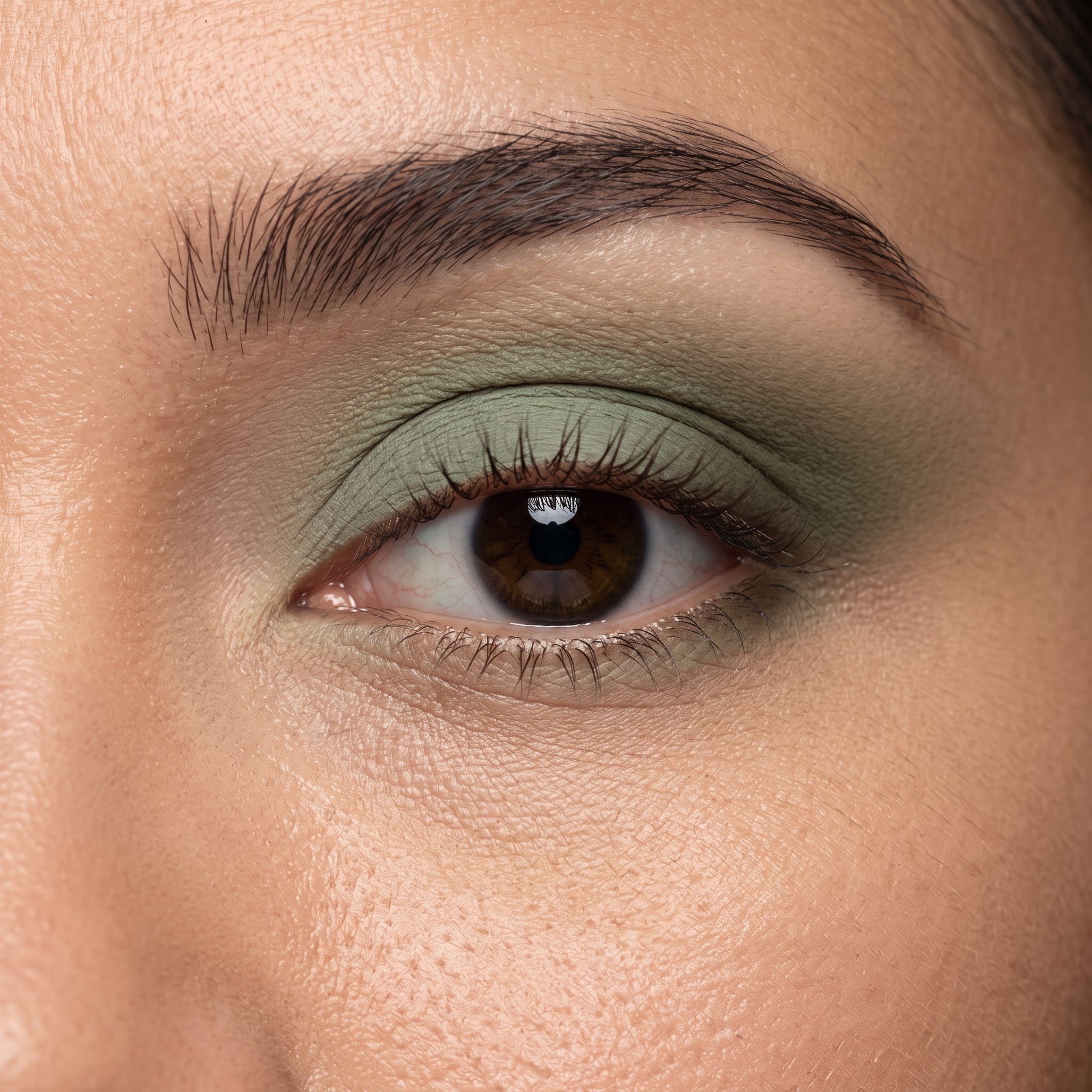
9. Green Winged Eyeliner Look
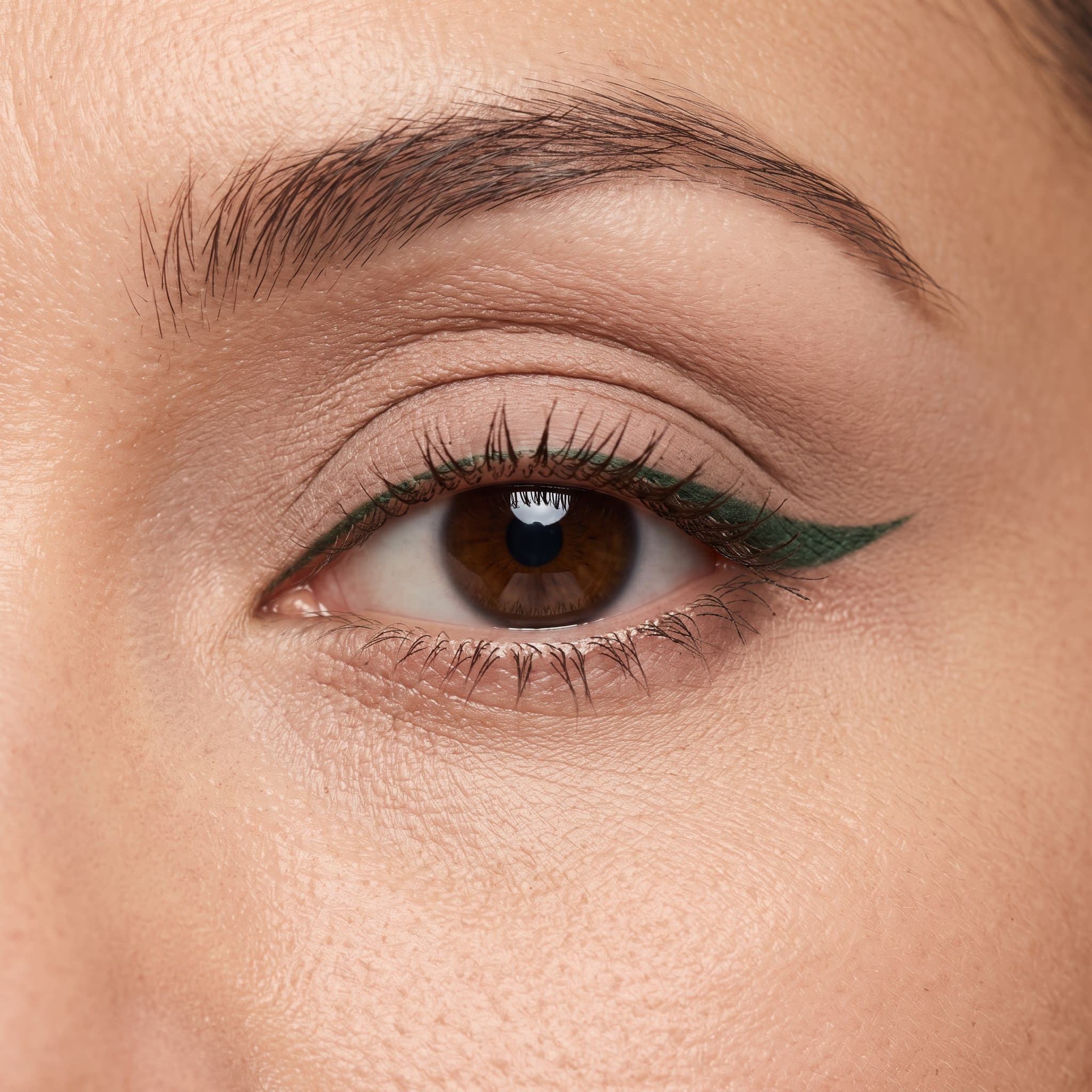
For a lower-commitment way to wear green, let the liner do the work. Draw a thin wing in a deep green gel or pencil liner, following the angle of the lower lash line toward the end of the brow, and keep the lid neutral with a soft beige or taupe wash. Draw the wing with your eyes open so you can see where it actually lands. Finish with brown-black mascara. Best for work, daytime and color without a full lid of shadow.
10. Soft Green Halo Eye
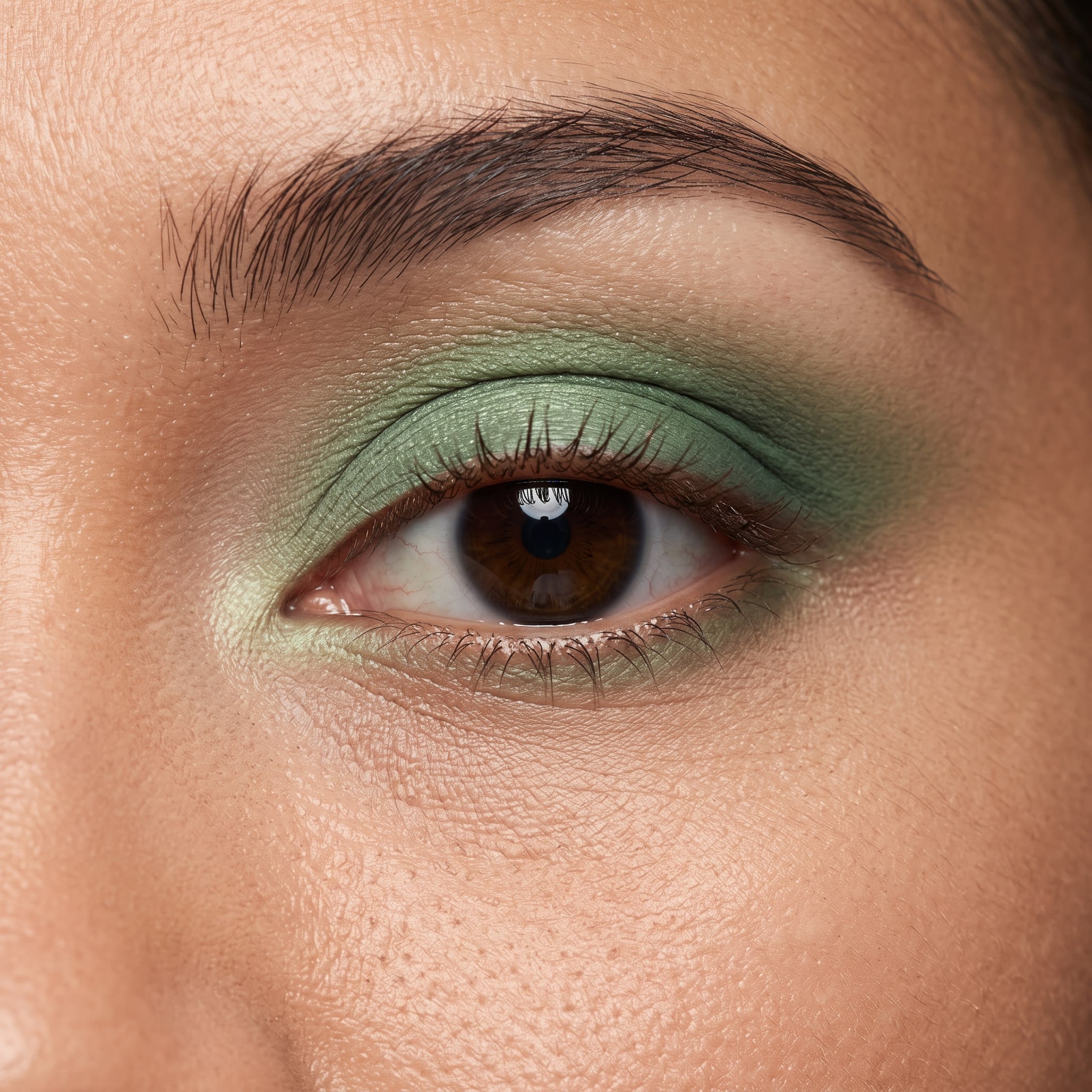
A halo eye puts the deepest color in the inner and outer corners and keeps the center of the lid light, so the eye looks rounder. Apply a mid-tone green in both corners and blend inward, then press a pale satin cream or soft peach shade into the middle. Smudge a little green along the lower lash line to connect the corners. Best for dressing up neutral outfits and for evenings that call for something softer than a smokey eye.
11. Deep Green and Burgundy Evening Eyes
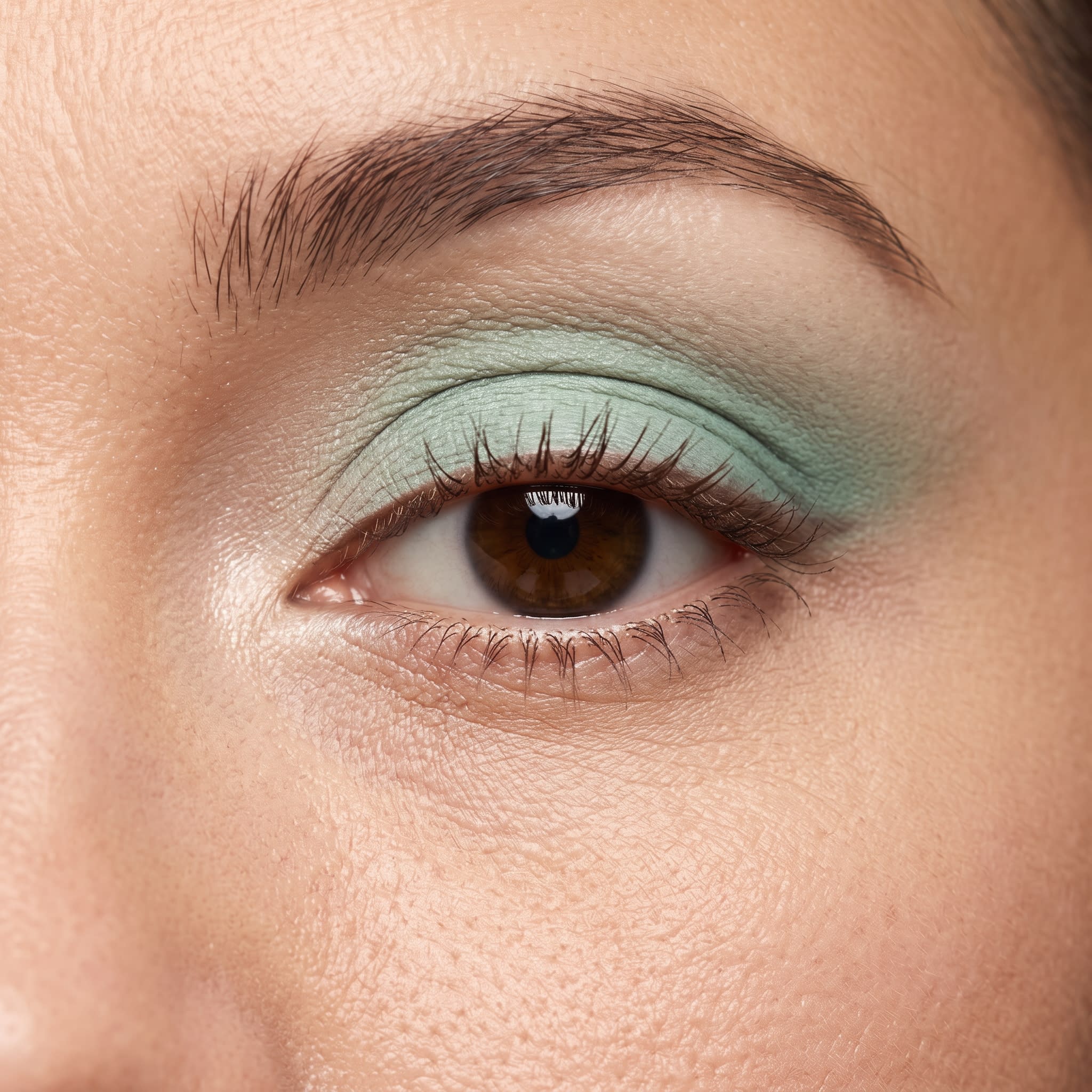
Burgundy and deep plum sit opposite green on the color wheel, so the pairing reads rich rather than muddy when blended carefully. Place a satin bottle green across the lid, then blend a burgundy into the outer corner and crease so the two overlap by only a few millimeters. Keep the brows soft and the lips neutral. Best for dinners, weddings and winter events.
12. Green Crease with Champagne Lid
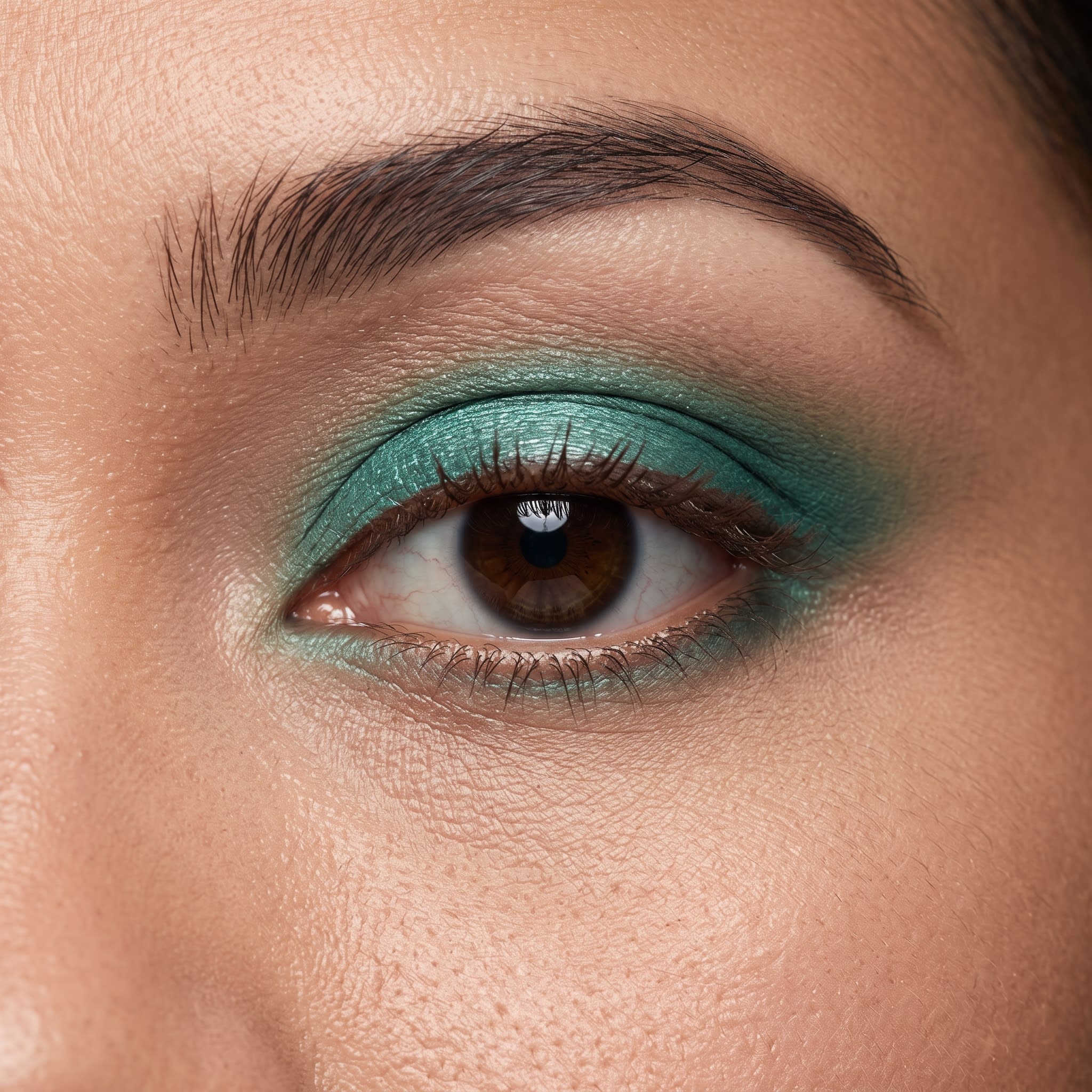
Here green becomes the transition shade. Blend a sheer olive or sage through the crease and slightly above it, then press champagne shimmer across the lid and a matte shade close to skin tone onto the brow bone. The lid catches the light while the green adds depth. This is a good option if you want color that looks more subtle than a full green lid. Best for daytime events and for anyone who likes a luminous lid.
13. Green Outer-Corner Accent
Wash the lid with a neutral beige or soft brown, then place a small wedge of olive or emerald at the outer corner and extend it along the outer third of the lower lash line. The green is easy to see in photos and barely changes a neutral look, which makes this a good way to test a shade before committing to a full lid. Best for hesitant first-timers and everyday wear.
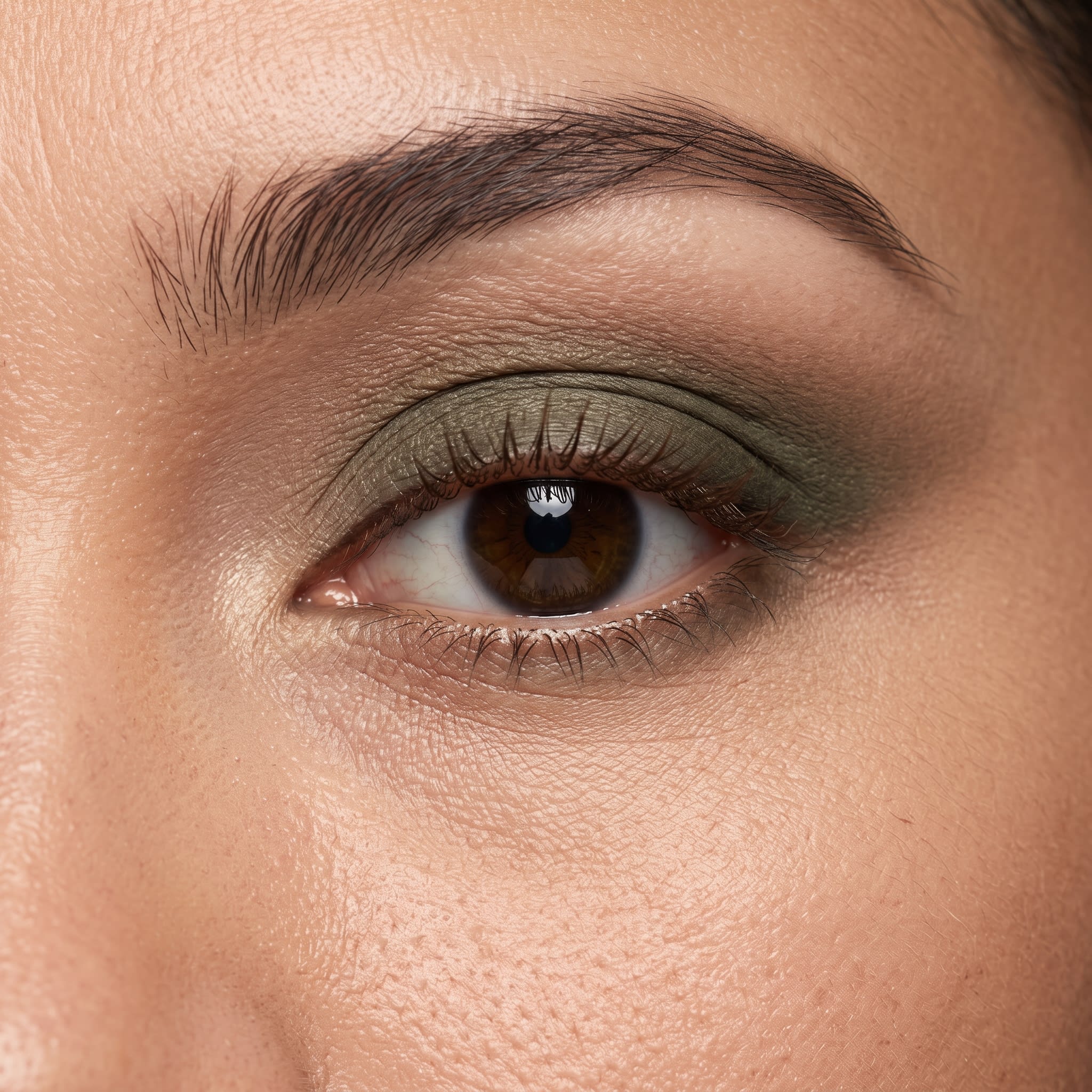
14. Minimal Green Smudge
Run a green pencil or cream liner along the upper lash line, smudge it with a small brush until it looks soft, and leave the rest of the lid bare except for a sweep of concealer or skin-tone shadow. This is the closest green gets to a no-makeup look. A small dot at the inner corner of the lower lash line is optional. Best for casual days and anyone who prefers less product.
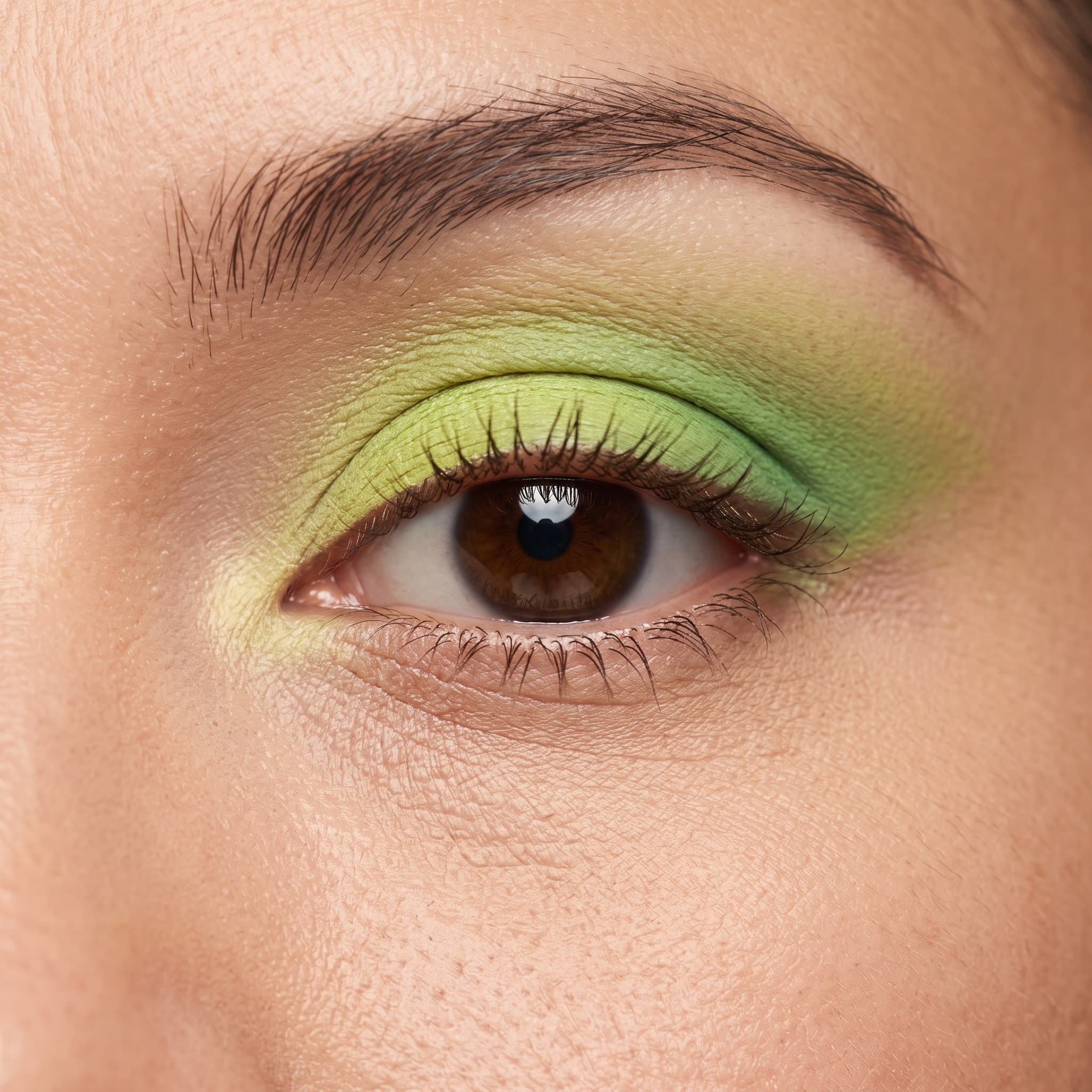
15. Dramatic Green Editorial Eyes
For a graphic, high-impact finish, press a saturated emerald or jade pigment over a cream base so the color is dense. Extend it past the outer corner and sweep it upward toward the temple, then clean the edge with concealer on a flat brush so the shape looks sharp. Keep the rest of the face minimal. Best for photo shoots, festivals and creative looks, and one to practice before an important event.
How to Choose the Right Green Eyeshadow
Green is a wide color family, and each shade behaves differently on the lid. Swatch on the lid rather than the back of your hand if you can, because green can read differently against eyelid skin.
Sage Green
A muted, gray-leaning green that looks soft and understated. It works in matte or satin, pairs well with taupe and cream, and is a good beginner shade.
Olive Green
A yellow-brown green that sits between a neutral and a color. It is versatile, blends easily with warm browns, and suits gold and bronze accents.
Emerald Green
A saturated, jewel-toned green with a blue lean. It looks best in satin, foiled or metallic finishes, and pairs well with gold, champagne and plum.
Forest and Hunter Green
Deep, dark greens that can stand in for black in a smokey eye or as liner. They are easiest to control in a matte or satin finish and blend well with deep brown.
Mint, Lime and Teal
Brighter greens work well for graphic liner, a small accent at the outer corner or an editorial look. Mint is pale and cool, lime leans yellow, and teal leans blue. Apply them over a base so the color shows clearly.
Matte, Satin or Shimmer
Matte greens are the easiest to blend and tend to look most natural. Satin finishes add a soft sheen without obvious sparkle. Shimmer and metallic finishes make the lid reflect more light and are best pressed on rather than swept.
Green Eyeshadow Color Combinations That Work
A green lid looks most polished when another color supports it. These pairings are reliable starting points.
- Green and gold: warm and bright, with the gold lifting the center of the lid.
- Green and bronze or copper: deeper, earthier and especially good for autumn looks.
- Green and brown: the safest pairing, with a taupe or cocoa shade softening the edges.
- Green and champagne or cream: a light-catching lid with a softer overall effect.
- Green and burgundy or plum: rich and evening-ready, with strong contrast.
- Green and black or charcoal: smoky and intense, best blended into the lash line.
- Green and peach or soft pink: fresh and light, suited to daytime and spring.
How to Apply Green Eyeshadow Step by Step
This method works for most of the looks above and keeps blending forgiving. If you are new to green, start with a matte or satin sage or olive.
- Prep the lid. Apply a thin, even layer of eyeshadow primer or concealer and set it with a little skin-tone powder if your lids tend to be oily. A smooth base helps green look even instead of patchy.
- Blend a transition shade. Use a fluffy brush to sweep a warm brown or taupe through the crease in small windshield-wiper motions. Brown around the green keeps the edges soft.
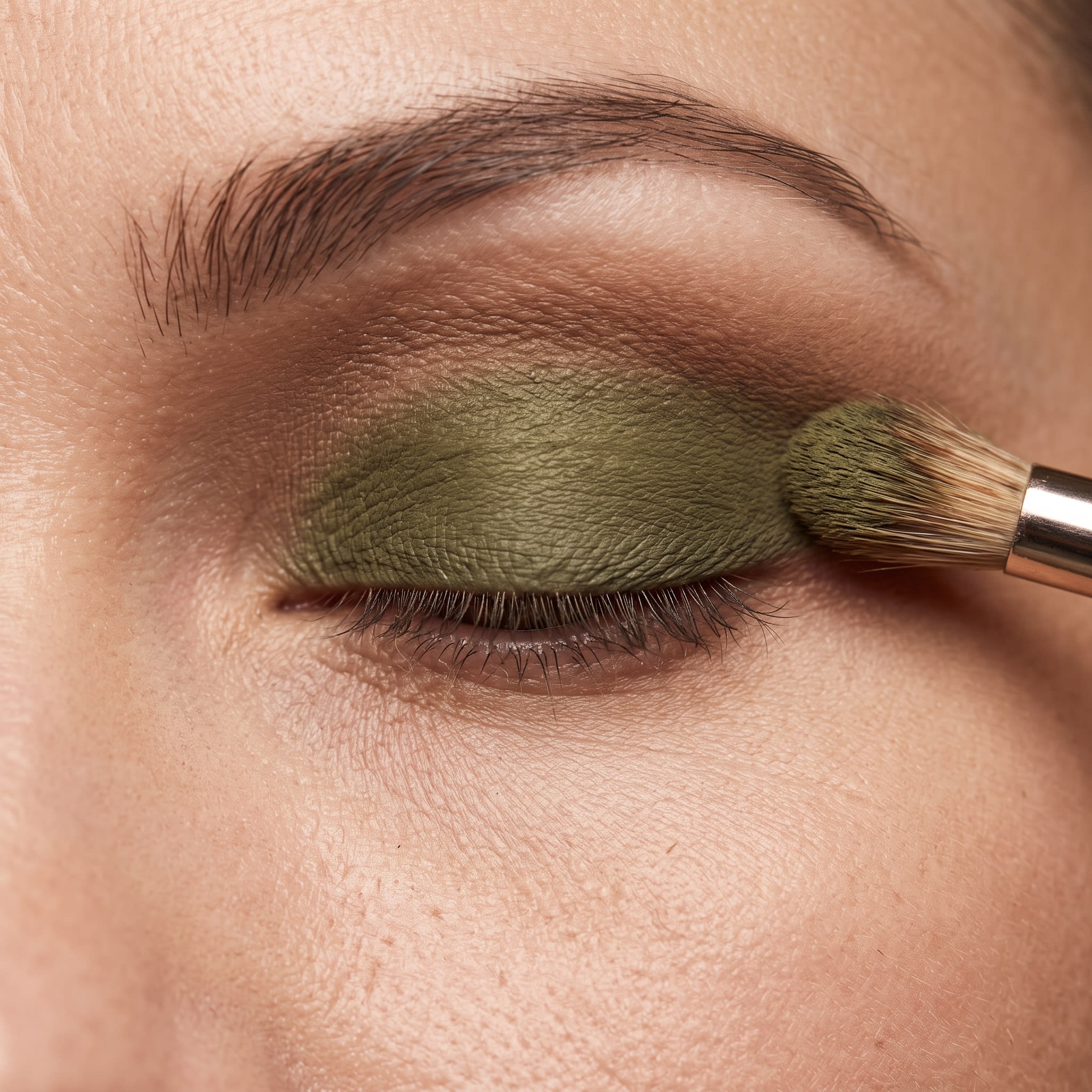
- Pat on the green. With a flat shader brush or a fingertip, press the green onto the mobile lid. Patting gives more color than sweeping, and thin layers are easier to correct than one heavy layer.
- Blend the edges. Use a clean fluffy brush to soften where the green meets the brown, working in small circles. Stop when you can no longer see a line.
- Add depth at the outer corner. Take a deeper green or brown along the outer third and blend it upward and outward, keeping it slightly away from the center of the lid.
- Define the lash line. Draw a thin line of brown, black-brown or green liner close to the upper lashes and smudge it slightly. Add a little green to the outer third of the lower lash line if you want the look to feel complete.
- Brighten if you like. Tap a champagne or gold shimmer onto the center of the lid or the inner corner, and use a matte shade close to your skin tone on the brow bone.
- Finish with mascara and brows. Curl the lashes, apply mascara, and fill in the brows lightly so the eye is framed without competing with the color.
Wearing Green Eyeshadow on Hooded Eyes
When the eye is open, hooded lids show less lid space, so color placed only inside the crease can disappear. Keep your eyes open and looking straight ahead while you apply, and take the green slightly above the natural fold so it stays visible. Concentrate depth at the outer corner, use a matte or satin finish where the lid folds, and save shimmer for the visible center of the lid.
Draw any green wing with the eyes open, and test a look in the mirror from the front before you finish. For a full technique guide, see our complete hooded eye makeup guide.
Common Green Eyeshadow Mistakes and How to Fix Them
- Skipping a base: green can look patchy on bare lids. Fix it with a thin layer of primer or concealer and press the color on in layers.
- Leaving hard edges: a green lid with no transition looks abrupt. Blend a warm brown or taupe around the edges with a clean brush.
- Over-blending into mud: pulling green and a contrasting shade together for too long can dull both. Blend lightly where they meet and stop early.
- Too much fallout: tap excess shadow off the brush before it touches the lid, and consider doing eye makeup before foundation so any fallout can be wiped away.
- Going too bright too soon: if a shade looks stark, choose a more muted green, add brown depth, or limit it to the outer corner.
- Using products that are not meant for the eyes: check that pigments and glitter are labeled for use on the eye area.
- Heavy glitter on textured lids: on lids with fine lines or crepey texture, chunky glitter and heavy powder can emphasize texture. Satin finishes, cream formulas or finely milled shimmer in thin layers tend to sit more smoothly.
Green Eyeshadow FAQs
What color eyeshadow goes best with green eyeshadow?
Brown, gold, bronze and champagne are the most reliable partners. Burgundy, plum and charcoal create more contrast for evening looks. See the color combinations above for how each pairing looks.
What is the easiest green eyeshadow for beginners?
A matte or satin sage or olive over a warm brown transition shade. These shades are forgiving to blend and sit close to neutral.
Can I wear green eyeshadow if I don't have green eyes?
Yes. Green eyeshadow works with any eye color, and shade and placement matter more than the color of your iris. If you want shades chosen specifically to flatter green irises, see our guide to eye makeup for green eyes.
What lip color goes with green eyeshadow?
For soft looks, neutral pink, peach or rosy brown keep the focus on the eyes. For emerald or burgundy evening looks, a brown-red or berry shade works well, while a nude lip keeps things balanced.
Do I need eyeshadow primer for green eyeshadow?
Not strictly, but a thin base helps the color look more even and stay in place. If you do not use primer, a small amount of concealer set with a skin-tone powder works well.
How do I make green eyeshadow wearable for daytime?
Choose a muted shade such as sage or olive, blend it with a warm brown, and limit the color to a wash on the lid or an accent at the outer corner.
Final Takeaway
Green eye makeup works best when you start with the right shade and keep the placement and finish consistent. Sage and olive are the easiest places to begin, while emerald and forest green offer more impact once you are comfortable blending. Choose one look from the gallery, keep the edges soft, and adjust the depth to suit the occasion.