
Is It Normal to Lose Hair at 20, 22, or 23?
Finding more hair in the shower or on your brush in your early 20s is alarming, and it sends most people straight to Google. The short answer is: yes, it happens, and it is more common than dermatologists see reported because many young people assume it will resolve on its own. The important distinction is between temporary shedding and progressive loss.
Normal daily shedding is 50 to 100 hairs per day. If you are seeing significantly more, especially with visible scalp, a widening part, or a thinner ponytail, that warrants investigation rather than waiting. Hair lost in your early 20s from a treatable cause can often be recovered, but delays matter. Follicles that are miniaturising progressively become harder to reactivate the longer they are dormant.
Common misconception: many young people assume hair loss only signals something serious, like cancer or a chronic disease. In reality, the most common causes of hair loss at 20 to 23 are nutritional deficiencies, hormonal imbalances, and stress — all highly manageable. Scalp health is often intertwined with overall skin sensitivity; some people losing hair young also report itching, which is explored in this guide on itchy scalp causes and relief.
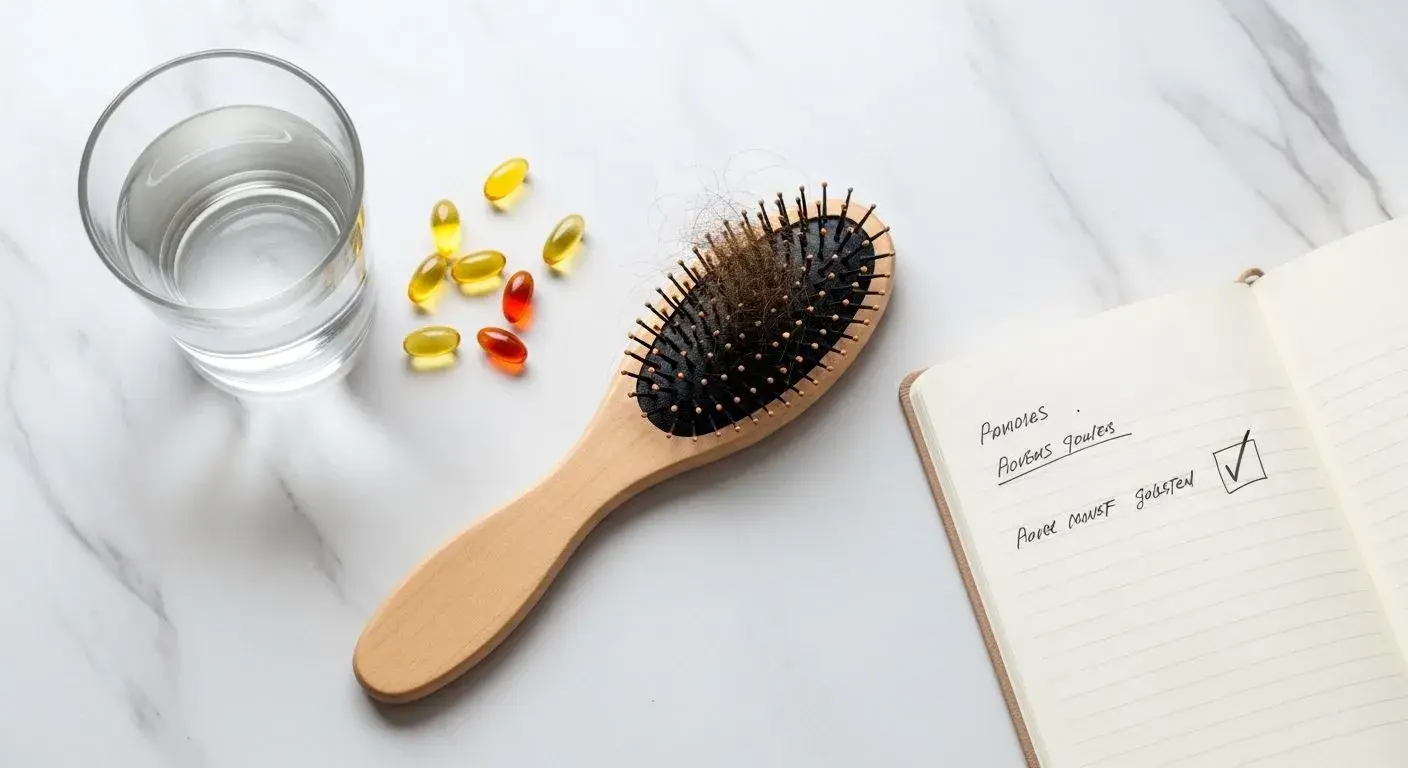
The Main Causes of Hair Loss in Your Early 20s
Hair loss at 22 or 23 rarely has a single cause. Most cases involve two or three overlapping factors. Here are the most common culprits in young adults:
- Iron deficiency (low ferritin): the most underdiagnosed cause in young women. Standard blood tests may show 'normal' iron levels while ferritin — the stored form — is too low to support hair growth. Request a ferritin-specific test, not just a general iron panel.
- Hormonal changes: stopping hormonal birth control can trigger a telogen effluvium (mass shedding) 2 to 4 months later. PCOS, thyroid disorders, and even natural hormonal fluctuations in young women all affect hair density.
- Androgenetic alopecia (genetic): yes, pattern hair loss can begin in your early 20s, both in men and women. In women it typically presents as diffuse thinning at the crown, not a receding hairline. In men, it often starts at the temples. A family history makes this more likely.
- Chronic stress and poor sleep: university, new jobs, and life transitions common at 20 to 23 all trigger cortisol spikes that push follicles into a resting phase. This type of loss is reversible but has a 3 to 6 month delay between trigger and visible shedding, making it hard to self-diagnose.
- Crash diets and restrictive eating: rapid calorie or protein restriction starves follicles. Hair is not considered 'essential' by the body, so it is one of the first things sacrificed during a caloric deficit.
What Actually Helps When You Are Losing Hair Young
The single most effective step is getting a dermatologist-ordered blood panel before trying any product or supplement. Guessing the cause and self-treating is the most common mistake — it delays real recovery and wastes money. That said, here is what works once the cause is known:
- For deficiencies: correct the specific gap. For ferritin, you generally need levels above 70 ng/mL for hair to recover, even though labs mark 12 to 15 ng/mL as 'normal'. Supplementing without confirmed deficiency can cause toxicity.
- For hormonal causes: spironolactone is commonly prescribed for androgen-driven loss in women. Minoxidil (topical) is FDA-approved and works across causes. Both require consistent long-term use to maintain results.
- For stress-triggered shedding: the hair typically regrows on its own within 6 to 9 months once the stressor is resolved. The trade-off is patience — there is no product that speeds this up significantly.
- Where standard advice fails: biotin supplements are heavily marketed for hair loss but are only effective if you have an actual biotin deficiency, which is rare. Most people see no benefit. They can also skew thyroid lab results, which matters if you are investigating hormonal causes.
If scalp irritation or itching accompanies your hair loss, that symptom is worth investigating separately as it may point to a different or additional trigger. This overview of hormonal itching and its treatment options covers the hormonal overlap in detail. Always consult a qualified healthcare provider before starting any hair loss treatment, particularly if you are under 25.