
Why Heartburn and Acid Reflux Worsen During Perimenopause
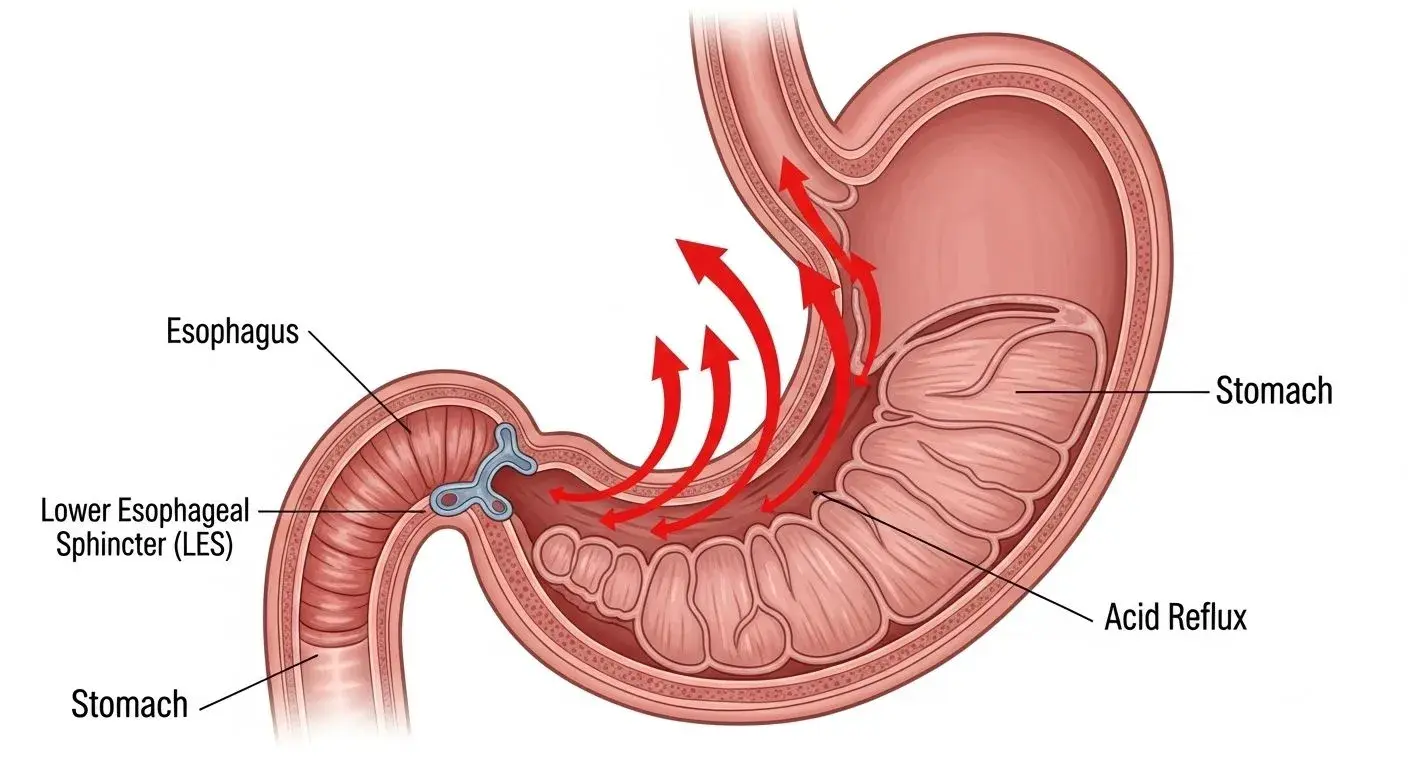
The connection between declining estrogen and increased acid reflux (GERD) is less well-known than hot flashes or mood changes, but it is documented and affects a significant proportion of perimenopausal women. Estrogen and progesterone both influence the tone of the lower esophageal sphincter (LES) — the muscular valve between the esophagus and stomach that prevents stomach acid from rising. As these hormones fluctuate and decline, LES tone can decrease, making reflux episodes more likely. Additionally, estrogen affects gastric motility: lower estrogen slows the rate at which the stomach empties, leaving food sitting longer and creating more opportunity for acid to travel upward.
The timing correlation is frequently reported by women themselves: heartburn and bloating that were never a problem suddenly appearing in the mid-40s, coinciding with other perimenopausal symptoms. A second mechanism is indirect — the cortisol elevation common in perimenopause (from disrupted sleep, stress, and the hypothalamic dysregulation of the transition) directly increases stomach acid production and worsens gut motility. The result is that heartburn during perimenopause often has both a direct hormonal mechanism and an indirect stress pathway running simultaneously. Unusual sensory experiences — which can also affect the throat — are discussed in our article on unexpected sensory symptoms in menopause.
Why Heartburn and Hot Flashes Often Strike Together
The co-occurrence of heartburn and hot flashes is not coincidental. During a hot flash, the rapid vasodilation and sympathetic nervous system activation can temporarily relax the lower esophageal sphincter, triggering a reflux episode. This is why many women report heartburn or a burning sensation in the chest during or immediately after a hot flush — the two events share a physiological trigger point. Additionally, the night sweat disruptions that accompany nocturnal hot flashes result in lying awake at night, often leading to late-night eating or drinking that further provokes reflux.
Common misconceptions here: first, many women (and even some clinicians) attribute new-onset midlife heartburn entirely to diet or weight gain without considering the hormonal dimension. While both factors contribute, ignoring the estrogen mechanism means treatment focuses only on triggers (coffee, fatty food, alcohol) without addressing the underlying sphincter tone change. Second, the burning sensation in the chest during a hot flash is sometimes misinterpreted as cardiac — heart palpitations and chest warmth during flashes can overlap with reflux symptoms, creating understandable anxiety. If you have any doubt about chest symptoms, cardiac causes should always be ruled out first. Oily skin changes that also accompany this hormonal period are explored in our piece on greasy skin during perimenopause.
Effective Treatments for Perimenopausal Acid Reflux
Treatment should address both the hormonal mechanisms and the practical triggers. Foundational dietary changes — avoiding large meals close to bedtime (finish eating at least 3 hours before lying down), reducing alcohol and caffeine, and keeping serving sizes moderate — remain important. However, these alone are often insufficient if the LES tone reduction is primarily hormonal.
For persistent perimenopausal GERD, the treatment ladder includes: over-the-counter antacids for occasional relief, H2 blockers (famotidine) for more frequent symptoms, and proton pump inhibitors (omeprazole) for clinical GERD confirmed by symptom severity or endoscopy. Long-term PPI use in post-menopausal women does have a trade-off worth knowing: it reduces magnesium absorption and has been associated with modestly increased fracture risk over years of use, relevant in a population where bone density is already declining. Discussing the most appropriate approach with your GP is important. HRT has also shown benefits for digestive symptoms in some women by addressing the underlying estrogen deficit — this is worth raising with your doctor if heartburn is part of a broader menopausal symptom picture.