
Why Perimenopause and Histamine Intolerance Often Arrive Together
You have been fine eating tomatoes, drinking the occasional glass of wine, and wearing that fragrance for years. Then, seemingly out of nowhere in your 40s, you start flushing after meals, waking with a stuffy nose, or breaking out in hives with no obvious trigger. Doctors find nothing on allergy tests. The culprit may not be a new allergy at all — it may be histamine intolerance driven by fluctuating and declining estrogen.
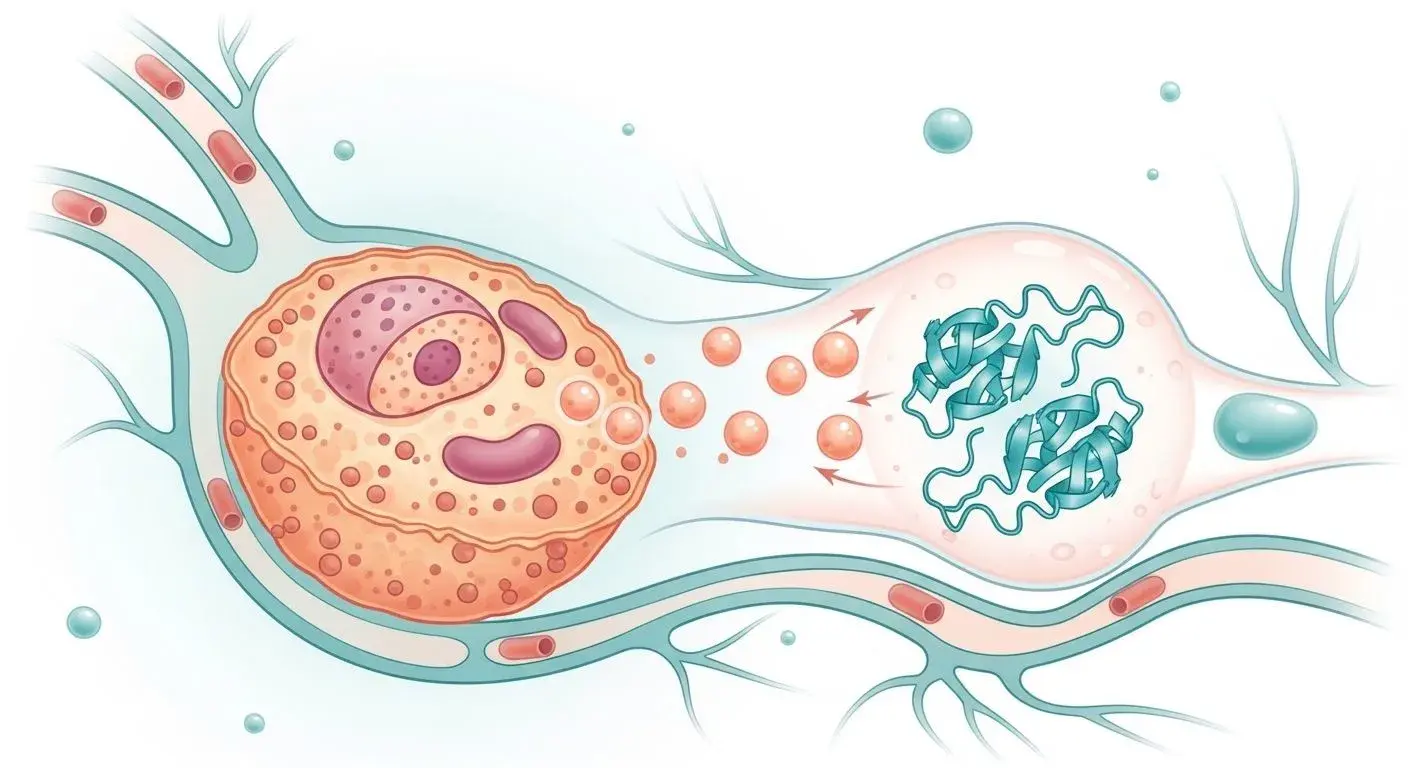
The estrogen-histamine relationship is bidirectional and genuinely complex. Estrogen stimulates mast cells (the immune cells that release histamine) and also upregulates histamine receptors, meaning that when estrogen fluctuates erratically in perimenopause, histamine activity fluctuates with it. At the same time, histamine itself can trigger the release of more estrogen from the ovaries — a feedback loop that, in a hormonally unstable system, can amplify both histamine reactions and estrogen surges unpredictably.
Separately, the enzyme responsible for breaking down histamine in the gut — diamine oxidase (DAO) — is partly regulated by progesterone. As progesterone declines earlier and more steeply than estrogen in perimenopause, DAO activity often drops too. Less DAO means histamine from food accumulates faster, producing symptoms even from foods that were previously tolerated without issue.
Symptoms, Misconceptions, and When It Is Not What You Think
Menopause histamine intolerance symptoms overlap heavily with both allergy and menopause symptoms, which is why it is so frequently missed. Common presentations include flushing and facial redness (often mistaken solely for hot flashes), itchy skin or hives, headaches and migraines that worsen around ovulation or the luteal phase, nasal congestion, palpitations, and digestive discomfort after high-histamine foods.
The most common misconception is that this is an 'oestrogen allergy' — that the body has become allergic to its own estrogen. This framing is not accurate. There is no IgE-mediated allergic response to endogenous estrogen. What is happening is a sensitivity pattern driven by histamine dysregulation, not a true allergy. Calling it an estrogen intolerance symptom is closer, but even that language implies the problem is estrogen itself rather than the broken feedback system around it.
A second misconception is that antihistamines are a straightforward solution. Some women ask whether antihistamines lower estrogen — the short answer is that standard antihistamines (like cetirizine or loratadine) do not have meaningful effects on estrogen levels in most women. However, they also provide only partial relief for hormonally-driven histamine intolerance because they block receptors without addressing the upstream hormonal instability. Symptoms often return when the medication wears off, particularly around ovulation when estrogen peaks.
Skin symptoms in particular can be persistent and confusing. If you are experiencing itching, rashes, or inflammatory skin changes alongside these reactions, our article on dermatitis and skin inflammation in perimenopause covers how to distinguish histamine-driven flares from other menopausal skin conditions.
What Actually Helps — and Where the Evidence Is Still Thin
For women in perimenopause, the most impactful intervention for hormonally-driven histamine intolerance is addressing the hormonal instability directly. There is good evidence that HRT — particularly progesterone, which supports DAO enzyme activity — can meaningfully reduce histamine reactivity over time. Women who start HRT sometimes report that food intolerances they developed in perimenopause ease significantly within a few months, which aligns with what we understand about the progesterone-DAO-histamine pathway.
Dietary management remains the most accessible short-term tool. A low-histamine diet — reducing fermented foods, aged cheeses, alcohol (especially wine and beer), smoked meats, vinegar, and certain vegetables like spinach and avocado — can reduce the total histamine load enough to bring symptoms below threshold. This is not a cure, and it tends to be more effective in early perimenopause when hormone fluctuation is the primary driver rather than full depletion.
DAO supplementation (oral enzyme supplements) is the one intervention that directly targets the degradation deficit. Evidence in non-menopausal histamine intolerance is modest but consistent. In perimenopause specifically, the evidence base is thin — this is an area where clinical research has not kept pace with what women are experiencing. A subset of women report meaningful benefit; others see little effect, possibly because their symptoms are more receptor-sensitivity-driven than DAO-deficiency-driven.
One edge case worth flagging: women with mast cell activation syndrome (MCAS) may see symptoms that closely mimic perimenopause histamine intolerance but are considerably more severe and less responsive to hormonal treatment. If flushing, reactions, and skin symptoms are extreme, unpredictable, and escalating, a referral to an allergist or immunologist is warranted rather than treating this as routine menopause management. Ear and sinus symptoms that are persistent may also have a histamine component — see our guide to itchy ears during menopause for more on how histamine affects those specific symptoms.