
Why Traditional Coverage Methods Fail on Deep Wrinkles
The fundamental problem with learning how to hide deep wrinkles with makeup is that most tutorials teach coverage techniques designed for surface imperfections, not three-dimensional texture. Deep wrinkles—particularly forehead lines and frown lines—create shadows and valleys that require optical correction, not concealment. When you apply traditional full-coverage foundation over these areas, you're essentially creating a thick mask that pools in the creases and cracks with every facial expression, making wrinkles more visible by midday, not less.
What cosmetic chemistry reveals about the best makeup for deep wrinkles contradicts the high-coverage industry standard. Deep wrinkles need products with specific rheological properties—low viscosity for initial application (so they don't drag on delicate skin) combined with flexible film-forming ability (so they move with expressions rather than cracking). These formulas contain silicone elastomers like dimethicone crosspolymer that fill microscopic surface irregularities while maintaining skin-like flexibility. Yet most 'anti-aging' foundations still use heavy waxes and pigments that become rigid once set.
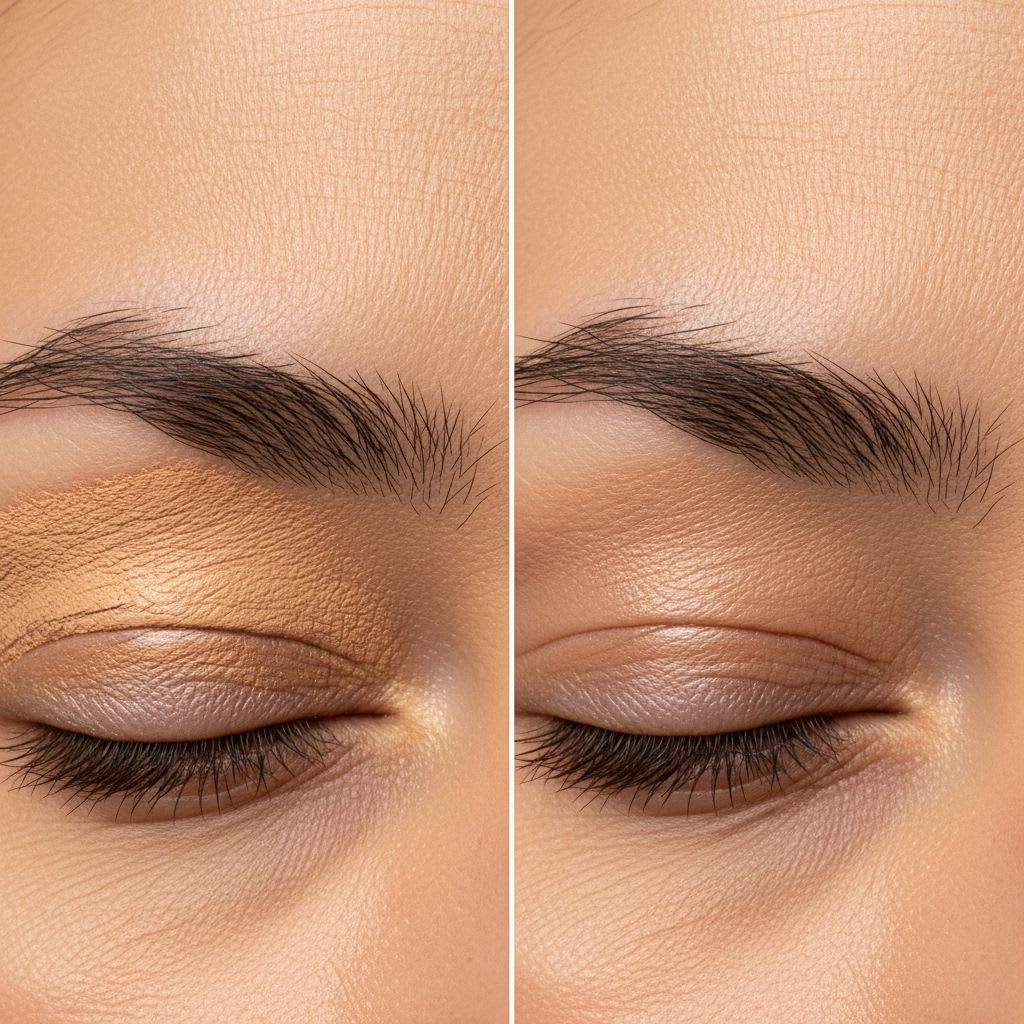
The critical insight about makeup to hide wrinkles isn't about hiding at all—it's about diffusion. You can't make a 2mm-deep forehead line disappear, but you can manipulate how light interacts with it. Strategic use of light-reflecting particles redirects attention away from shadows while maintaining natural skin texture. This requires abandoning the beauty counter mentality that more coverage equals better results. For specific forehead wrinkle techniques, see our targeted guide on covering forehead lines during menopause.
Myths About Covering Wrinkles That Make Them Worse
Myth 1: Primer Fills In Wrinkles
The marketing promise of wrinkle-filling primers contradicts biomechanical reality. Silicone primers create a temporary smooth surface by filling micro-texture, but they cannot fill deep expression lines that are 1-3mm in depth. What actually happens: the primer creates a slippery base that causes foundation to slide into wrinkle valleys throughout the day, creating the exact settling effect you're trying to prevent. The trade-off that experienced makeup artists understand—skip primer on deep wrinkle areas entirely, or use an extremely thin layer only on surrounding smooth skin to create contrast that makes wrinkles less noticeable.
Myth 2: Concealer Under Foundation Hides Wrinkles Better
What beginners misunderstand about how to cover deep wrinkles with makeup is the layering sequence. Applying thick concealer under foundation creates excessive product buildup that emphasizes texture rather than diffuses it. The concealer settles into creases first, then foundation settles on top of that, creating visible striping by afternoon. The correct approach inverts this—use sheer-to-medium foundation overall, then apply minimal concealer only to the deepest part of specific wrinkles using a tiny brush, blending only the edges. This targeted correction uses 80% less product with better results.
Myth 3: Setting Powder Prevents Creasing
The contradiction between standard advice and evidence: powder does set makeup, but on areas with deep wrinkles, it creates the creasing it promises to prevent. Powder particles migrate into wrinkle valleys with facial movement, accumulating visibly within 2-3 hours. Every smile, frown, or raised eyebrow pushes more powder into those lines. The limitation even experts face—you need some setting for longevity but traditional powder application fails. The solution: use setting spray for overall longevity, reserving the tiniest amount of finely-milled powder only for oil-prone zones that won't crease, like the center forehead above wrinkle lines.
Professional Techniques That Actually Conceal Deep Wrinkles
What experienced makeup artists do differently when learning how to disguise wrinkles starts with prep work most tutorials skip entirely. Deeply wrinkled skin requires barrier optimization before any color products touch the face. Apply a hydrating serum with hyaluronic acid, wait 60 seconds, then use a silicone-free moisturizer. This creates plumpness that reduces wrinkle depth by 20-30% through temporary tissue hydration, not topical filling. Only after skin reaches maximum hydration should you begin makeup application.
Strategic application methods for different wrinkle types:
- For forehead lines and frown lines: Use a damp makeup sponge to press (not wipe) sheer foundation in a stippling motion perpendicular to the wrinkle direction. This deposits product on the raised areas between wrinkles without forcing it into valleys. Apply foundation slightly lighter than your skin tone on wrinkled areas to bounce light away from shadows.
- For smile lines and around the mouth: Skip foundation entirely in the deepest crease. Instead, use a luminizing pen with light-reflecting particles applied only to the raised muscle areas on either side of the line. This creates dimensional correction through strategic highlighting rather than coverage.
- For crow's feet and eye area wrinkles: Use cream products instead of powder—a cream eyeshadow or cream highlighter applied with ring finger pressure. The emollients in cream formulas maintain flexibility during facial expressions. Set with hydrating setting spray, never powder.
Product selection matters as much as technique. The best makeup to cover wrinkles and pores contains silicone-based optical diffusers (look for dimethicone, cyclopentasiloxane) combined with light-reflecting pigments (mica, synthetic fluorphlogopite). These create the blur filter effect that actually works on texture. Avoid foundations listing talc or kaolin clay high in ingredients—these absorb moisture and create the flat, cakey appearance that emphasizes every line. For comprehensive makeup strategies during skin changes, explore our complete makeup guide for hormonal transitions.
When Standard Wrinkle Coverage Techniques Fail
Here's the edge case that standard tutorials never address: dynamic wrinkles that deepen dramatically with facial expressions versus static wrinkles visible at rest require completely opposite approaches. If your forehead wrinkles only appear when you raise your eyebrows, traditional coverage actually makes them more noticeable by creating a textural contrast between your smooth at-rest forehead and the sudden creases during movement. For dynamic wrinkles, the counterintuitive solution is strategic non-coverage—use minimal product on wrinkle-prone areas and instead draw attention elsewhere with defined eyes or lips. This accepts the wrinkles as natural facial animation rather than fighting them with makeup that emphasizes their appearance during expressions. Static wrinkles that remain visible at rest respond well to the light-diffusing techniques described above, but mixing strategies for both wrinkle types on the same face creates inconsistent results. The limitation? This requires honest assessment of which wrinkle type you're dealing with, and most women have both types simultaneously on different facial areas, making a unified coverage approach impossible. Professional makeup artists solve this by mapping each facial zone individually, but this level of customization takes 15-20 extra minutes that most morning routines can't accommodate.