
What Hair Shedding Actually Means
Seeing hair in your brush, on your pillow, or circling the shower drain is alarming — but the interpretation matters more than the count. Normal shedding involves losing 50 to 100 hairs per day as part of the natural growth cycle. Each follicle cycles independently through growth (anagen), transition (catagen), and rest (telogen) before releasing the hair and starting again.
Excessive shedding — clinically called telogen effluvium — happens when a larger-than-normal proportion of follicles enter the resting phase simultaneously, then shed together weeks or months later. Triggers include hormonal shifts, physical stress (illness, surgery), nutritional deficiency, or significant emotional stress. During perimenopause and menopause, declining estrogen is the primary driver. Estrogen normally prolongs the growth phase; without it, follicles cycle faster and shed more.
Common misconception: Many women believe that hair shedding and hair loss are the same thing. They are not. Shedding involves hairs that complete their natural cycle and release. True hair loss (alopecia) involves follicles that stop producing new growth entirely. The distinction matters because shedding is often reversible once the trigger is addressed — permanent loss is not. If you are also experiencing scalp inflammation or itching alongside shedding, these can compound the issue; understanding what drives scalp irritation during menopause can help address both simultaneously.
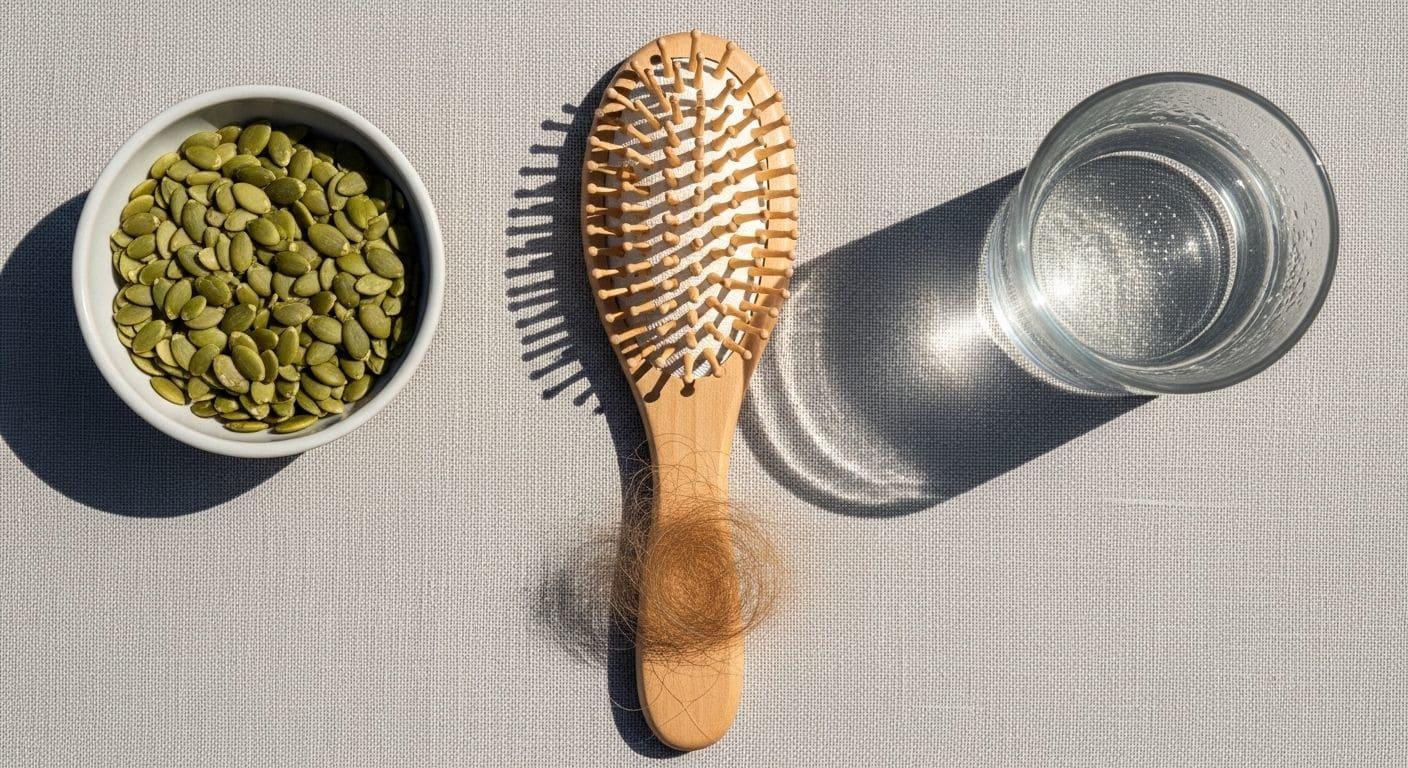
Why Your Hair Keeps Falling Out: The Overlooked Causes
When hair shedding persists despite basic hair-care changes, one or more of the following underlying factors is usually unaddressed:
- Low ferritin (stored iron): This is the single most commonly missed nutritional cause. Serum iron can appear normal while ferritin is depleted. Hair follicles are highly sensitive to ferritin levels — many specialists recommend levels above 70 ng/mL specifically for hair health, well above the standard 'normal' lab range.
- Subclinical hypothyroidism: TSH at the high end of normal can still impair hair cycling. Thyroid issues are more prevalent during perimenopause and frequently coexist with estrogen-driven shedding.
- Scalp circulation restriction: Chronic tension from tight hairstyles, or reduced scalp blood flow from stress-related vasoconstriction, limits the nutrient delivery follicles need during active growth.
- Protein deficiency: Hair is almost entirely protein. Women reducing calories or following restrictive diets frequently undereat protein, which directly compromises the growth phase.
A case where standard advice fails: Biotin is widely marketed for hair shedding and is unlikely to help unless you have a true biotin deficiency — which is rare. Women who take biotin without deficiency may also notice interference with certain thyroid and cardiac lab tests, producing falsely reassuring or alarming results. It is not a neutral supplement for everyone.
It is also worth knowing that menopause-related hormonal changes can affect vascular function and skin fragility throughout the body. If you have noticed increased bruising alongside hair changes, this may reflect the same systemic shift — more on this in our piece about bruising causes and prevention during menopause.
How to Minimize Hair Shedding: What Works and What Does Not
There is no method that stops shedding immediately — any claim to the contrary is overstated. The growth cycle means that even effective interventions take 3 to 6 months to show measurable results. With that said, the following approaches have the strongest evidence for reducing shedding over time:
- Address nutritional deficiencies first: Get ferritin, zinc, vitamin D, and thyroid panels done before spending money on supplements. Targeted repletion of actual deficiencies works; broad supplementation without deficiency largely does not.
- Daily scalp massage (4 to 5 minutes): A small but consistent body of research supports scalp massage as increasing dermal papilla cell activity and improving hair thickness over 6 months. It also reduces cortisol, which independently worsens shedding.
- Reduce mechanical stress: Tight elastics, heat over 180°C (356°F), and aggressive towel-drying all break and dislodge hairs prematurely. Switching to silk pillowcases and looser styles removes a daily friction source.
- Consider minoxidil or peptide serums: Topical minoxidil (2% for women) is the most evidence-backed non-hormonal option for slowing follicle miniaturization. Newer peptide-based serums (particularly those with Redensyl or Capixyl) show promising results with fewer side effects but require longer commitment.
The honest trade-off: Natural approaches alone are rarely sufficient when shedding is driven by significant hormonal decline. They can reduce the severity and support recovery, but women with moderate-to-severe menopausal hair shedding typically see the most meaningful improvement through hormonal evaluation — either hormone replacement therapy or anti-androgenic treatments discussed with a dermatologist or gynecologist. Combining natural support with appropriate medical guidance produces the best outcomes.