
Do Women Actually Shed More Hair — and Why?
Yes — increased shedding is one of the most common and distressing changes women experience during perimenopause and beyond. The primary driver is a drop in oestrogen and progesterone, two hormones that normally extend the hair growth phase (anagen). When they decline, hair spends less time growing and more time in the resting and shedding phases, resulting in visibly thinner density over time.
At the same time, androgens like testosterone become relatively more dominant. Hair follicles on the scalp are sensitive to a testosterone derivative called DHT, which gradually shrinks follicles and produces finer, shorter strands — a pattern called female-pattern hair loss (androgenetic alopecia). This often appears as a widening parting or overall volume loss rather than a bald patch, which is why it can be easy to miss until it is quite advanced.
Hair thinning is not exclusive to midlife, however. Younger women asking 'why is my hair thinning at 20' may be dealing with nutritional deficiencies (especially iron, ferritin, or vitamin D), thyroid dysfunction, polycystic ovary syndrome (PCOS), or high psychological stress — all of which disrupt the same hair cycle, just through different pathways. If you are noticing significant shedding before 40, a GP blood panel is a sensible first step before assuming it is hormonal. If scalp discomfort accompanies the shedding, it may also be worth reading about menopausal itchy scalp causes and relief, as inflammation at the follicle level can compound shedding.
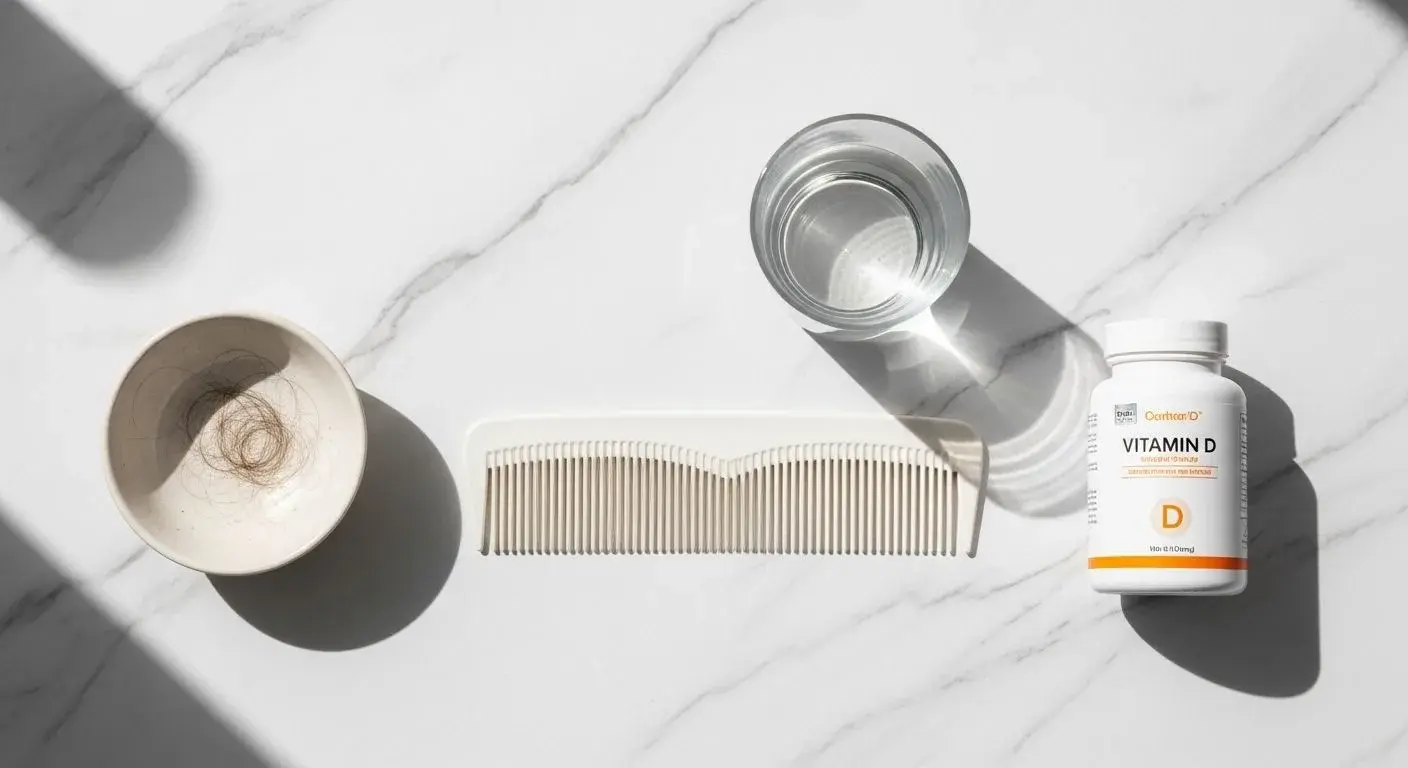
Common Myths About Stopping Hair Loss — and What Evidence Actually Shows
Myth 1: Washing your hair less will stop the shedding. Many women reduce how often they wash their hair, believing shampoo accelerates loss. In reality, the hairs seen in the shower were already detached and simply dislodged by water. Skipping washes only means more hairs accumulate and shed at once — creating the illusion of a sudden worsening. Gentle, regular cleansing is not the cause.
Myth 2: Hair supplements always help. Biotin supplements are heavily marketed for hair, but clinical evidence only supports them in people with a confirmed biotin deficiency — which is rare. In contrast, correcting a genuine iron or ferritin deficit has strong evidence behind it. Before spending money on hair-specific supplements, test for the deficiencies most likely to be relevant (iron, ferritin, vitamin D, thyroid hormones).
What does have consistent support is minoxidil (2% for women), which prolongs the growth phase and is available without a prescription. It requires consistent use — results typically take four to six months and stop if treatment is discontinued. Scalp massage (four minutes daily) has emerging evidence for stimulating follicle activity with no downside beyond the time investment. Managing chronic stress is also clinically meaningful: cortisol spikes push more follicles into the shedding phase simultaneously, producing the pattern called telogen effluvium.
Practical Steps to Slow Menopausal Hair Thinning
A multi-pronged approach works better than a single fix. The most evidence-backed actions, ranked by impact:
- Rule out deficiencies first: Ask your GP to test ferritin (not just haemoglobin), thyroid (TSH, T3, T4), and vitamin D. Ferritin below 70 mcg/L is associated with hair loss even when anaemia is absent.
- Use a scalp-focused shampoo: Look for formulas with ketoconazole or saw palmetto, which have mild anti-androgenic effects at the scalp level, reducing DHT-related follicle miniaturisation.
- Minimise mechanical damage: Tight ponytails, heat styling without protection, and aggressive towel drying all increase breakage. Traction alopecia from consistent tight styles can cause permanent follicle damage if sustained over years.
- Consider discussing HRT with your doctor: Restoring oestrogen levels can help preserve the hair growth phase. This is explored in depth — including the complication that some progestogens can worsen hair loss — in our guide on menopause symptom treatments.
One important trade-off: treatments that work for hormone-driven loss (like HRT or anti-androgens) will not address loss caused by nutritional or thyroid issues — and vice versa. Getting the correct diagnosis before choosing an intervention saves significant time and money. If shedding is severe, sudden, or accompanied by other symptoms, a dermatologist referral is appropriate. Please consult a qualified healthcare professional before starting any medical treatment for hair loss.