
Why Menopause Causes Hair Loss — and Whether It's Reversible
Menopausal hair loss is not a single condition — it's several overlapping ones, and whether it's permanent depends entirely on which type you're dealing with. The most important distinction is between telogen effluvium (a temporary shedding response to hormonal disruption) and androgenetic alopecia (a progressive follicle miniaturization that tends to be long-term without intervention).
During perimenopause and menopause, estrogen levels decline. Estrogen normally extends the hair's anagen (growth) phase and partially offsets androgens at the follicle level. As estrogen drops, androgens like DHT exert more influence — particularly in women with a genetic sensitivity to DHT. This isn't rapid, dramatic loss; it's gradual thinning that often becomes noticeable years after it began, which is why many women feel like the change is sudden when the underlying process has been slow.
Telogen effluvium, by contrast, occurs when the body pushes more follicles into the resting phase at once — commonly triggered by the hormonal shock of menopause transition, illness, surgery, or major stress. This type is typically reversible. Shedding often peaks two to four months after the trigger and resolves within six to twelve months once the system stabilizes — though this timeline can be disrupted if new triggers keep occurring. Scalp inflammation can also compound shedding during this period, as discussed in the context of itchy scalp and hormonal changes during menopause.
What Affects Whether Hair Grows Back
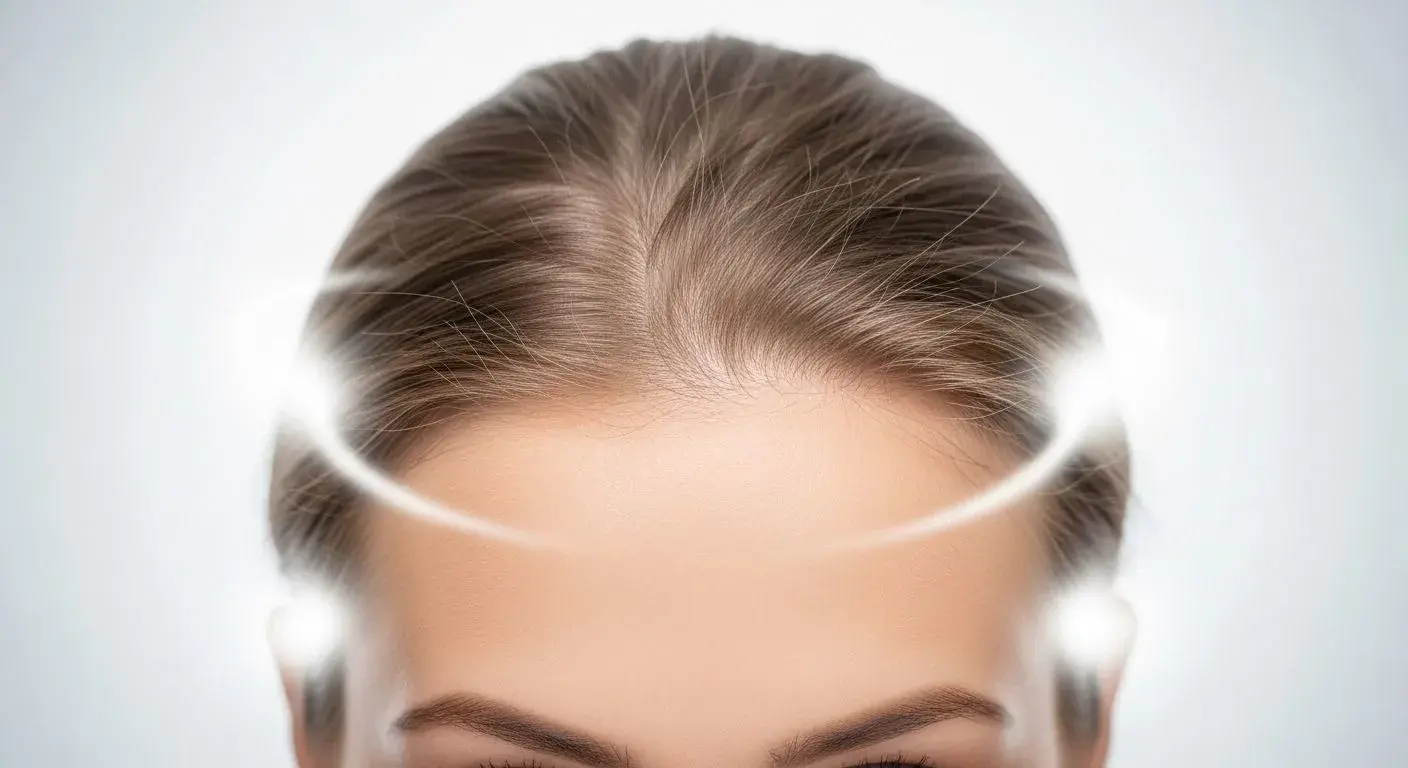
The most common misconception is that all menopausal hair loss is permanent. For women experiencing primarily telogen effluvium — diffuse shedding, not follicle miniaturization — meaningful regrowth is possible. The critical factors are how long the follicles have been dormant, whether scalp inflammation is present, and whether underlying deficiencies (particularly ferritin, vitamin D, and thyroid hormones) have been corrected.
Where the picture changes: women who have androgenetic alopecia running alongside the hormonal shift. In this case, estrogen was partially protecting follicles that were genetically vulnerable to DHT. Once that estrogen buffer drops, miniaturization accelerates. These follicles don't spontaneously recover without intervention. The window for treatment matters — the earlier you act, the more viable follicles remain. Waiting to 'see if it resolves' works for telogen effluvium; it doesn't work for androgenetic loss.
A secondary complication many women don't anticipate: menopausal symptoms affecting the ears and head region — including sensations like itchy ears linked to hormonal changes — can sometimes signal broader scalp and skin dryness that reduces the follicle-supporting environment. Addressing scalp hydration and barrier health is a legitimate part of a hair loss recovery plan, not just a cosmetic consideration.
What Can Actually Help Regrowth — and What Can't Be Undone
For reversible telogen effluvium, stabilizing hormones through perimenopause — whether via hormone replacement therapy (HRT) or other approaches — often allows natural regrowth. In parallel, correcting nutritional deficiencies (especially ferritin above 70 ng/mL) and reducing inflammatory scalp conditions accelerates recovery. Some women see noticeable improvement within six months; others take up to a year.
For androgenetic alopecia, the most evidence-supported topical treatment is minoxidil (5% formulation for women), which prolongs the anagen phase and can partially reverse miniaturization in active follicles. It does not work on follicles that have been fully scarred. Oral options like low-dose spironolactone or finasteride are sometimes discussed with a dermatologist, though both carry considerations that require specialist input.
The honest limitation: hair that has been lost due to fully miniaturized or scarred follicles will not regrow with any topical or nutritional intervention. At that stage, the options shift to density-focused treatments (like platelet-rich plasma therapy), cosmetic strategies, or acceptance. The key clinical rule is: treat early and identify the type first. Applying regrowth strategies to a type of loss they were never designed for wastes critical time and leads to the false conclusion that 'nothing works.' A dermatologist or trichologist can distinguish the types with a scalp analysis or dermoscopy — a step that is consistently underused.