
Are Itchy Ears Really a Sign of Perimenopause?
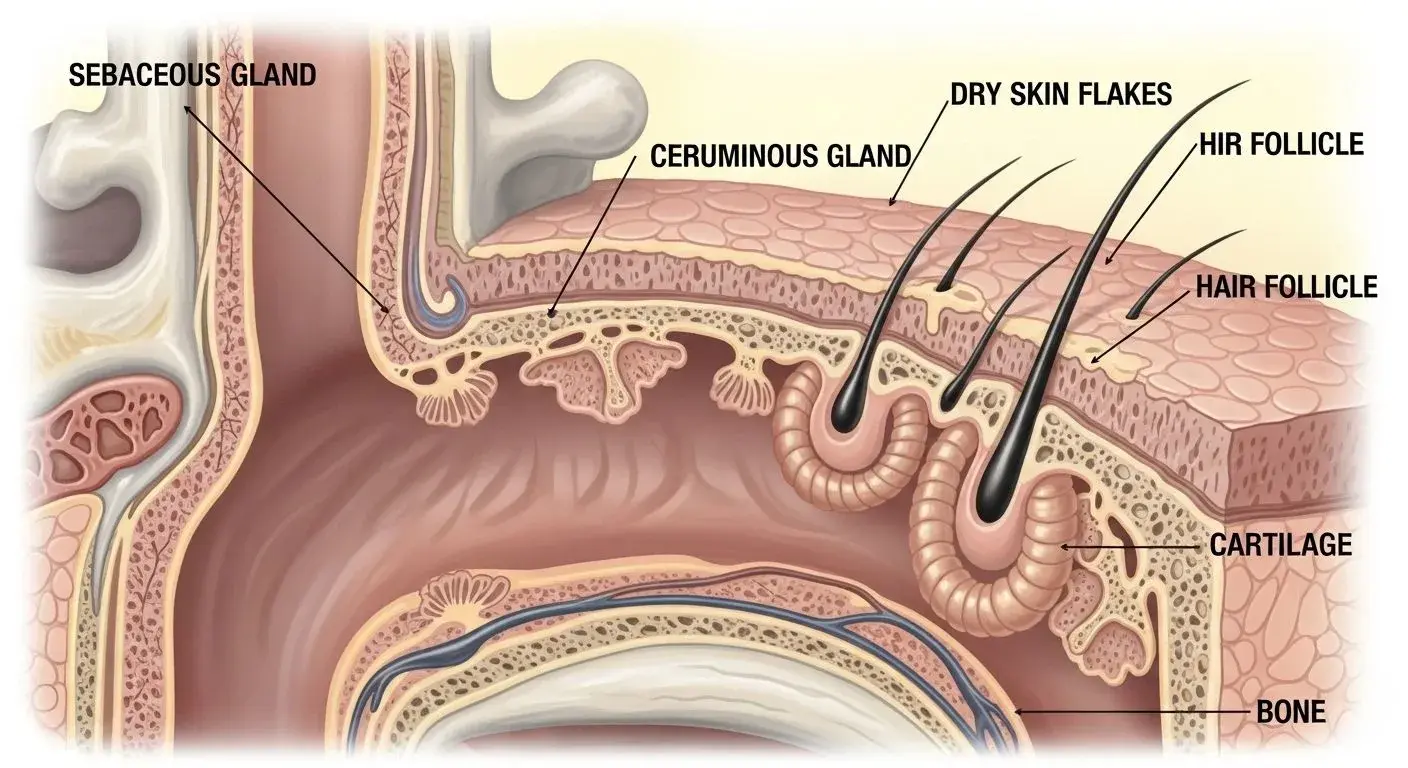
Yes — and it is more direct a connection than most people realise. The ear canal is lined with specialised skin that contains sebaceous glands responsible for producing earwax (cerumen). These glands are regulated in part by oestrogen. As oestrogen levels fall during perimenopause, sebaceous activity throughout the body decreases — and the ear canal is no exception. The result is a drier, thinner ear canal lining that becomes itchy, flaky, and hypersensitive to sound, earbuds, hearing aids, and even temperature changes.
This also explains a symptom many perimenopausal women notice but rarely connect to hormones: a change in earwax texture and smell. With reduced sebaceous output, earwax becomes drier, harder, and less effective at its natural self-cleaning role. Some women notice it smells different — slightly more pronounced — which is a by-product of altered gland secretion rather than infection or poor hygiene.
Itching concentrated deep in the inner ear canal, or a sensation of itchiness behind the eardrum, is particularly characteristic of hormonal ear changes rather than external dermatitis or fungal infection. These are distinct conditions requiring different approaches. The full treatment breakdown is covered in menopause itchy ears: treatment options.
Hot Ears, Night-Time Itch, and Earache: Untangling the Symptoms
Perimenopausal ear symptoms extend beyond simple itching. Some women experience hot ears — a flushing or burning warmth that affects the outer ear and earlobe, often accompanying hot flushes or occurring independently. This is a vasomotor response: oestrogen normally helps regulate peripheral blood vessel tone, and its decline makes the vascular responses in the skin less controlled. Hot ears are not an infection; they are a circulation response to hormonal fluctuation.
Night-time itching inside the ears is disproportionately common during perimenopause and is worsened by lying on the affected side, increasing local warmth and reducing airflow. A key misconception here: many women assume night-time ear itch means a fungal infection and apply antifungal drops without medical advice. Fungal otitis externa (ear canal fungal infection) is possible but requires specific diagnosis — it presents with discharge and significant discomfort rather than isolated dry itch, and antifungal drops applied to a hormonally dry canal can further strip natural oils and worsen the symptom.
Menopause earache — a dull ache or feeling of fullness rather than sharp pain — is also reported by perimenopausal women and is thought to relate to changes in the Eustachian tube, which also has oestrogen-sensitive tissue. This is distinct from infection-based earache and typically does not respond to standard ear drops. If persistent, ENT evaluation is warranted to rule out other causes.
How to Stop Itchy Ears During Menopause: What Works
The first rule is to stop cotton bud use entirely. This is standard ENT advice, but it is even more important for perimenopausal women: the drier, thinner ear canal skin is more easily abraded, and cotton buds compact the drier cerumen further inward while removing the minimal natural oil present. The itch-scratch cycle with cotton buds is one of the most common reasons hormonal ear itch becomes chronic and difficult to break.
Effective relief comes from restoring moisture to the ear canal skin. A single drop of warmed olive oil or almond oil applied once or twice weekly softens dry cerumen and lubricates the canal lining without disrupting the natural pH. Over-the-counter ear sprays containing sodium bicarbonate or glycerol can soften impacted dry wax gently. Importantly, neither approach should be used if there is any history of perforated eardrum — in that case, a GP or audiologist should manage ear canal care directly.
For women whose itchy ears appear alongside scalp itch, skin itch on the body, or other unusual itch sites, this multi-site pattern is characteristic of systemic oestrogen withdrawal rather than isolated ear pathology. Understanding the full scope of how perimenopause affects skin and mucosal tissue across the body is explored in how to stop itchy ears during menopause and perimenopause, which includes oestrogen cream options and when to consider them.