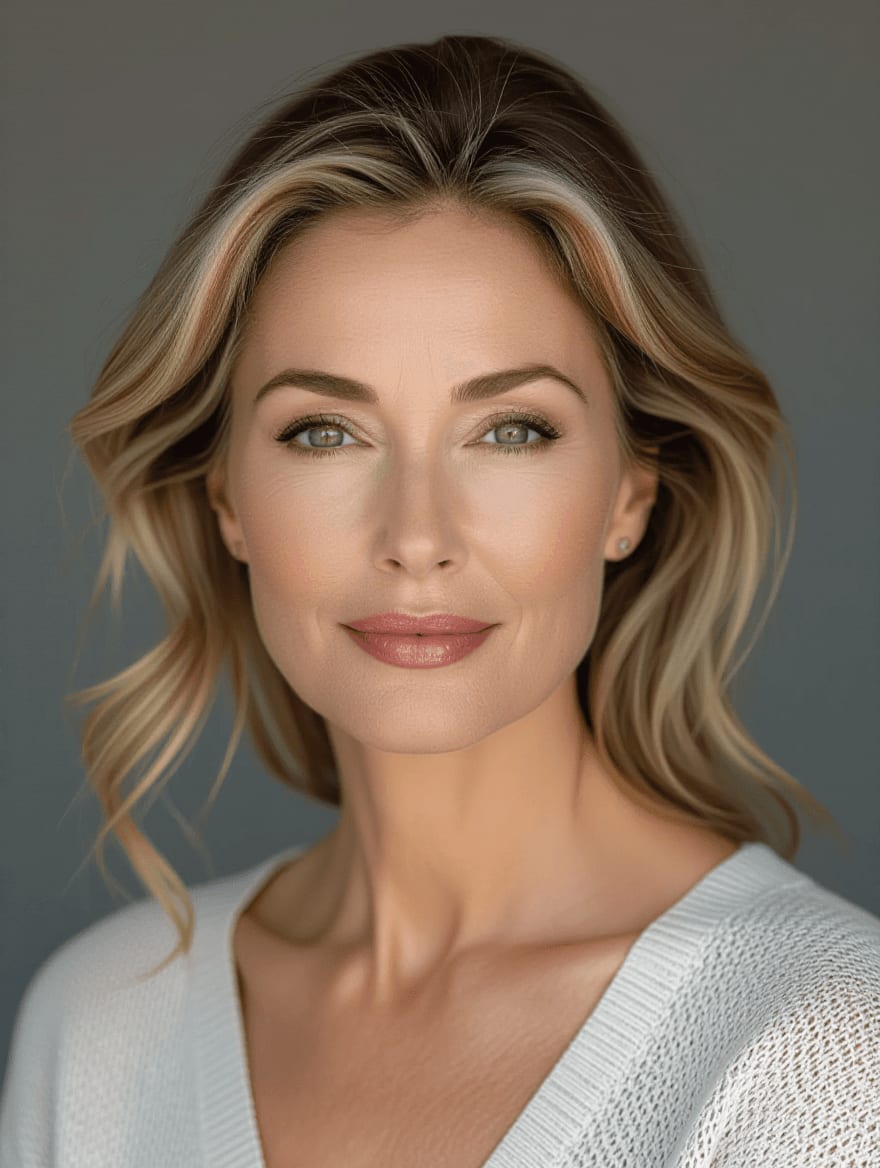
Why Mature Beauty Requires a Completely Different Approach
The concept of mature beauty has been fundamentally misunderstood by the mainstream beauty industry, which treats aging as a problem requiring correction rather than a natural evolution requiring adaptation. The search for resources about mature beauty reflects a growing frustration: women over 40, 50, and 60 recognize that techniques and products designed for younger skin don't just fail to work—they actively make you look older. This isn't about vanity or refusing to age; it's about understanding that your skin, facial structure, and hormonal environment have changed so dramatically that continuing previous routines produces counterproductive results.
What dermatological and anatomical research reveals about beauty after 40: you experience compound physiological changes that standard beauty advice ignores. Estrogen decline reduces skin thickness by approximately 1.13% annually after menopause, collagen production drops by 30% in the first five post-menopausal years, and facial bone resorption causes structural changes that alter where light and shadow naturally fall on your face. Simultaneously, the malar fat pads that gave your face youthful fullness descend by 1-2mm per year, while deeper fat compartments atrophy, creating hollowing in areas that were previously full. These aren't cosmetic concerns—they're anatomical realities that demand strategic response.
The critical insight that transforms your entire beauty approach: you're not trying to look younger—you're optimizing for your current face with its unique characteristics, challenges, and advantages. Mature skin has benefits younger skin doesn't: the natural oils that caused breakouts at 25 now provide barrier protection, slower cell turnover means less sensitivity to active ingredients once you adjust dosage, and facial structure has settled into its permanent architecture, making it easier to identify your optimal makeup placement. The goal isn't anti-aging—it's age-appropriate enhancement that works with your biology. For comprehensive strategies on navigating these changes, see our complete makeup guide for menopausal skin changes.
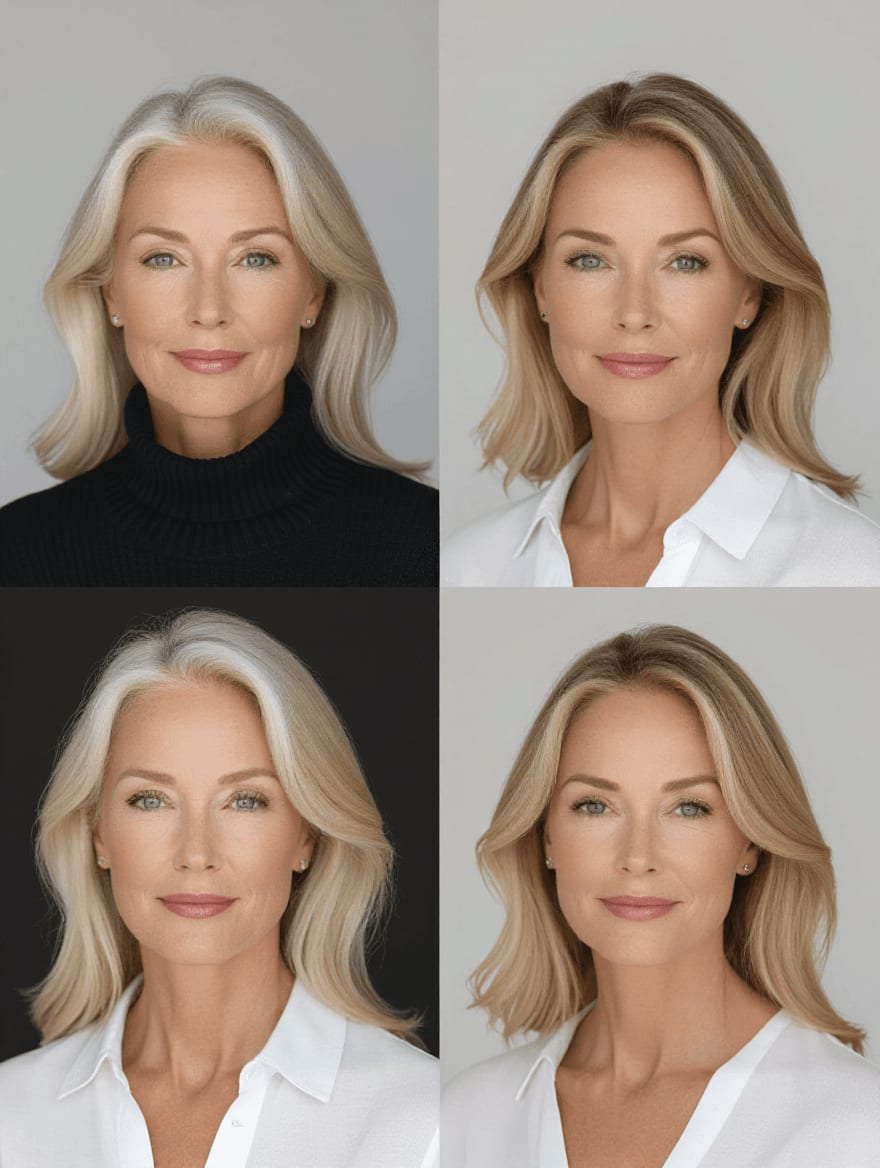
The Mature Beauty Myths Holding You Back
Myth 1: Less Makeup Looks More Age-Appropriate
The pervasive advice that mature women should wear minimal makeup stems from outdated notions of dignity and invisibility, not from what actually looks best. The reality contradicts this entirely: strategic makeup becomes more important as you age, not less, because you're compensating for natural color loss, defining features that have softened, and creating dimension where volume has decreased. What changes isn't the amount of makeup—it's the type and placement. Heavy foundation looks aging, but sheer coverage with strategic highlighting looks polished. No eyebrow definition makes you disappear, but natural brow enhancement frames your face. The trade-off that professionals understand: mature beauty requires more skill and precision than youthful makeup, but the result should look effortless rather than obvious.
Myth 2: You Should Abandon Bold Colors After 40
Here's what beginners misunderstand about color selection for mature beauty: the advice to stick with neutral, muted tones assumes that vibrancy automatically reads as trying too hard. But what actually happens with pale, washed-out colors on mature skin is that you blend into the background, looking tired rather than refined. Evidence shows that warm, saturated colors—berry lipsticks, terracotta blush, rich bronze eyeshadow—provide the contrast necessary to define features that have lost natural pigmentation and definition. The key isn't avoiding bold colors; it's choosing them strategically and applying with the right intensity. A vibrant lip on an otherwise understated face creates intentional focal point. Muted everything creates unintentional invisibility.
Myth 3: Expensive Products Work Better on Mature Skin
The misconception that mature beauty requires luxury-tier investment: while some high-end products do perform better, price correlates poorly with actual effectiveness for aging skin. What matters is ingredient selection and formula design, not brand prestige or packaging aesthetics. A drugstore foundation containing hyaluronic acid and light-reflecting particles outperforms a luxury formula with heavy silicones and mattifying agents, regardless of price difference. The contradiction between marketing and reality shows that mature skin needs specific functional ingredients—peptides, niacinamide, squalane, ceramides—and these appear across price points. Many luxury brands still formulate for younger consumers and simply age-adjust their marketing without changing formulas.
The Complete Mature Beauty Strategy That Works
The most effective approach to mature beauty integrates three interdependent elements: skincare that addresses barrier function and hydration rather than aggressive anti-aging, makeup that enhances rather than conceals, and technique that compensates for structural changes through strategic placement. These work synergistically—excellent skincare creates a better canvas for makeup, while proper makeup technique protects skin throughout the day and reduces the need for heavy coverage. This represents a philosophical shift from fighting aging to optimizing for your current reality.
Your foundational mature beauty principles should include:
- Prioritize hydration at every stage: Mature skin's primary deficit is moisture, not oil. Layer water-based serums containing hyaluronic acid and glycerin before applying lightweight emollients. Choose makeup formulas with hydrating bases—tinted serums instead of traditional foundation, cream blush instead of powder, lip treatments with color instead of matte lipsticks. Every product should add moisture or at minimum avoid depleting it.
- Place products higher than instinct suggests: Facial features have descended with gravity and volume loss. Your makeup placement must compensate by going higher—blush on the upper cheekbone rather than the apple, eyeshadow above the natural crease, lip liner slightly outside your natural lip line, brow arch positioned higher than it naturally sits. This creates optical lift that counteracts structural descent.
- Choose luminosity over coverage:Thick coverage emphasizes texture and looks mask-like on mature skin. Sheer to medium coverage with strategic concealer provides better results. Light-reflecting particles in foundation, highlighter, and even eyeshadow scatter light across imperfections, creating optical smoothness without the weight of heavy pigment. Dewy and satin finishes consistently outperform matte on mature skin.
- Apply with minimal manipulation:Mature skin bruises easily and shows redness from friction. Press and pat products into skin using damp sponges or fingers—never drag, buff, or vigorously blend. Use the lightest possible touch, building coverage gradually through multiple thin layers rather than attempting full coverage in one application.
Your daily routine should follow a specific sequence that maximizes each product's effectiveness. Morning: hydrating serum, antioxidant treatment (vitamin C), lightweight moisturizer, SPF, tinted serum or light foundation, cream blush, brow definition, mascara, lip treatment with color. Evening: thorough but gentle cleansing, treatment actives (retinoid or peptides), richer moisturizer, eye cream. This represents the minimum effective routine—you can add but shouldn't subtract without understanding the consequences. For detailed product recommendations that execute this philosophy, explore our guide to the best makeup for women in their 40s and beyond.
When Standard Mature Beauty Advice Fails
Here's the edge case that derails even expert guidance: some women experience such severe hormonal disruption during perimenopause and menopause that their skin becomes fundamentally unstable—cycling between extreme dryness and unexpected oiliness, developing sudden sensitivities to previously tolerated products, experiencing inflammatory flares from minimal triggers, or showing paradoxical responses where moisturizers cause breakouts while actives somehow don't irritate. Standard mature beauty advice assumes your skin has settled into a predictable pattern of dryness and sensitivity. When it hasn't, when it remains volatile and reactive years into menopause, the consistent routine that works for most women becomes impossible. You can't commit to hydrating products when your skin might turn oily tomorrow, or invest in gentle formulas when you might tolerate stronger actives next week. The solution requires abandoning the idea of a fixed routine entirely and instead maintaining a flexible arsenal: multiple foundation formulas for different skin states, both cream and powder blush options, various moisturizer weights you rotate based on daily assessment. This means performing a skin check every morning before applying anything—assessing oiliness, dryness, sensitivity, and texture—then selecting products accordingly rather than following rote routine. Additionally, this volatility often indicates underlying issues requiring medical intervention: hormone replacement therapy, treatment for autoimmune conditions, or addressing nutritional deficiencies that manifest first in skin instability. Some women find that once these root causes are addressed, their skin stabilizes enough for consistent routines to work. Others discover their skin remains variable even with medical management, requiring permanent adaptation to a responsive rather than prescriptive approach. The limitation extends beyond daily inconvenience to identity disruption—you can't develop signature looks or reliable techniques when your skin refuses consistency. This forces a different relationship with beauty entirely: one based on adaptability and acceptance rather than perfection and control. For some women, this flexibility becomes liberating, freeing them from the pressure of maintaining appearances. For others, it represents a frustrating loss of mastery over something they'd previously understood intuitively. Both responses are valid, and neither represents failure—they're simply different ways of navigating beauty when the conventional framework no longer applies.