
Why Hormonal Shifts Trigger Melasma and Pigmentation Changes
Melasma is often thought of as a pregnancy condition — the so-called 'mask of pregnancy' — but the same hormonal mechanisms that drive it during gestation can reactivate or worsen it during perimenopause. The link is estrogen. Estrogen stimulates melanocytes (the skin cells responsible for pigment production) directly, and the erratic estrogen surges that characterise early perimenopause — before levels ultimately decline — can trigger irregular melanin production that surfaces as dark patches on the cheeks, forehead, and upper lip.
This means some women experience a temporary worsening of melasma in perimenopause even before menopause is confirmed — a pattern that confuses many because their estrogen has not 'dropped' yet. The problem is not low estrogen but unstable estrogen. Separately, post-menopause brings a different pigmentation issue: accumulated UV damage becomes more visible as the skin thins and its ability to regulate melanin distribution weakens, leading to solar lentigines (age spots) that are distinct from melasma but often discussed together.
HRT's relationship with pigmentation is nuanced. Transdermal estrogen at stable doses may actually help regulate melanocyte activity compared to the erratic surges of perimenopause. However, oral HRT and high-dose estrogen can sometimes worsen melasma in women who are predisposed, mirroring the hormonal load of pregnancy. This is a trade-off that is rarely discussed honestly in menopause skincare content.
What Works, What Does Not, and the Misconceptions That Slow Progress
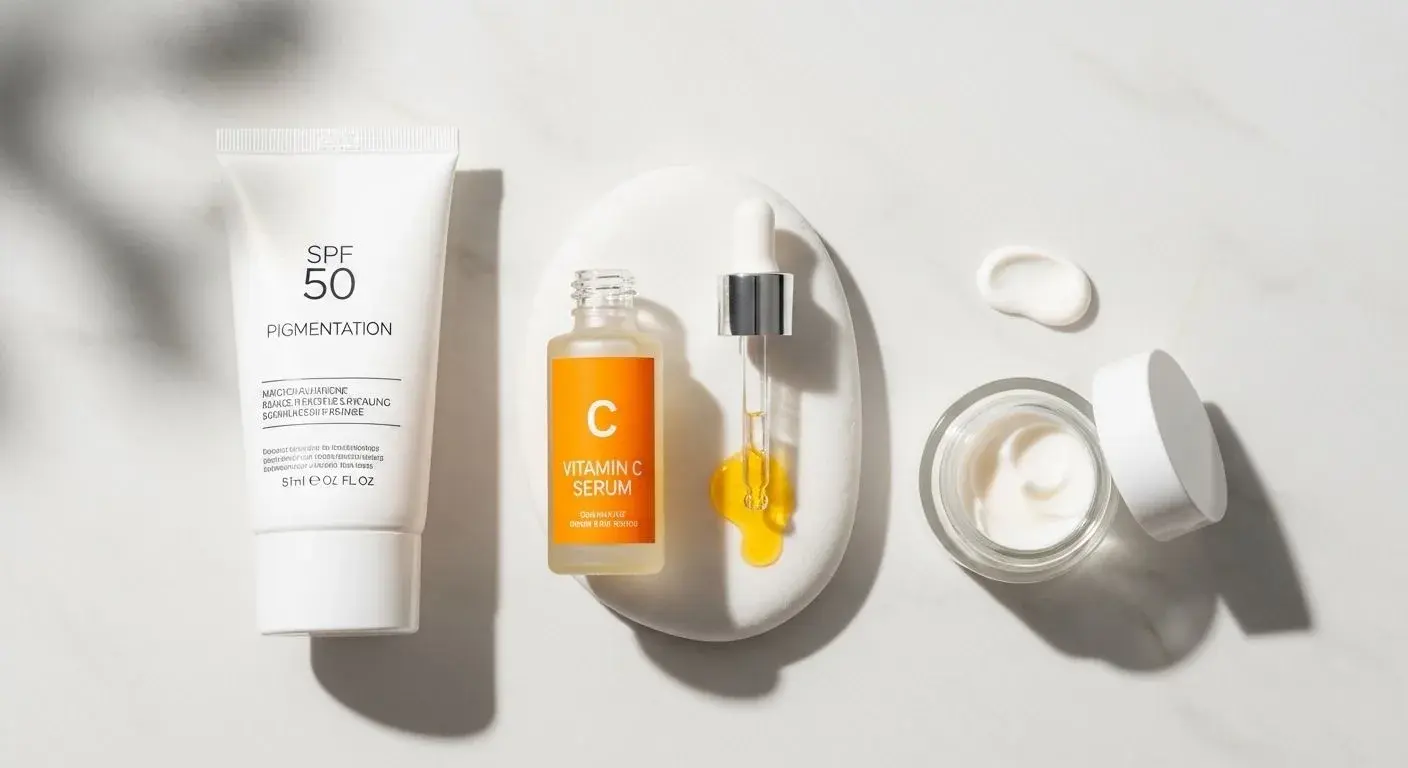
The most pervasive misconception is that brightening serums alone will clear menopause pigmentation. No topical ingredient — including the gold-standard hydroquinone — works reliably without strict daily SPF use. UV exposure is the primary trigger that keeps melanocytes overactive, and in menopausal skin that has thinned and lost some of its natural UV defence capacity, unprotected sun exposure will reverse any brightening progress within days. SPF 50 applied every morning is not optional for this skin concern.
A second misconception is that all dark patches in menopause are the same and respond to the same treatment. Melasma (driven by hormones and UV together), solar lentigines (purely UV-driven), and post-inflammatory hyperpigmentation (from skin damage or dermatitis) each have different mechanisms and respond to different interventions. Vitamin C is broadly useful across all three for its antioxidant and melanin-inhibiting effects, but deeper melasma often requires prescription-strength actives or professional treatments that OTC products cannot replicate.
Where standard advice fails: chemical exfoliants like AHAs are frequently recommended for pigmentation, but menopausal skin is thinner and more reactive than younger skin. Overuse can trigger inflammation that worsens pigmentation — a phenomenon called post-inflammatory hyperpigmentation from treatment itself. The rule for menopausal skin is to start at lower concentrations and lower frequency than product guidelines suggest. See our detailed guide on melasma and skin pigmentation changes in menopause for a full breakdown of treatment options by pigmentation type.
Building a Pigmentation Routine That Suits Menopausal Skin
An effective routine for menopause hyperpigmentation works in two phases: inhibiting new melanin production and gently accelerating cell turnover to bring existing pigment to the surface and shed it. The morning routine should be anchored by an antioxidant (vitamin C serum is the most evidence-backed option) followed by SPF 50 — applied daily, not just on sunny days. This combination interrupts the UV-melanin activation cycle at two points simultaneously.
At night, low-dose retinol or retinaldehyde accelerates cell turnover without the irritation risk of prescription tretinoin in sensitive menopausal skin. Niacinamide (at 5–10%) works well alongside either, as it inhibits the transfer of melanin from melanocytes to skin cells independently of the other actives — meaning it adds benefit without competition or irritation risk. Azelaic acid is a strong alternative for women who find retinoids too sensitising; it both inhibits melanin synthesis and has mild anti-inflammatory effects.
For those exploring topical vitamin C specifically, results vary significantly by formulation — stability, pH, and concentration all affect efficacy. Our article on vitamin C on the face: before and after results covers what realistic outcomes look like and how to choose a formula that will actually perform on mature skin.