
Understanding Dry Skin During Menopause: The Estrogen Connection
Yes — menopause does cause dry skin, and the mechanism is direct. Estrogen receptors are embedded throughout the skin, particularly in the face, neck, and forearms. When estrogen declines during perimenopause and menopause, skin loses its ability to retain moisture, produce collagen, and maintain the lipid barrier that keeps irritants out and hydration in.
The specific changes are well-documented. Estrogen stimulates hyaluronic acid production — the molecule responsible for binding water in skin tissue. Low estrogen directly reduces this production, leading to the tight, papery, or flaky texture many women describe. Collagen production also drops sharply: studies estimate skin loses approximately 30% of its collagen in the first five years after menopause. What this looks like in practice is a face that looks more lined, less plump, and slower to heal than it did at 40.
What most skin guides miss is that dryness does not affect all areas equally. The T-zone may stay oilier longer than the cheeks and jaw, creating a confusing 'combination-dry' pattern that does not respond well to standard dry skin routines. Sebaceous gland activity also changes unevenly, and the resulting skin behaviour is harder to predict than simple dryness. This is why a blanket routine rarely works — skin in early perimenopause needs a different approach than post-menopausal skin two decades later.
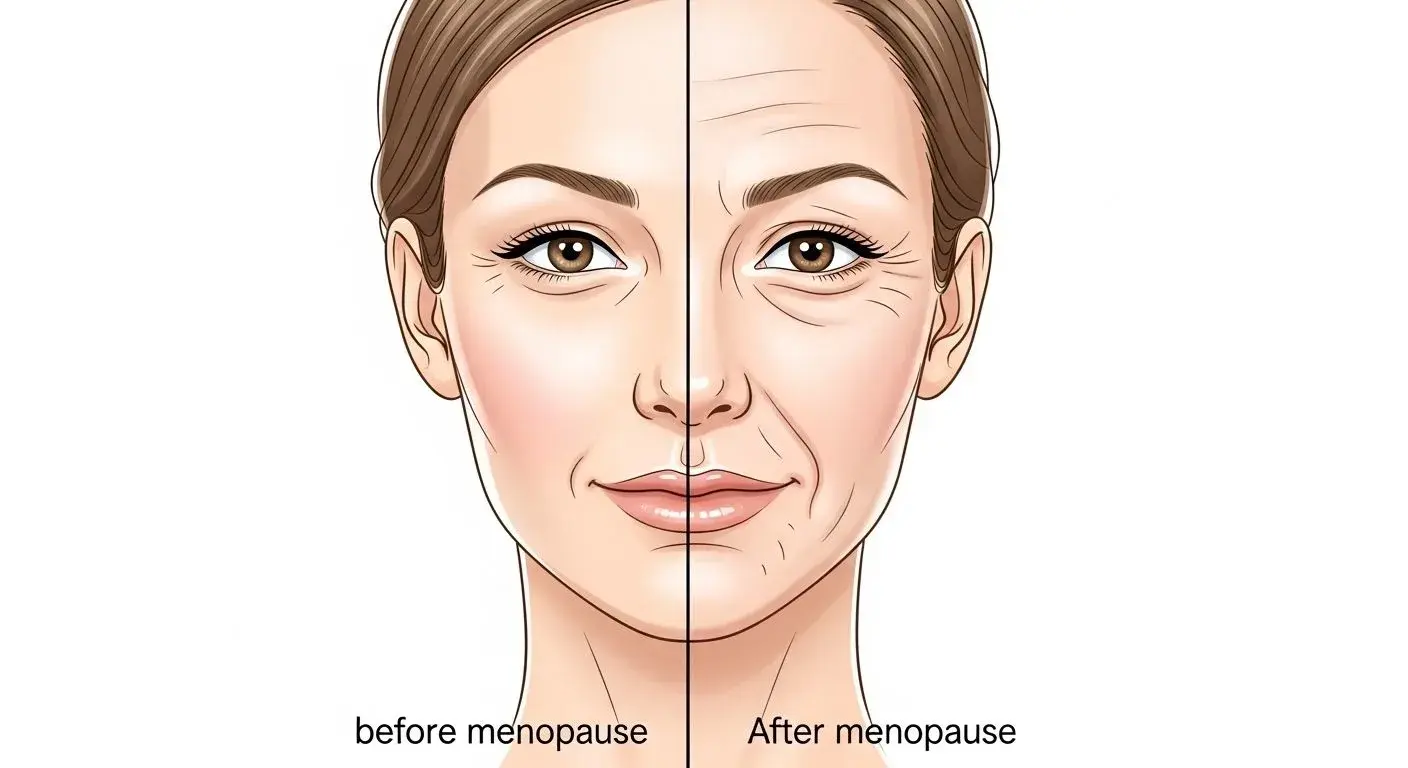
Common Myths vs. What Actually Restores Menopausal Skin
Myth 1: 'More moisturiser means less dryness.' Applying heavier creams more frequently is the instinctive response — but it often makes things worse. Thick occlusive creams without humectants (like hyaluronic acid or glycerin) can trap surface cells, disrupt skin cell turnover, and paradoxically dull the skin's appearance over time. Menopausal skin needs layered hydration: humectant serum first to draw water into the skin, then an emollient to seal it in.
Myth 2: 'Retinol is too harsh for menopausal skin.' This is the opposite of the evidence. Retinoids are among the most well-researched ingredients for post-menopausal skin — they stimulate collagen synthesis, accelerate cell turnover, and reduce the greyish texture that accompanies estrogen decline. The issue is introduction speed, not the ingredient itself. Starting at a low concentration (0.025–0.05%) every third night and building slowly is what dermatologists recommend. Women who abandon retinol after a week of irritation miss months of meaningful skin improvement.
The contradiction between common belief and evidence here is striking: the very women who need retinol most — those experiencing rapid collagen loss in post-menopause — are the most often told to avoid it. For menopausal skincare product recommendations, our guide on the best menopause face creams and skincare breaks down what ingredients and formulations to prioritise at each stage.
Practical Strategies That Work — and When Standard Advice Fails
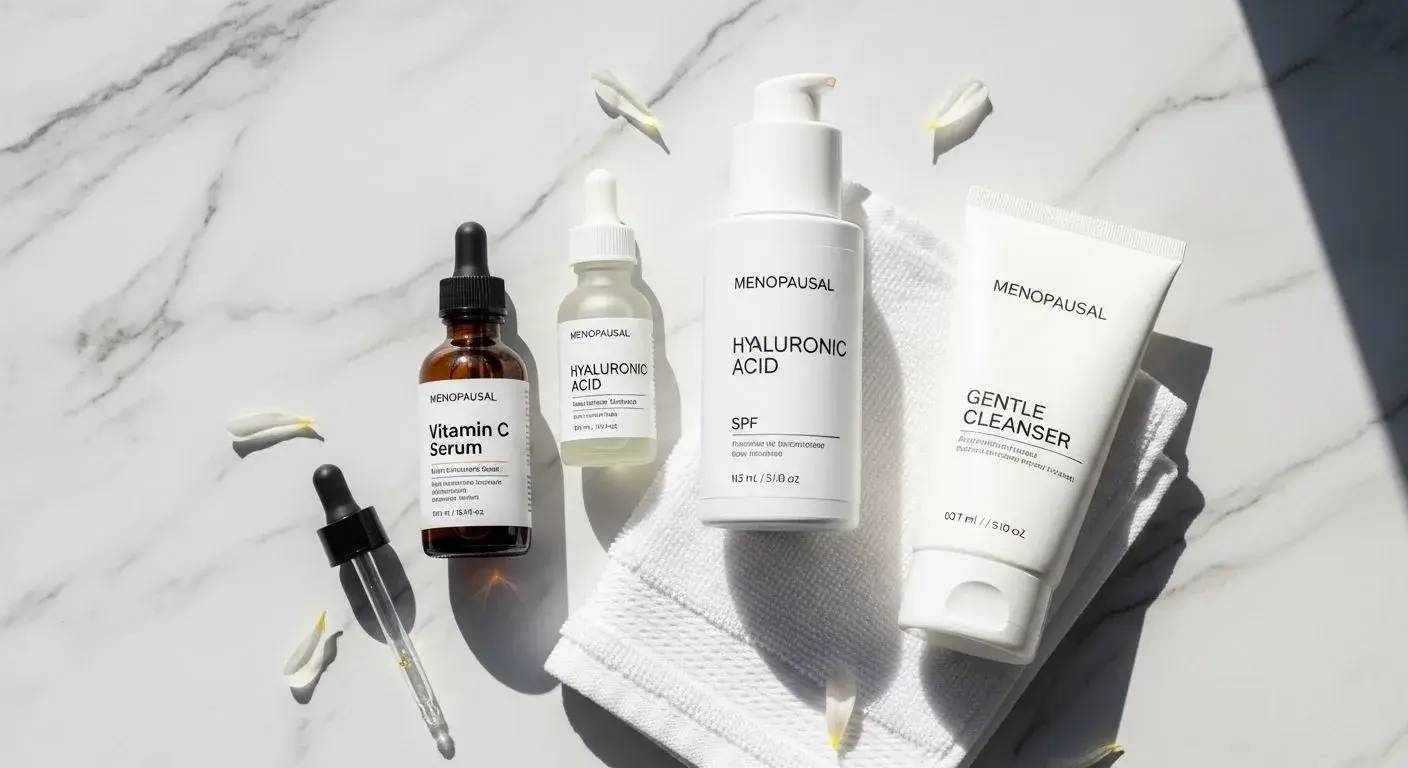
For most menopausal women, a three-step morning routine covers the core needs: a gentle, non-foaming cleanser that does not strip the skin barrier, a vitamin C serum for collagen support and antioxidant protection, and a broad-spectrum SPF moisturiser. Evening: mild exfoliation 2x per week (lactic acid works well for sensitive menopausal skin), followed by retinol at low concentration on non-exfoliation nights, and a barrier-repair cream containing ceramides and fatty acids.
The case where this routine fails: women with extremely dry, sensitised post-menopausal skin who are also using hormone replacement therapy (HRT). HRT can partly restore skin hydration and elasticity, which means the same woman may need lighter formulations after 6–12 months on HRT than she did before. Continuing with the same heavy repair creams can lead to congestion and breakouts — a frustrating outcome after months of improvement. Skin routines during HRT need to evolve, not stay static.
Dietary factors are consistently underestimated. Omega-3 fatty acids from oily fish, flaxseed, or quality supplements directly support skin-cell membrane integrity. Inadequate water intake combined with indoor heating — extremely common in winter — accelerates transepidermal water loss in menopausal skin, which no topical can fully compensate for. Internal hydration remains the foundation that skincare builds on, not the other way around. For brightening and antioxidant support alongside your dry-skin routine, vitamin C results before and after is worth reviewing. Always speak with a dermatologist or GP before making significant changes to your skincare or hormone treatment plan.
- Key ingredients to look for: Hyaluronic acid, ceramides, niacinamide, lactic acid, peptides, and retinoids (low-strength to start).
- Ingredients to avoid: High-fragrance formulations, denatured alcohol as a primary ingredient, and harsh physical scrubs — all of which damage an already-compromised skin barrier.
- Adjust seasonally: Menopausal skin reacts more dramatically to temperature and humidity changes than younger skin. Swap to a richer barrier cream in winter and a lighter lotion in summer without guilt.