
Why Menopause Makes Skin So Dry — and Why Moisturizer Alone Isn't Enough
Most women reach for richer creams when menopause dryness hits. That helps — but only at the surface. The real driver is estrogen decline, which reduces the skin's ability to retain water, produce ceramides, and synthesize collagen. By the time dryness becomes visible, the skin barrier has been compromised from within. Topical products can't fully compensate for that deficit, which is why targeted supplements matter. If your skin is also crawling or tingling alongside the dryness, that's a different signal — see our guide on menopause itchy ears treatment for why nerve sensitivity plays a separate role.
The most evidence-backed supplements for menopause dry skin work through three pathways: rebuilding the lipid layer, reducing internal inflammation that accelerates moisture loss, and supporting collagen density. Understanding which pathway your skin needs most helps you avoid wasting money on the wrong products.
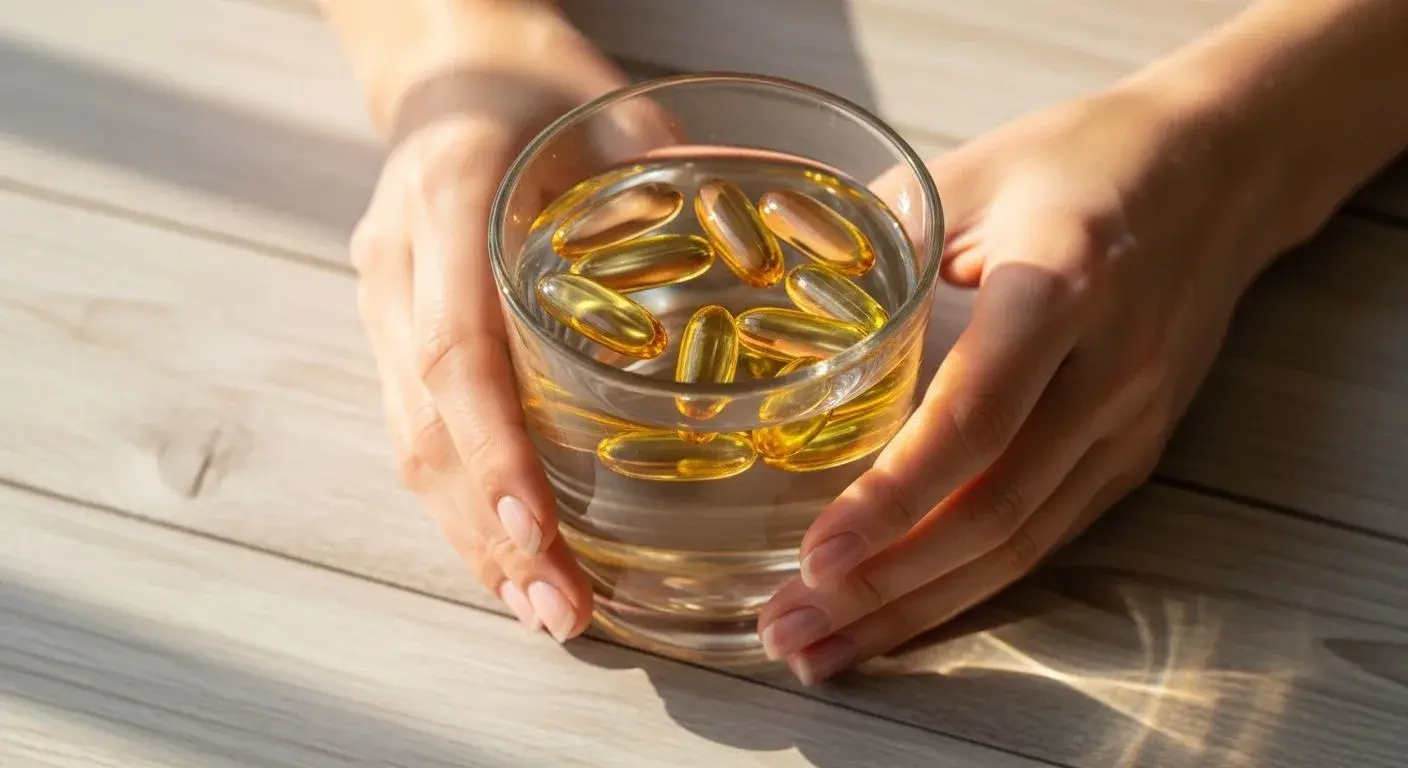
- Omega-3 fatty acids (EPA/DHA): Strengthen the lipid barrier and reduce the internal inflammation that accelerates transepidermal water loss. Fish oil or algae-based omega-3s (1,000–2,000 mg daily) are the most studied option.
- Evening primrose oil (GLA): Rich in gamma-linolenic acid, which the body uses to produce skin-protective prostaglandins. Particularly useful for women whose dryness comes with itching and sensitivity.
- Marine collagen (Types I and III): Provides the amino acid building blocks that declining estrogen no longer triggers the body to produce at the same rate. Hydrolyzed forms absorb more efficiently.
What Most Women Get Wrong About Skin Supplements
The biggest misconception is that more supplements equal faster results. In reality, taking five different skin supplements simultaneously makes it impossible to know what's working — and some combinations actually compete for absorption. For example, high-dose vitamin E can interfere with vitamin K2 metabolism, both of which are promoted for skin health.
A second common error is expecting collagen supplements to work without adequate vitamin C. Collagen synthesis requires vitamin C as a cofactor — without it, even high-quality marine collagen is poorly utilized. Many women supplement collagen and see limited results simply because their vitamin C intake is insufficient.
There's also a case where supplements genuinely fail: if your dryness and itching are tied to scalp involvement or widespread crawling sensations, the underlying cause may be neurological rather than nutritional. In that situation, supplementation addresses the wrong problem entirely. Our article on menopause itchy scalp causes and relief explains when a dermatologist referral is the more productive route.
Finally, most supplements require a consistent 8–12 week trial before visible results appear in skin. Women who abandon a protocol at four weeks often do so right before it would have produced a noticeable difference.
A Practical Supplement Protocol for Perimenopause and Post-Menopause Skin
For early perimenopause, when estrogen fluctuates rather than steadily declining, the priority is supporting the lipid barrier and calming inflammatory responses that spike during hormonal swings. A daily combination of omega-3s (1,000 mg EPA/DHA) plus evening primrose oil (500–1,000 mg) covers both angles without over-supplementing.
In post-menopause, the focus shifts toward structural support. Estrogen loss accelerates collagen breakdown significantly in the first five post-menopausal years. At this stage, adding marine collagen (5–10 g daily with vitamin C) alongside continued omega-3s produces the most consistent outcomes in clinical observations.
One trade-off worth acknowledging: supplementation works best as a complement to a skin-supportive diet, not a substitute. Women whose diets are already rich in fatty fish, seeds, and diverse vegetables often find supplement benefits are more modest — which is a good sign, not a disappointment. The supplement gap matters most when diet falls short. Always consult a healthcare provider before starting a new supplement regimen, particularly if you take blood thinners or hormone therapy.