
Why Menopause Causes Foot Pain and Aching
Foot pain in perimenopause and menopause is a genuinely hormonal symptom, not simply a consequence of ageing. Estrogen plays a specific structural role in the feet: it maintains the elasticity of the plantar fascia (the thick connective tissue band across the sole of the foot), supports collagen in the tendons and ligaments of the foot and ankle, and contributes to the fat padding in the heel that cushions each step. As estrogen declines, all of these structures become less supple and less well-maintained. The plantar fascia tightens and becomes more prone to inflammation, producing the heel or arch pain known as plantar fasciitis that many menopausal women suddenly develop with no prior foot history.
The fat padding in the heel also thins with age and declining estrogen, reducing the natural shock absorption of each footstep. This is why many women in their late 40s and 50s find that shoes that were once comfortable become painful, or that standing for periods that previously caused no discomfort now lead to significant sole aching. Pain on the top of the foot in menopause is typically related to tendon inflammation (extensor tendonitis) driven by the same collagen changes. These are the same mechanisms that produce joint pain throughout the body during menopause, which we cover in detail in our article on menopause-related back and hip pain.
Sweaty Feet, Foot Odour, and Temperature Changes
Sweaty feet during menopause are an extension of the same thermoregulatory dysfunction that causes hot flashes and night sweats. The hypothalamus, misfiring due to estrogen withdrawal, triggers sweat responses across the body — including the feet, which have a high density of eccrine sweat glands. Some women find that their feet sweat excessively even when the rest of the body is not hot, while others experience alternating cold and hot feet — a reflection of the erratic vasodilation and vasoconstriction that accompanies vasomotor instability.
A common misconception is that sweaty feet in midlife are purely a hygiene issue rather than a symptom. This matters because women may address it with antiperspirant foot products alone when the systemic driver (thermoregulatory instability) remains unaddressed. Moisture-wicking socks (merino wool or bamboo rather than synthetic), breathable leather or mesh footwear, and rotating shoes to allow drying between wears all help practically. For women whose sweating is primarily driven by hot flashes, treating the vasomotor symptoms — whether through lifestyle changes, HRT, or other interventions — often reduces foot sweating as a secondary benefit. Unusual sensory changes in other parts of the body during this period are explored in our piece on sensory symptoms in menopause.
Effective Relief for Menopausal Foot Pain
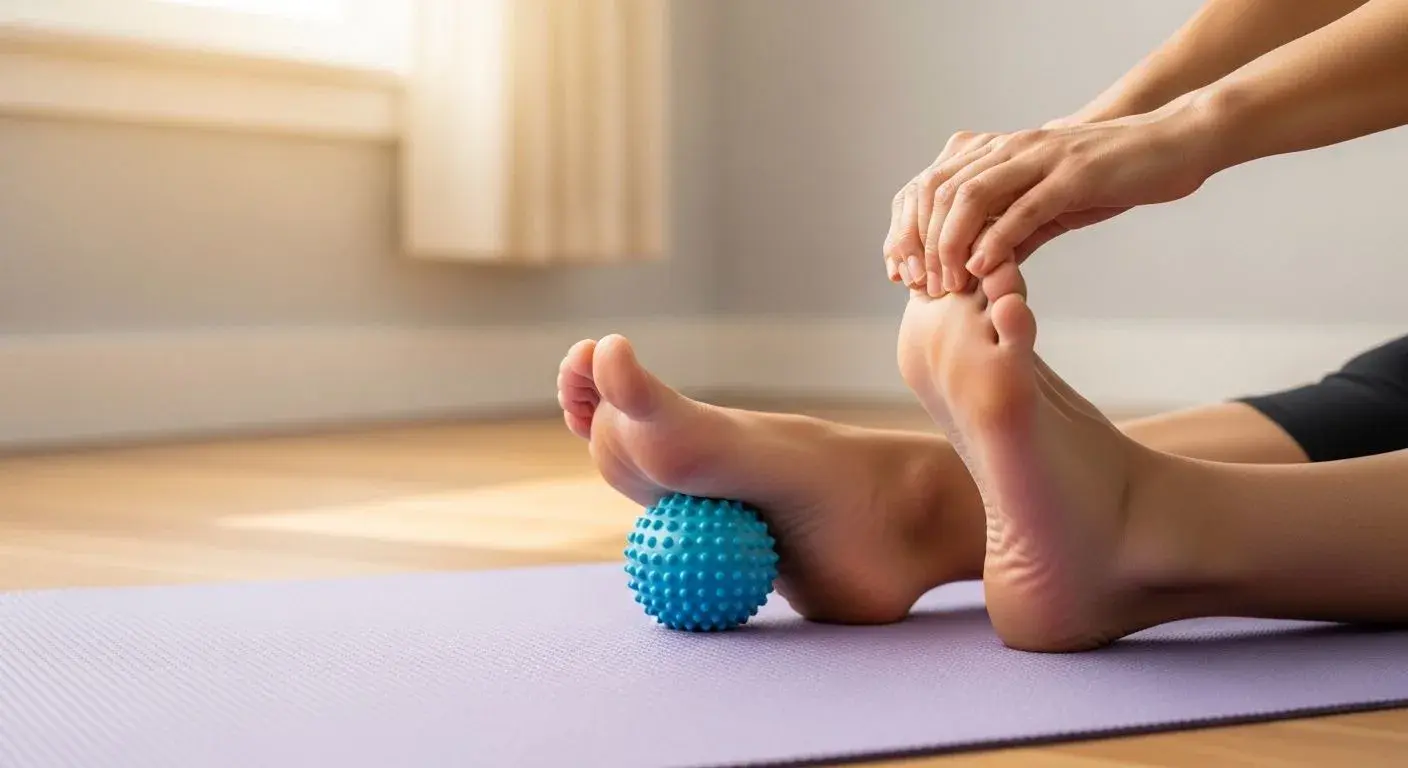
The most evidence-supported approach to menopausal plantar fasciitis and general foot aching combines targeted stretching, footwear changes, and where appropriate supplementation. For plantar fasciitis specifically: calf stretches and plantar fascia-specific stretches (pulling toes toward the shin, especially first thing in the morning before standing) are the most consistently effective interventions in both trial data and clinical practice. Rolling the foot over a frozen water bottle for 5-10 minutes reduces acute inflammation. These take consistency over several weeks rather than delivering immediate relief.
Footwear is frequently the most immediately impactful change: switching to supportive shoes with adequate heel cushioning and arch support (or adding custom or over-the-counter orthotics) dramatically reduces the load on the already-stressed plantar structures. Going barefoot on hard floors — common at home — significantly worsens plantar fasciitis symptoms. Collagen peptides (10-15g daily) show emerging evidence for supporting tendon and ligament health and are worth considering alongside dietary protein optimisation. For severe foot pain, a physiotherapist or podiatrist with experience in menopausal musculoskeletal changes can tailor a treatment plan. HRT addressing the underlying estrogen deficit has been shown to improve musculoskeletal symptoms broadly, including in the feet, though it is rarely prescribed specifically for foot pain — it should be considered as part of a holistic symptom management discussion with your GP.