
Why Menopause Triggers Hip Pain
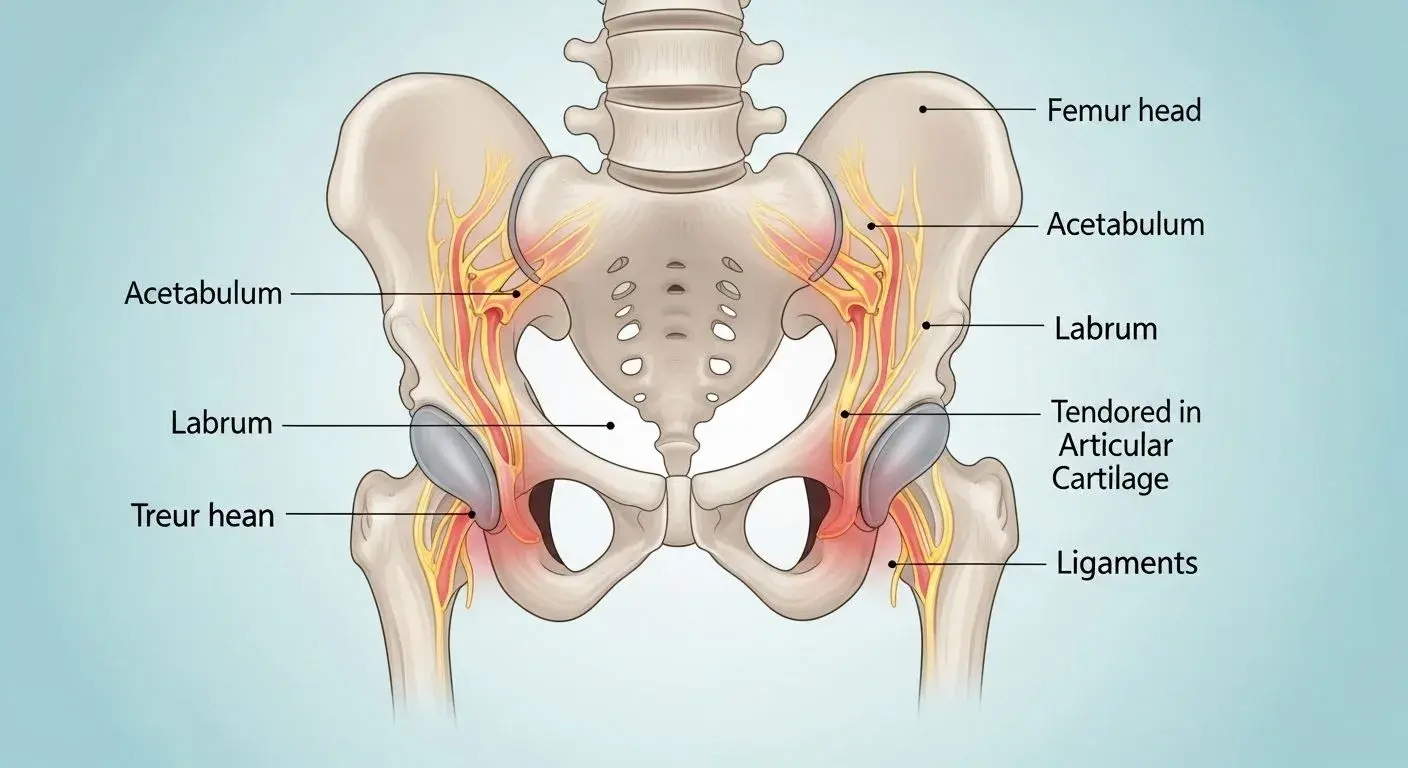
Hip pain during menopause is not random — it has a clear biological cause. Estrogen plays a critical role in maintaining cartilage, tendon elasticity, and synovial fluid in joints. When estrogen drops during perimenopause and menopause, the hips become one of the most affected areas in the body. Inflammation rises, protective cushioning thins, and tendons lose their resilience. The result is pain that can feel deep, achy, and worst at night. Women are also more prone to a specific condition called gluteal tendinopathy — irritation of the tendons around the hip that is directly linked to estrogen decline. This is not the same as arthritis, though it is frequently misdiagnosed as such.
Another underappreciated driver is cortisol dysregulation. During menopause, cortisol (the stress hormone) can spike unpredictably. Elevated cortisol accelerates inflammation in soft tissue and is closely linked to what some practitioners call 'cortisol poisoning' — a state of chronic low-grade inflammation that hits the hips and lower back hardest. Recognising which mechanism is driving your pain shapes how you treat it.
For a broader look at how hormonal changes affect the entire musculoskeletal system, see back and hip pain in menopause.
What Menopause Hip Pain Actually Feels Like
Many women describe menopausal hip pain as a deep, persistent ache rather than a sharp injury-like pain. It is often worse when lying on the affected side at night, when standing from a seated position, or after prolonged walking. Some women experience referred pain running down the outer thigh — this is a hallmark of menopausal bursitis or gluteal tendinopathy, not sciatica (though the two are often confused).
A key misconception is that hip pain in women over 50 is inevitably arthritis. While osteoarthritis does increase post-menopause, the majority of hip pain cases in this age group involve soft tissue — tendons, bursae, and ligaments — not bone-on-bone grinding. This distinction matters enormously because the treatments differ completely. Anti-inflammatory drugs help bursitis; they do not rebuild cartilage.
Night pain specifically is a red flag for gluteal tendinopathy. The tendon is compressed when you lie on it, and the inflammatory response peaks in the early hours, which is why many women wake between 2am and 5am with hip pain. Sleeping with a pillow between your knees to reduce hip adduction is one of the most immediately effective interventions.
Evidence-Based Treatments That Actually Work
The most evidence-backed treatment for menopausal hip pain is targeted physiotherapy, particularly progressive hip abductor strengthening. Weak gluteal muscles place excess load on the hip tendons, perpetuating the pain cycle. Studies consistently show that load-management exercises outperform rest and cortisone injections for gluteal tendinopathy over the long term.
- Hip abductor exercises: Clamshells, side-lying leg raises, and wall squats reduce tendon load progressively.
- Anti-inflammatory diet: Omega-3-rich foods, turmeric, and reduced refined sugar measurably lower systemic inflammation.
- HRT consideration: Hormone replacement therapy restores estrogen, which directly reduces joint inflammation for many women. Discuss with your GP.
- Sleep positioning: A pillow between the knees prevents hip adduction, reducing overnight tendon compression.
One case where standard advice fails: if your hip pain coincides with easy bruising and skin fragility, the underlying driver may be collagen loss rather than tendinopathy. In that scenario, strengthening exercises alone will not resolve the pain. Learn more about collagen-related changes in our article on menopause bruising causes and prevention.
Frequently Asked Questions
Can menopause cause hip pain?
Yes, menopause directly causes hip pain. Falling estrogen reduces cartilage protection, thins synovial fluid, and inflames tendons around the hip. Gluteal tendinopathy and bursitis are especially common. Most women notice hip symptoms peak in perimenopause and early post-menopause, then stabilise with targeted exercise and dietary support.
Why is my hip pain worse at night during menopause?
Night hip pain is worse because lying on the hip compresses inflamed tendons, and cortisol — which naturally suppresses inflammation — is at its lowest in the early morning hours. Sleeping with a pillow between your knees reduces compression and is one of the fastest ways to improve overnight comfort.
Can low estrogen cause hip pain?
Yes. Estrogen maintains collagen in tendons and cartilage and regulates joint inflammation. When estrogen falls, hip tendons become stiffer and more prone to irritation. This is why hip pain often appears in perimenopause — before periods have stopped — when estrogen fluctuations are most dramatic.
What does a frozen hip in menopause mean?
A frozen hip — also called adhesive capsulitis of the hip — is a rare but real condition where the hip joint capsule thickens and limits movement. It is more likely in menopause due to estrogen-driven collagen changes. It differs from bursitis in that stiffness, not just pain, is the dominant symptom. Physiotherapy is the primary treatment.
Sources
- Gluteal Tendinopathy: Integrating Pathomechanics and Clinical Features in Its Management. pubmed.ncbi.nlm.nih.gov — PubMed / NIH
- Estrogen and the Musculoskeletal System. pubmed.ncbi.nlm.nih.gov — PubMed / NIH
- Menopause and Musculoskeletal Pain. menopausesociety.org — The Menopause Society
- Hip Pain: Overview, Causes and Treatment. mayoclinic.org — Mayo Clinic