
Can Menopause and Perimenopause Actually Cause Rashes?
Yes — and it is more common than most women are told. Perimenopause rashes, hives, and sudden skin sensitivity are well-documented but frequently dismissed as coincidental allergies or stress reactions. The real driver is hormonal. Estrogen plays a direct role in regulating mast cells, the immune cells responsible for releasing histamine when the body perceives a threat. As estrogen fluctuates erratically in perimenopause and declines in menopause, mast cell activity becomes less stable, making the skin react to things it previously ignored.
This produces a range of presentations: menopause hives (urticaria — raised, itchy welts that appear and fade), diffuse itching without a visible rash, red flushing patches on the face and chest, and heat rash that becomes far more frequent due to hot flashes causing repeated sweating. Each of these has a slightly different mechanism, which matters when choosing how to treat them.
An estrogen skin rash typically does not look the same as an allergic rash. It tends to be more diffuse, often appearing on the face, neck, and chest — areas with dense estrogen receptors — rather than on the arms or torso. It may flare predictably around the cycle in perimenopause (worsening at ovulation when estrogen peaks sharply) or appear without a clear pattern once cycles become irregular. Allergy testing during this period often returns negative, which can be deeply frustrating without understanding the hormonal context.
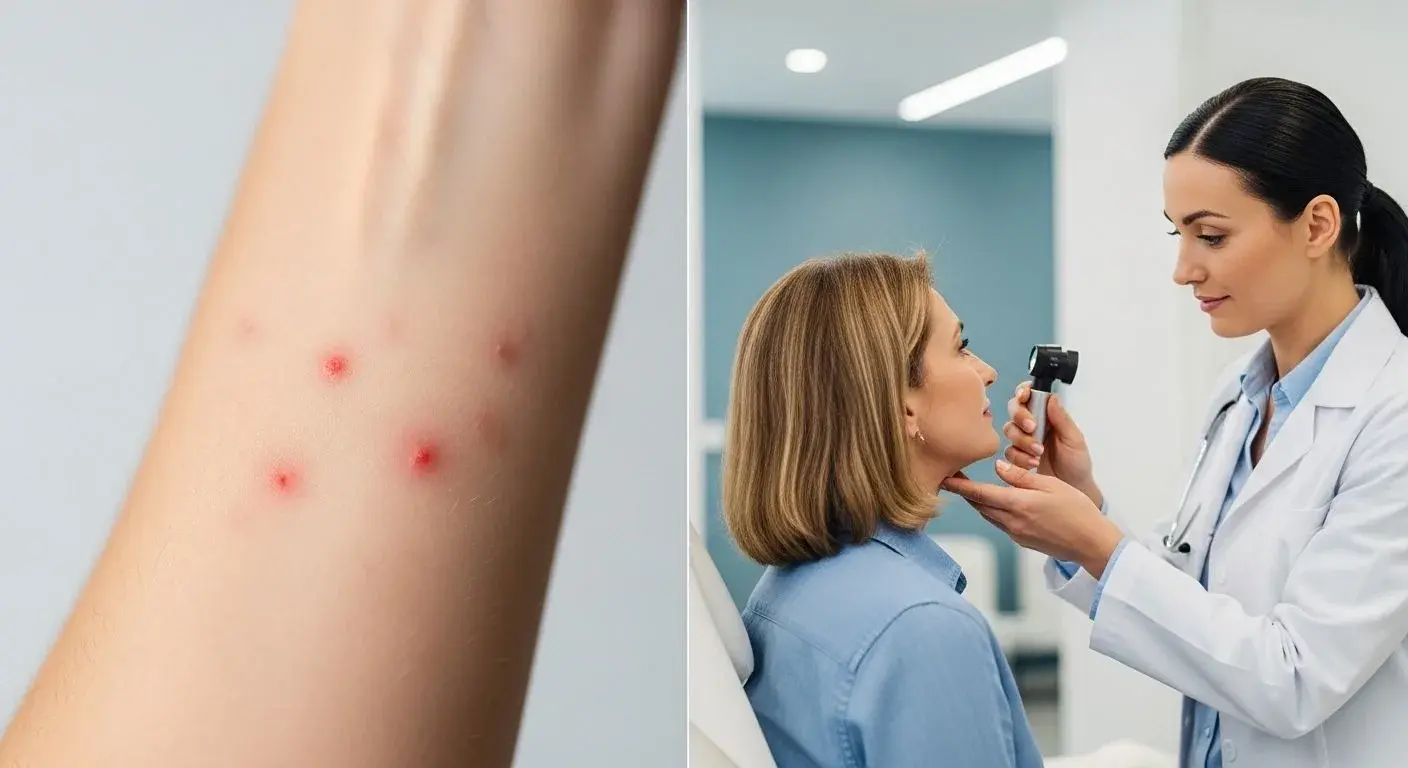
Types of Perimenopause Skin Rashes — and How to Tell Them Apart
Not all menopause-related skin reactions are the same, and treating the wrong type is a common reason women do not see improvement. Understanding which type you are dealing with changes the approach significantly.
- Menopause hives (urticaria): Raised, itchy welts that appear and resolve within 24 hours. Typically driven by mast cell instability from estrogen fluctuation. Often worse in the week before a period in perimenopause.
- Heat rash and menopause: Small red bumps or prickling sensation caused by sweat ducts becoming blocked during hot flashes. Appears on the chest, back, and neck. Distinct from hormonal hives — it is mechanically caused by repeated sweating and skin occlusion.
- Menopause face rash and flushing: Diffuse redness on cheeks, nose, and forehead. Can be vasomotor (linked to hot flashes) or inflammatory. When it becomes persistent with visible vessels, this may be rosacea triggered or worsened by hormonal changes — see our guide on rosacea in perimenopause and hormonal treatment for that specific picture.
- Perimenopause skin sensitivity and contact reactions: Products, fabrics, and detergents that were tolerated for years suddenly cause redness or itching. This reflects the skin barrier thinning and immune dysregulation — not new allergies per se.
One common misconception is that perimenopause allergies and rashes are simply existing allergies getting worse. In reality, many women develop apparent intolerances from scratch in their 40s due to hormonal-driven mast cell changes rather than developing new IgE sensitivities. A genuine new allergy panel is worth running once — but a negative result should not end the investigation. Persistent ear itching alongside skin reactions may point to a systemic histamine pattern; our article on itchy ears during menopause explores this connection.
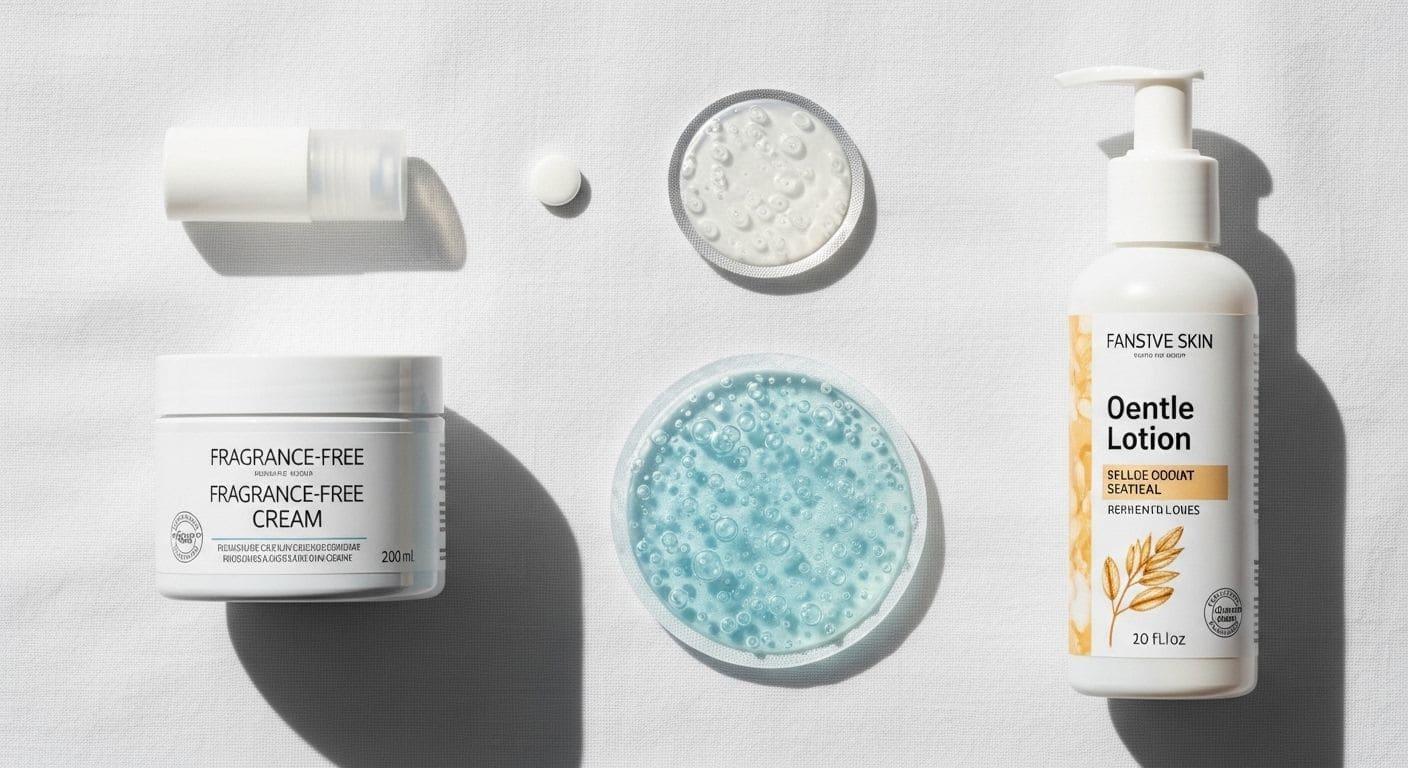
What Helps — Practical Management for Menopausal Skin Reactions
For hormonally-driven hives and skin sensitivity, the most effective long-term intervention is stabilising the underlying hormonal fluctuation. HRT — particularly formulations that include progesterone — has been shown to reduce mast cell reactivity over time by restoring more consistent estrogen and progesterone levels. Women who have been managing menopause hives for months sometimes find they resolve or significantly reduce within two to three months of starting HRT. This connection is rarely communicated at the point of prescribing.
For immediate symptom management, second-generation antihistamines (cetirizine, loratadine) are the most practical short-term option for hives and itching. They do not address the hormonal root cause but can break the itch-scratch cycle and provide daily relief. For heat rash specifically, the priority is preventing sweat-duct blockage: loose breathable fabrics, cooling the skin promptly after hot flashes, and avoiding occlusive body creams on the chest and back during warmer months.
Where standard advice fails is in women with perimenopause skin spots or chronic urticaria that does not respond to antihistamines or HRT. In this subgroup, mast cell activation syndrome (MCAS) or an autoimmune urticaria component should be investigated rather than continuing to escalate antihistamine dosing. Skin barrier support — fragrance-free emollients, avoiding hot water, and adding a ceramide-based cream — is beneficial across all rash types by reducing the reactive threshold of already-sensitised skin. Menopause and sensitive skin almost always benefit from a deliberately minimal, unfragranced routine during flare periods.