
Why Menopause Causes Vaginal and Vulvar Itching
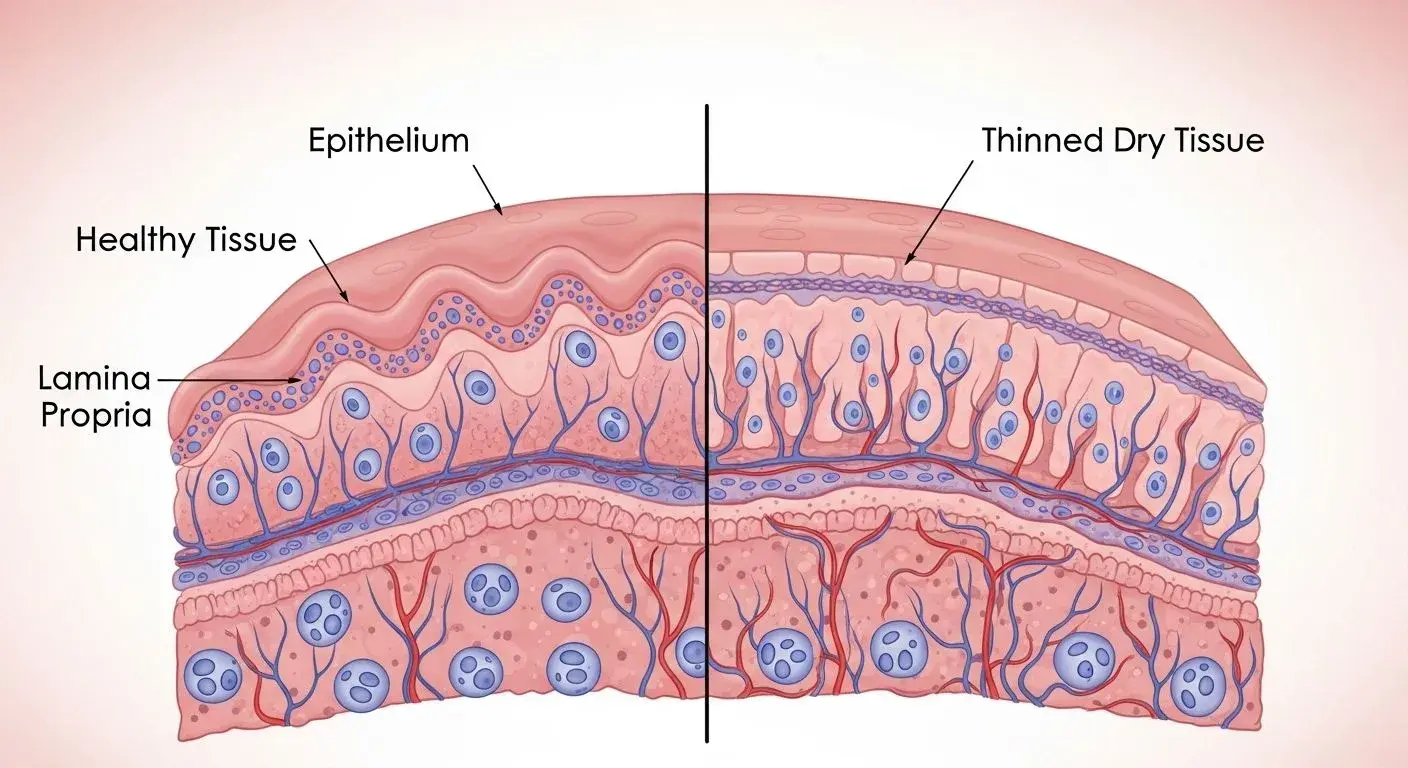
Yes — menopause does cause vaginal itching, and it is one of the most underreported symptoms women experience. The root cause is estrogen decline. Estrogen plays a critical role in maintaining the thickness, lubrication, and pH balance of vaginal and vulvar tissue. As levels drop during perimenopause and post-menopause, the tissue becomes thinner, drier, and more fragile — a condition clinically called Genitourinary Syndrome of Menopause (GSM).
The vulva — the external skin — is often the first area to react, producing intense itching, burning, or a raw sensation even when there is no visible irritation. Many women experiencing perimenopause itchy vulva are still cycling regularly, which surprises them. Estrogen fluctuation, not just depletion, is enough to trigger symptoms. Women who have had a hysterectomy may experience vaginal itching after the procedure for the same hormonal reason — surgical menopause often causes an abrupt estrogen drop that accelerates GSM onset.
The vaginal pH also rises from its normal acidic range (under 4.5) to a more alkaline level, disrupting the protective microbiome. This creates conditions where bacteria and yeast — particularly Candida — can overgrow more easily. This is why perimenopause thrush becomes recurrent for many women who rarely had yeast infections before. Itching that menopause causes is not always GSM alone — it is often a chain reaction triggered by the same hormonal shift. Just as estrogen loss affects the skin elsewhere on the body, it affects intimate tissue too — for a deeper look at how hormones drive wider skin changes, see how perimenopause affects scalp and skin dryness.
Common Misconceptions About Itchy Vagina in Menopause
The biggest misconception women hold is that vaginal itching during menopause always signals an infection. This sends many women through repeated cycles of antifungal treatments that do not work — because the underlying problem is tissue atrophy, not active yeast. Treating GSM-driven itch with antifungals alone is like treating sunburn with antihistamines: it misses the actual mechanism.
A second misconception is that only post-menopausal women experience this. In reality, perimenopause itchy labia and vulvar irritation are well-documented in women still having periods. Fluctuating estrogen during perimenopause can cause intermittent symptoms that feel confusingly inconsistent — some weeks fine, others unbearable.
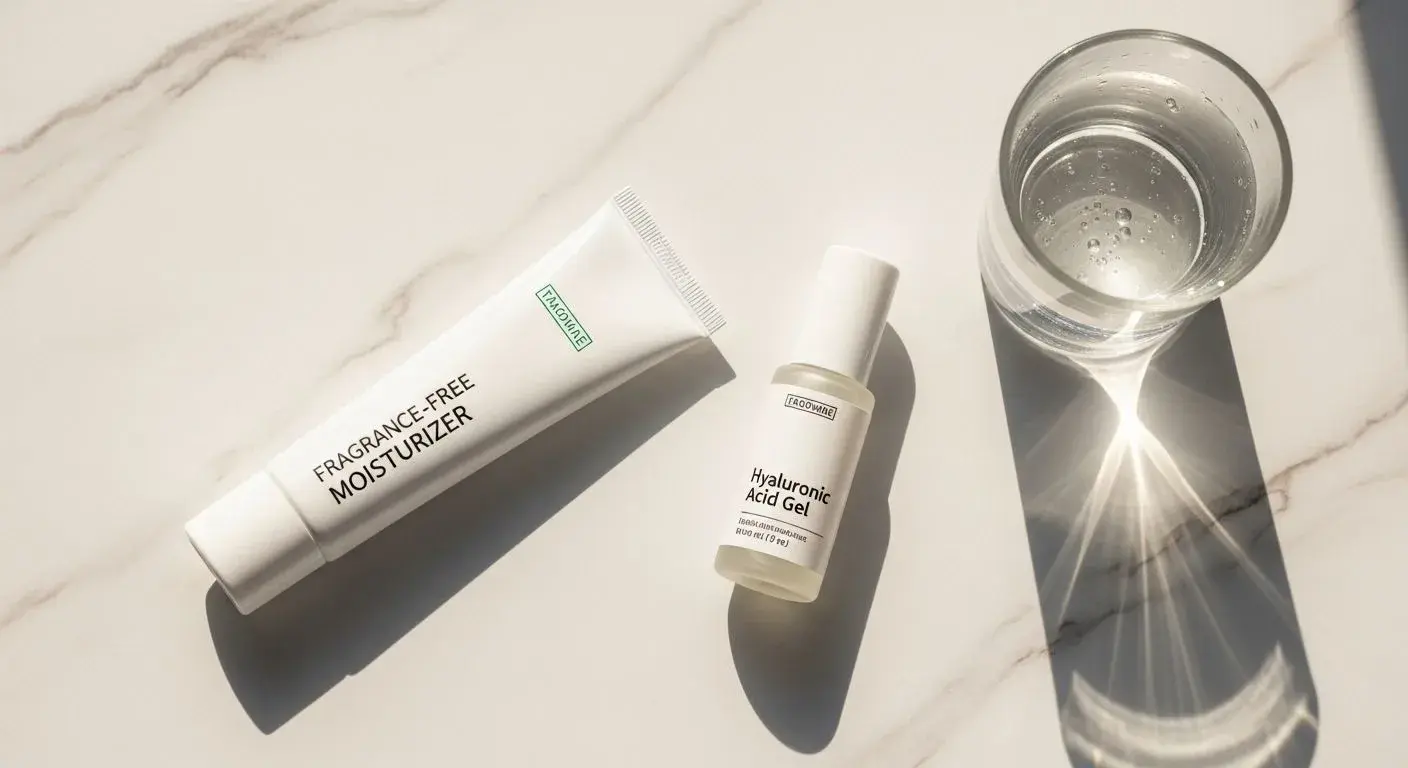
Where standard advice sometimes fails: fragrance-free does not mean reaction-free. Some women with thinned vulvar tissue react to preservatives like propylene glycol or parabens found even in 'gentle' intimate moisturizers. If over-the-counter options are not reducing your menopause itchy crotch symptoms after two weeks of consistent use, a contact dermatitis reaction to the product itself may be the issue — not a failure of the treatment approach. Switching to single-ingredient options like pure hyaluronic acid gel or plain coconut oil can clarify whether the product is part of the problem.
- Vaginal moisturizers (non-hormonal): Applied 3x per week to restore tissue hydration — not the same as lubricants, which only help during intercourse.
- Topical low-dose estrogen (prescription): Applied directly to vulvar and vaginal tissue. Systemic absorption is minimal, making it a first-line option even for women who cannot take oral HRT.
- Ospemifene (oral SERM): A non-estrogen prescription option for GSM that works systemically. Useful when topical application is difficult or uncomfortable.
When to See a Doctor and What to Ask For
Persistent perimenopause vaginal symptoms that do not respond to over-the-counter moisturizers within four weeks warrant a clinical assessment. A gynaecologist or menopause specialist can distinguish GSM from lichen sclerosus — a chronic skin condition that causes vulvar whitening and intense itching and is more common in post-menopausal women. It is frequently misdiagnosed as atrophy or thrush, and it requires a specific treatment (high-potency topical steroids), not estrogen.
When you see a doctor, ask specifically about low-dose vaginal estrogen (cream, ring, or pessary), even if you have been told you are 'not menopausal yet.' Perimenopause qualifies. If you have had hormone-receptor-positive breast cancer, ask about vaginal DHEA (prasterone) — a prescription option with a different safety profile that has been shown to reduce GSM symptoms without meaningful systemic estrogen exposure.
For day-to-day management, avoid soap on vulvar tissue entirely — rinse with warm water only. Wear loose, cotton-lined clothing and avoid panty liners unless genuinely necessary, as the adhesive and synthetic backing increase irritation in atrophic tissue. The same estrogen-driven sensitivity that causes perimenopause and vulvar itching also affects other skin surfaces — if you are dealing with widespread dryness and irritation, read about why menopause causes itchy ears and how to treat it for the same underlying pattern applied to a different body area.
Disclaimer: This article is for informational purposes only and does not constitute medical advice. Consult a qualified healthcare provider for diagnosis and treatment of vaginal or vulvar symptoms.