
Why Menopause Weight Gain Is Different — and Why Old Approaches Stop Working
Menopause weight gain — particularly the accumulation of fat around the abdomen — is not simply the result of eating more or moving less. The hormonal environment of perimenopause and post-menopause fundamentally changes how and where the body stores fat. Declining estrogen shifts fat distribution from the hips and thighs (peripheral fat, relatively metabolically inert) to the visceral abdominal area (the hormonal belly). Visceral fat is metabolically active, inflammatory, and more resistant to standard caloric restriction than peripheral fat.
Compounding this, menopause increases insulin resistance. The same meal that previously produced a moderate blood sugar response now produces a higher, longer spike — driving greater fat storage and more intense hunger signals in the hours after eating. This is why many women find that the diet that maintained their weight in their 30s produces weight gain in their 50s without any change in behaviour. It is biology, not willpower.
Cortisol plays a secondary but significant role. Elevated cortisol — driven by poor sleep, chronic stress, and the physical stress of hormonal fluctuation itself — directly promotes visceral fat storage and suppresses fat-burning signals. This is why stress management is not optional in a menopause weight loss diet plan: it is a metabolic intervention.
What to Eat, What to Avoid, and How Many Calories to Aim For
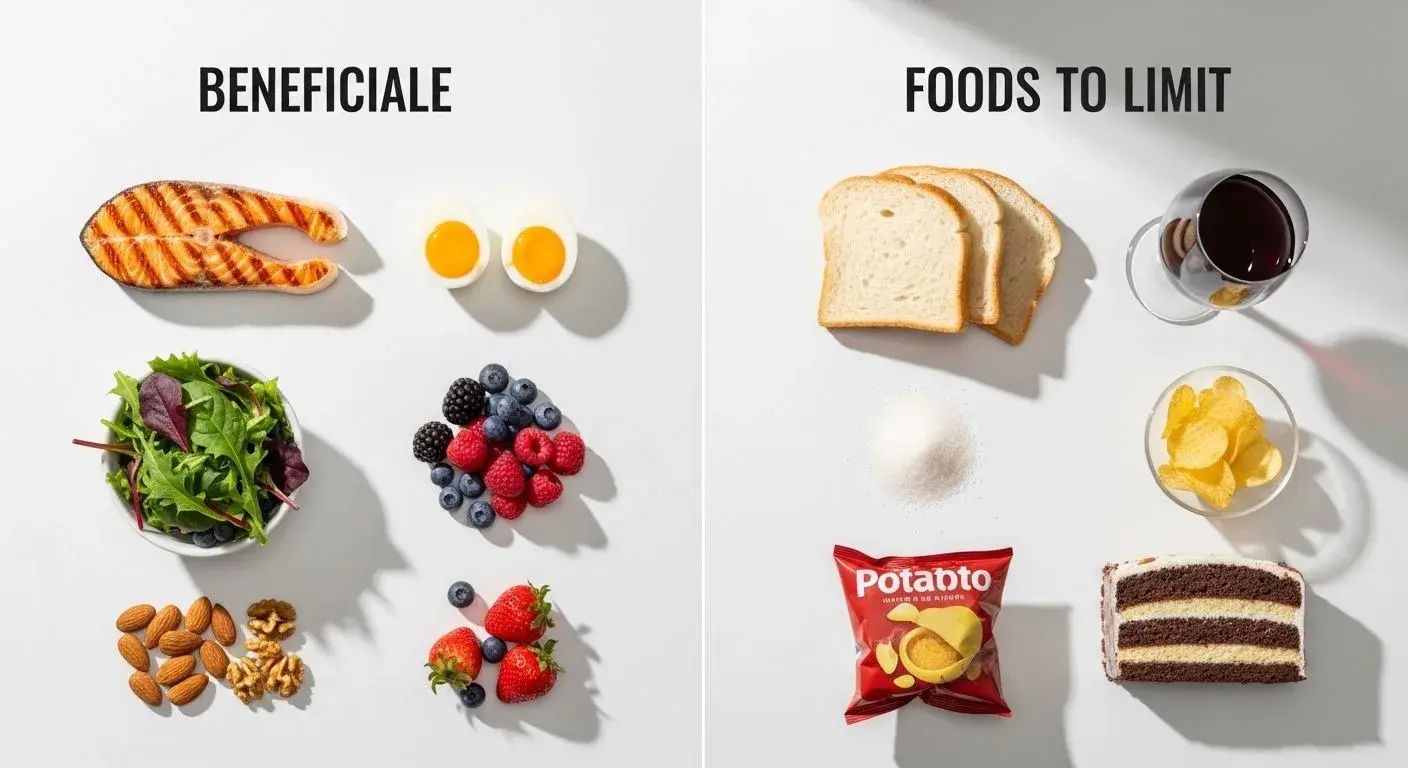
The most evidence-supported dietary approaches for menopause weight loss share common features: they reduce insulin spikes, preserve muscle mass, and keep cortisol stable. Low-carbohydrate diets — particularly those that prioritise protein and healthy fats while reducing refined carbohydrates and sugar — are consistently effective for menopausal women because they directly address the elevated insulin resistance.
- Prioritise: Protein at every meal (eggs, fish, chicken, legumes), non-starchy vegetables, healthy fats (avocado, olive oil, nuts), fibre-rich whole grains in moderate amounts.
- Foods to avoid for menopause belly: Ultra-processed foods, refined carbohydrates, added sugars, alcohol (particularly wine — high in sugar and a direct cortisol trigger), and high-sodium packaged foods that drive water retention.
- Calorie target: Post-menopausal metabolic rate is typically 200 to 400 calories per day lower than pre-menopause. A modest deficit of 300 to 400 calories below this new maintenance level (not below pre-menopause maintenance) is sustainable. Aggressive restriction below 1,200 calories elevates cortisol, triggers muscle catabolism, and counterproductively increases visceral fat storage.
For structured programme guidance, our roundup of the best menopause weight loss programs compares approaches that account for menopausal physiology rather than generic calorie-counting models.
Misconceptions, Edge Cases, and What a 5-Day Plan Actually Looks Like
The most pervasive misconception is that post-menopausal weight gain is purely a calorie problem solvable with portion control. Given the insulin resistance and fat redistribution mechanisms described above, calorie reduction without dietary composition change produces minimal results for most women. Protein intake in particular is consistently underemphasised: research suggests post-menopausal women need closer to 1.2 to 1.6 grams of protein per kilogram of body weight daily to preserve muscle mass during weight loss — considerably more than standard dietary guidance suggests.
A simple 5-day framework to lose weight: begin each day with a protein-led breakfast (eggs or Greek yoghurt), have a lunch centred on protein and non-starchy vegetables, a small handful of nuts as an afternoon snack to stabilise blood sugar before the cortisol-driven hunger peak, and a dinner with protein plus fibre-rich carbohydrates. Avoid eating within two hours of bed to support growth hormone release during sleep, which is a key fat-metabolism signal that declines post-menopause.
Where this approach fails is in women with significant thyroid dysfunction or on medications that affect insulin sensitivity (including some antidepressants commonly prescribed for menopause symptoms). For these women, dietary changes alone will not produce expected results, and addressing the medication or thyroid issue is the prerequisite. Skin and body composition also benefit from dietary changes during this period — our overview of the best menopause face cream and skincare touches on how nutritional status affects skin appearance during the menopause transition.