
What is the Musculoskeletal Syndrome of Menopause?
The musculoskeletal syndrome of menopause (MSM) is a formally recognised cluster of symptoms driven by estrogen withdrawal that affects muscles, tendons, joints, cartilage, and bone simultaneously. It is not simply 'aches and pains' — it is a systemic hormonal response that degrades the entire musculoskeletal system in parallel. Despite affecting the majority of menopausal women, it remains widely underdiagnosed because each symptom is often treated in isolation.
Estrogen is not just a reproductive hormone. It has receptors throughout connective tissue and muscle fibres, where it regulates collagen synthesis, inflammation control, and muscle protein turnover. When estrogen falls, muscle mass decreases faster than in aging men (a phenomenon called menopausal sarcopenia), tendons stiffen, and joints lose their lubricating synovial fluid. This happens whether or not a woman is physically active.
Common symptoms of MSM include unexplained muscle weakness, joint stiffness (worst in the morning), tendon pain, reduced grip strength, and a general feeling that the body is 'falling apart.' Many women also report anxiety alongside these physical symptoms — see our article on perimenopause anxiety stories for how these experiences connect.
Myths vs. Evidence: What Actually Causes Muscle Weakness in Menopause
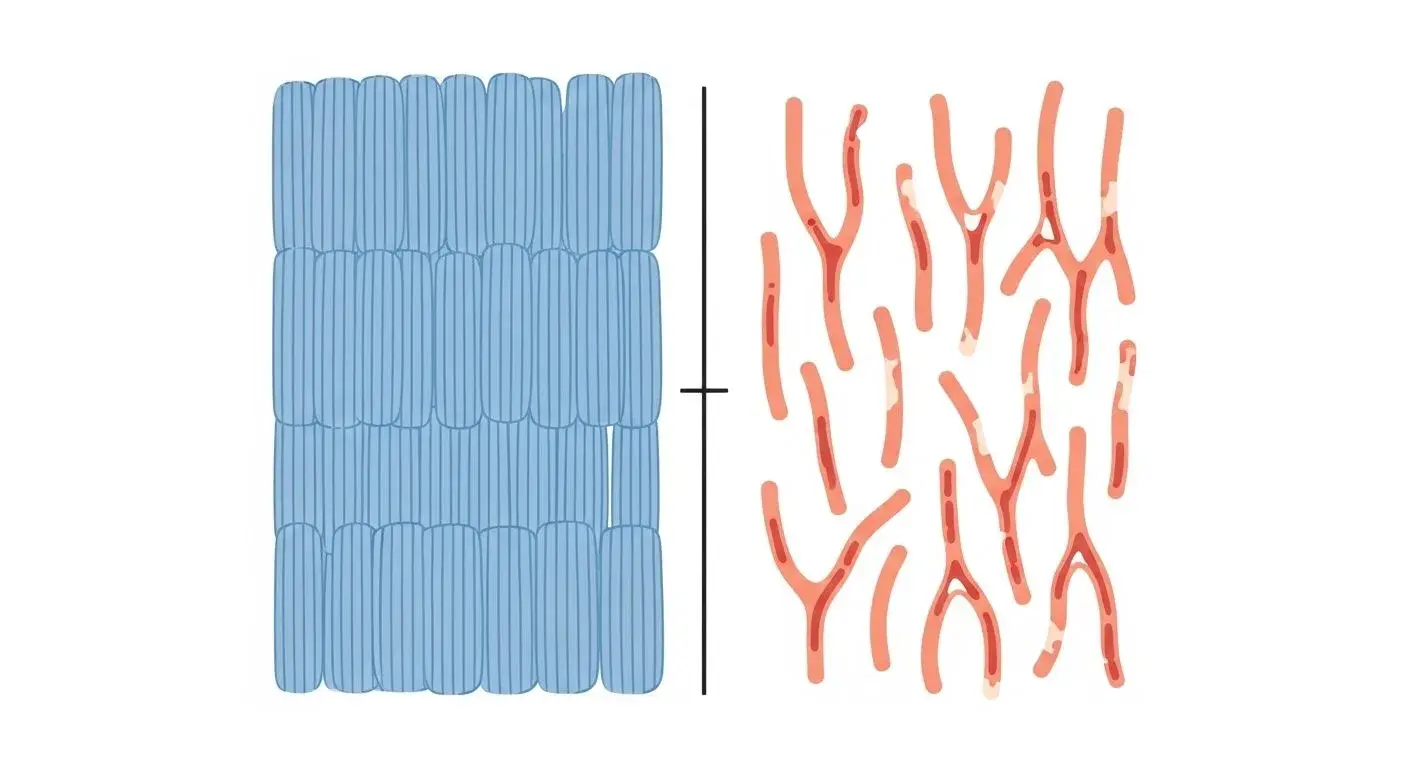
The most damaging misconception is that menopausal muscle weakness is simply a consequence of getting older and is therefore unavoidable. Research clearly shows this is false. While age contributes to muscle loss, the hormonal shift of menopause accelerates that loss by 3–8% per decade beyond normal aging, independently of lifestyle.
A second misconception is that cardio exercise is sufficient to counteract MSM. Cardiovascular exercise preserves heart health and energy but does not stimulate the type of muscle protein synthesis needed to reverse menopausal sarcopenia. Resistance training — specifically progressive overload with weights or resistance bands — is the only intervention with consistent clinical evidence for rebuilding muscle mass in this population.
One important trade-off: starting resistance training with MSM-related tendon pain requires careful load management. Beginning too aggressively worsens tendinopathy. A physiotherapist-guided programme that starts conservatively and increases load over 8–12 weeks is safer and more effective than unsupervised gym training.
Evidence-Based Treatment for Musculoskeletal Syndrome of Menopause
- Progressive resistance training: 2–3 sessions per week of weighted exercises targeting all major muscle groups. Begin with bodyweight and advance over 8 weeks.
- Protein intake optimisation: Menopausal women need approximately 1.2–1.6g of protein per kilogram of body weight daily to support muscle protein synthesis — significantly above the standard RDA.
- Hormone replacement therapy (HRT): Restoring estrogen measurably reduces the rate of muscle and bone loss. HRT is not appropriate for everyone, but it is the most direct treatment for the hormonal root cause.
- Vitamin D and magnesium: Both are essential for muscle contraction and are commonly deficient in menopausal women. Testing and supplementing deficiencies is a low-risk, evidence-supported step.
For women experiencing associated skin and itching symptoms alongside MSM, the inflammatory pathways often overlap — explore our article on menopause and perimenopause itching overview for more context.
Frequently Asked Questions
What is musculoskeletal syndrome of menopause?
Musculoskeletal syndrome of menopause is a clinically recognised condition caused by estrogen loss that simultaneously weakens muscles, stiffens joints, inflames tendons, and reduces bone density. It affects most menopausal women to some degree. Unlike general aging, MSM responds specifically to estrogen restoration, resistance training, and protein optimisation.
Does perimenopause cause muscle weakness?
Yes, perimenopause causes muscle weakness. Estrogen fluctuations during perimenopause disrupt muscle protein turnover even before periods stop. Women often notice reduced grip strength, difficulty with previously easy physical tasks, and faster post-exercise soreness. Starting resistance training early in perimenopause significantly reduces long-term muscle loss.
Can the musculoskeletal syndrome of menopause be reversed?
Partially yes. Progressive resistance training consistently rebuilds muscle mass lost to MSM, and HRT slows further deterioration. However, some collagen loss in tendons and cartilage is not fully reversible. Starting treatment early in perimenopause produces better long-term outcomes than waiting until post-menopause.
Sources
- The Musculoskeletal Syndrome of Menopause. pubmed.ncbi.nlm.nih.gov — PubMed / NIH
- Estrogen and Muscle Mass in Women. pubmed.ncbi.nlm.nih.gov — PubMed / NIH
- Resistance Exercise and Menopause Muscle Preservation. menopausesociety.org — The Menopause Society