
Can Menopause Really Cause Itching?
Yes — and it is more common than most women are told before it happens. Itching during perimenopause and menopause (clinically called pruritus) is a direct consequence of falling oestrogen. Oestrogen regulates the production of collagen, ceramides, and natural moisturising factors in the skin. When levels drop, the skin barrier thins, water loss increases, and nerve fibres in the skin become more sensitive to everyday stimuli. The result is itch that can appear without any visible rash or obvious cause.
This matters for diagnosis: many women are told their itching is 'just dry skin' or anxiety-related, leading to years of ineffective treatment. The distinguishing feature of hormonal itch is its pattern — it tends to worsen at night, migrate between body sites (arms, legs, torso, scalp), and flare alongside other oestrogen-withdrawal symptoms like hot flushes and disrupted sleep. It is not random, and it is not psychological.
The full clinical picture of how hormonal changes drive skin-wide itching is explored in menopause and perimenopause itching: causes and treatment. What this article focuses on is the practical questions: what patterns to expect, whether it resolves, and how to get ahead of it.
Common Patterns: Feet, Night-Time Itch, and Prickly Sensations
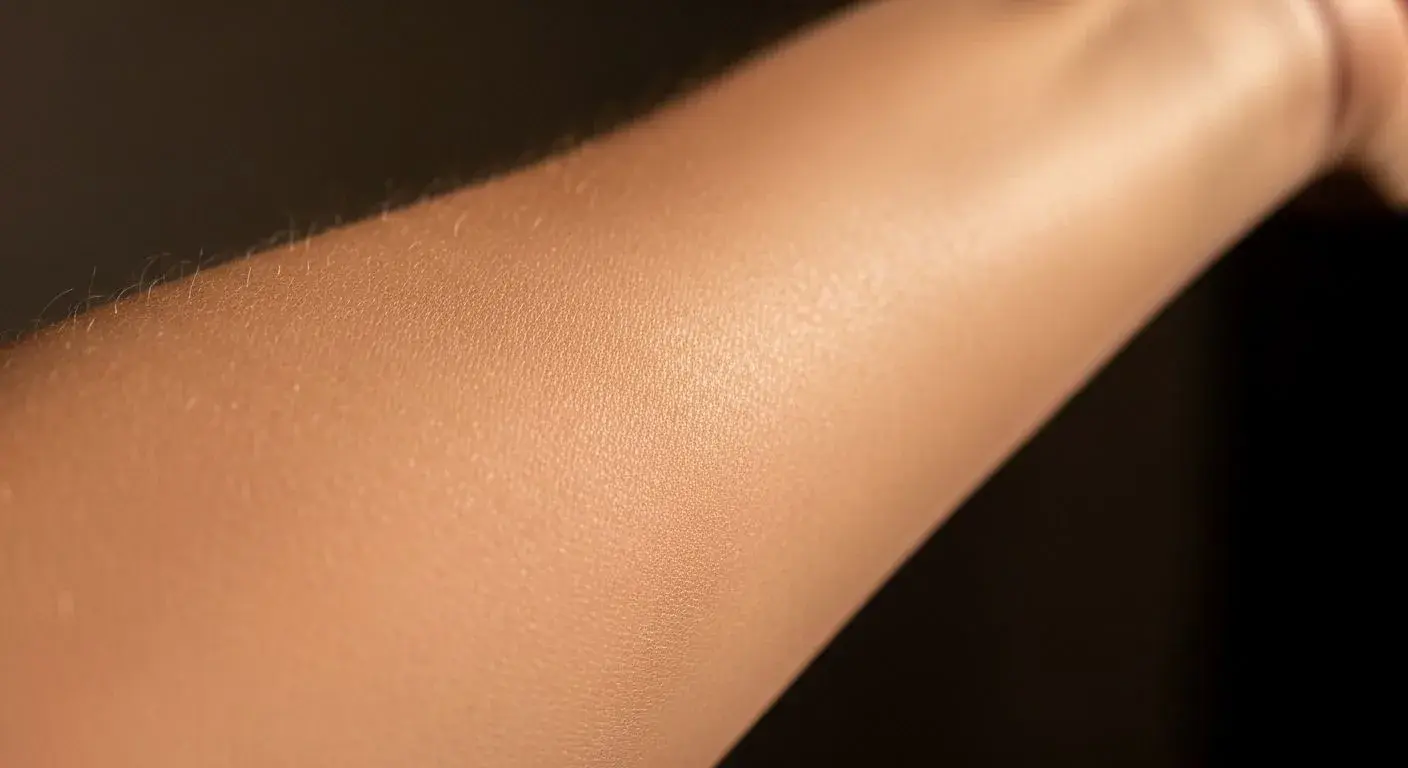
Perimenopausal pruritus rarely presents the same way twice, which is part of why it goes unrecognised. Some women experience a deep, crawling itch on the shins or forearms. Others report itchy feet at night, a sensation of prickling heat across the upper back, or a sudden intolerance to fabrics and products they have used for years. All of these are driven by the same mechanism: a thinner, more permeable skin barrier combined with sensitised nerve endings.
Night-time itching is particularly disruptive and is often worsened by the body temperature fluctuations accompanying hot flushes. Heat dilates skin blood vessels, lowers the itch threshold, and makes the nervous system more reactive — all at a time when sleep is already fragmented. A common misconception is that night itch signals a systemic problem like liver disease or blood disorders. While these warrant ruling out if itch is severe and unexplained, the far more prevalent cause in perimenopausal women is oestrogen-related barrier dysfunction.
The prickly heat sensation some women describe — different from a standard itch, more like static electricity under the skin — overlaps with a condition called formication (a crawling or pins-and-needles itch). This is covered in depth alongside burning skin sensations in menopause burning skin and prickly heat sensations.
Does Menopause Itching Go Away — and How to Manage It Now
For most women, hormonal itching is most intense during the perimenopause transition and does ease once oestrogen levels stabilise in post-menopause. However, 'stabilise' does not mean 'recover' — skin in post-menopause remains thinner and drier than before, so some baseline sensitivity persists long-term without active maintenance. Women who manage their skin barrier proactively during perimenopause consistently report less severity as they transition.
The most effective topical approach centres on barrier repair: rich emollients containing ceramides, shea butter, or colloidal oatmeal applied immediately after bathing while the skin is still damp. This is not optional timing — damp skin absorbs lipids up to 60% more effectively than dry skin. Antihistamines are frequently self-prescribed for hormonal itch but largely unhelpful; hormonal pruritus is not histamine-mediated, which is why over-the-counter allergy tablets rarely provide relief.
Where standard care consistently falls short: women who also experience vaginal or vulvar itching. This is a separate but related symptom called genitourinary syndrome of menopause (GSM), which responds poorly to general moisturisers and requires topical oestrogen or specific vaginal hydrators. Treating body itch and vulvar itch as the same problem leads to persistent discomfort that is easily resolved with the right targeted treatment.