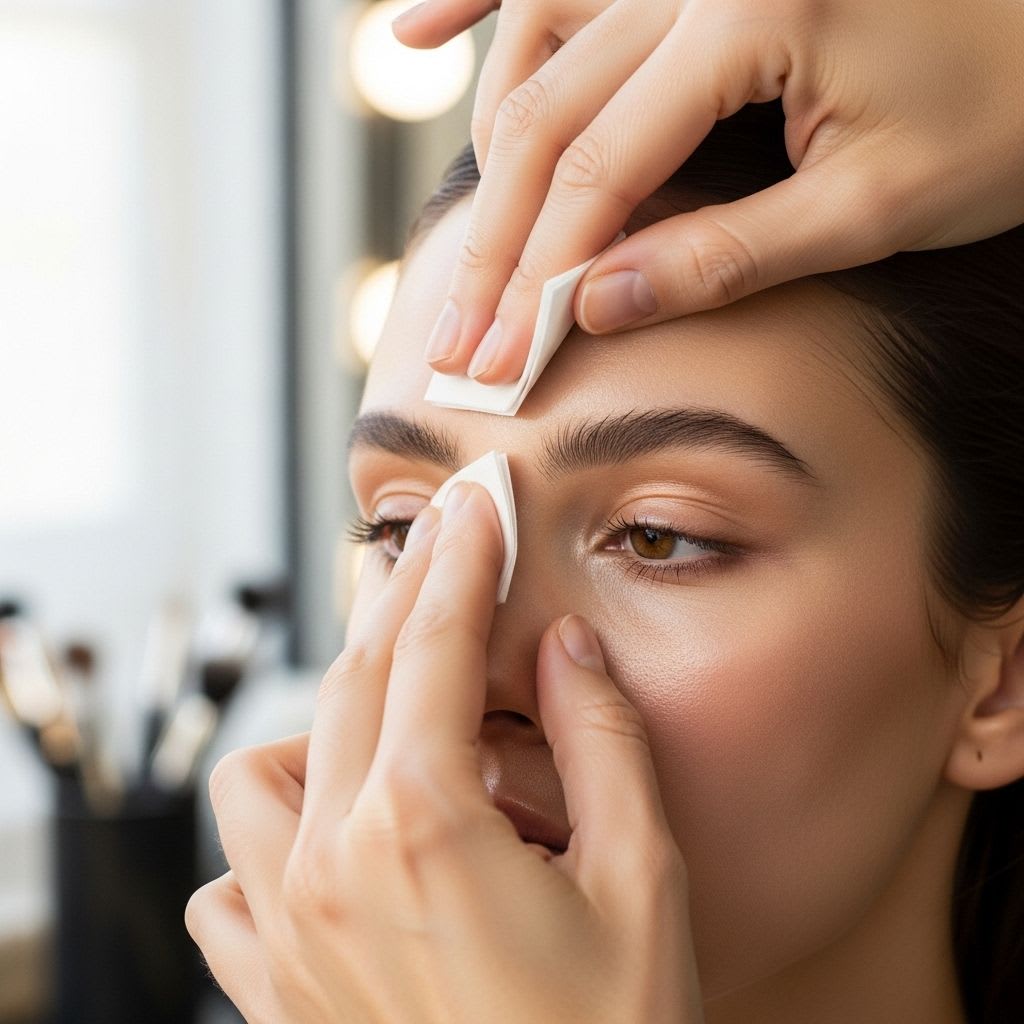
Why Menopause Creates the Oily-Dry Paradox Nobody Warned You About
If your makeup suddenly looks greasy by noon despite your face feeling tight and dehydrated, you're experiencing one of menopause's most frustrating contradictions. Declining estrogen doesn't uniformly dry out your skin—it dysregulates sebaceous gland function, causing some areas to overproduce oil while others become parched. Your T-zone may develop midday shine you haven't seen since your twenties, while your cheeks simultaneously flake from dryness. Traditional makeup products for oily skin are engineered for uniformly oily, younger complexions and will devastate the dry zones on your face, creating a cracked, aged appearance even as they control shine.
What dermatologists observe but the beauty industry rarely addresses: hormonal oily skin after 40 behaves fundamentally differently than genetic oily skin in your twenties. Younger oily skin produces consistent sebum with smaller molecular weight that distributes evenly; menopausal oil production is erratic, with larger oil molecules that sit on the surface rather than absorbing. This is why your makeup looks slick and separated instead of just dewy—the oil isn't integrating with your foundation, it's literally pushing it off your face. The oil control makeup you need must address both the excess sebum and the underlying dehydration that's causing your skin to overcompensate.
The misconception that destroys most makeup routines: believing that mattifying everything will solve hormonal greasiness. Dermatologists treating menopausal patients consistently see that aggressive oil control across the entire face accelerates visible aging by emphasizing fine lines and making skin look dull and lifeless. The counterintuitive solution involves selective oil control—using mattifying products only on your actual oily zones while maintaining luminosity everywhere else. This targeted approach prevents the flat, makeup-heavy appearance that occurs when you try to matte-ify skin that's simultaneously dealing with moisture loss and unexpected oil production.
The Primer Mistake Making Your Makeup Greasier
Most women experiencing hormonal oiliness reach for mattifying primers as their first defense, which actually worsens the problem within hours. Silicone-heavy mattifying primers create a temporary barrier that feels dry initially but prevents your skin from releasing moisture naturally. Your skin responds to this occlusion by producing even more oil to break through the barrier, creating the greasy breakthrough that appears around 2 PM. Additionally, these primers on mature skin settle into fine lines and enlarge the appearance of pores as they interact with your changing sebum composition throughout the day.
The professional approach uses hydrating primers with oil-absorbing minerals—a seemingly contradictory combination that actually addresses the root cause. Primers containing hyaluronic acid or glycerin satisfy your skin's moisture needs so it stops overproducing sebum, while kaolin clay or silica microspheres selectively absorb excess oil without creating the occlusive barrier that triggers more production. This dual-action approach keeps greasy makeup at bay for 8+ hours without the dried-out texture that reveals every wrinkle. Apply these hybrid primers only to your oily zones—typically forehead, nose, and chin—while using a luminizing primer on your cheeks to maintain dimension and youthfulness.
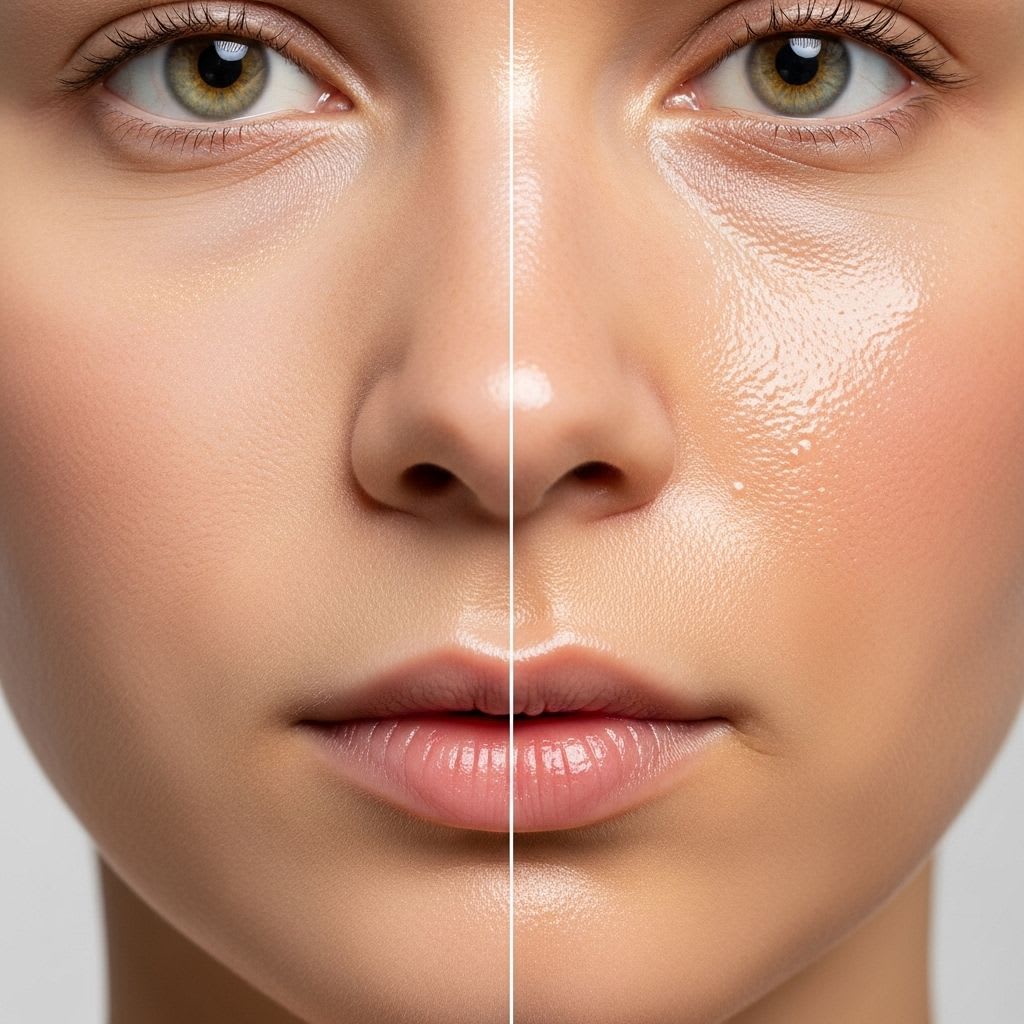
The Makeup Products That Actually Control Hormonal Oil
Foundation selection becomes critical when managing the oily-dry combination of menopausal skin. The makeup products for oily skin marketed to teenagers and young adults contain high concentrations of alcohol and aggressive mattifiers that will emphasize every texture concern on aging skin. Instead, look for foundations labeled as 'natural matte' or 'semi-matte' that achieve oil control through microporous minerals rather than drying alcohols. These formulas absorb excess sebum without creating the flat, chalky finish that adds years to your appearance. Water-based foundations with dimethicone work exceptionally well because they provide slip for easy blending while creating a breathable barrier that regulates oil migration.
Setting powder technique determines whether your oil control makeup routine succeeds or creates a cakey disaster. The standard advice to powder your entire face is disastrous for mature skin—powder settles into every line and creates texture where none existed. Professional makeup artists use the 'baking' technique exclusively on the oily zones of hormonal skin: press translucent powder heavily into your T-zone using a damp sponge, let it sit for 5-10 minutes to absorb oil, then brush away the excess. This intensive technique locks in a matte finish where you need it while leaving the rest of your face with its natural, youthful luminosity intact.
- Blotting papers over powder touch-ups: Removes surface oil without adding layers that emphasize texture and settle into lines throughout the day
- Cream blushes and bronzers: Counterintuitively work better than powder formulas on oily mature skin—they fuse with your natural oils instead of sitting on top
- Mattifying setting sprays with niacinamide: Control oil while actually improving skin barrier function over time, addressing the root cause of hormonal sebum dysregulation
- Avoid: Powder foundations: Despite seeming like the obvious choice for oily skin, they oxidize rapidly with hormonal sebum and turn orange while emphasizing every wrinkle
Eye makeup presents unique challenges when dealing with greasy lids during menopause. The oil migrating from your T-zone will break down eyeshadow and create creasing regardless of formula quality unless you use a dedicated eye primer with oil-absorbing properties. Look for primers containing silica or cornstarch that create a matte, tacky base—this texture feels counterintuitive but it's what prevents creamy eyeshadows from sliding into your crease within an hour. For eyeliner, switch from pencils (which smudge with oil contact) to tubing mascaras and gel liners that set to a waterproof, oil-proof finish.
For comprehensive guidance on selecting makeup that addresses all hormonal skin changes beyond just oiliness, explore our complete menopause makeup guide that covers foundation, color cosmetics, and application techniques for every stage of hormonal transition.
When Standard Oil-Control Advice Completely Backfires
The universal recommendation to use oil-free everything fails spectacularly for the subset of menopausal women whose oiliness stems from barrier damage rather than sebaceous overproduction. If your skin feels simultaneously greasy and dehydrated, stripping all oils from your routine creates a vicious cycle where your compromised barrier produces more oil to protect itself. These women need what seems contradictory: lightweight facial oils applied before makeup that actually regulate sebum production by signaling to your skin that it has adequate lipids and can stop the emergency oil production.
Another scenario where conventional wisdom fails: women experiencing stress-induced hormonal oiliness alongside menopausal changes. Cortisol elevation triggers additional sebum production independent of estrogen decline, creating oil levels that even intensive mattifying products cannot control. The oil control makeup that works for standard hormonal oiliness will slide off completely within hours if cortisol is a factor. These situations require pharmaceutical-grade oil control—primers and setting sprays containing niacinamide at 4-5% concentration that actually suppress sebaceous gland activity at the cellular level rather than just absorbing surface oil.
The most damaging misconception: believing that greasy makeup means you're using the wrong products, when often it indicates your skincare isn't preparing your canvas properly. No amount of oil-control makeup can compensate for a skincare routine that's damaging your barrier or failing to address hormonal dehydration. If you're using harsh cleansers, skipping hydrating serums, or over-exfoliating in an attempt to control oil, your makeup will always break down prematurely. The foundation of oil control is literally your skin's foundation—a healthy barrier that produces appropriate amounts of sebum rather than the dysregulated overproduction that characterizes hormonal changes.
The critical timing factor most articles ignore: hormonal oiliness fluctuates throughout your cycle even during perimenopause and post-menopause due to residual hormonal variations. Your makeup products for oily skin routine may need to change week-to-week. Track which weeks you experience the most breakthrough oil and intensify your mattifying approach during those periods while lightening up when your skin naturally produces less sebum. This adaptive approach prevents the over-treatment that makes your skin look aged and flat during your less-oily weeks while ensuring adequate control during peak oil production times.
If you're in your 40s and newly experiencing these oily skin challenges, our guide to best makeup products for women in their 40s provides targeted product recommendations that address early hormonal changes before they become severe menopausal symptoms.