Why PCOS Causes Hair Loss — and Why It's Different From Other Thinning
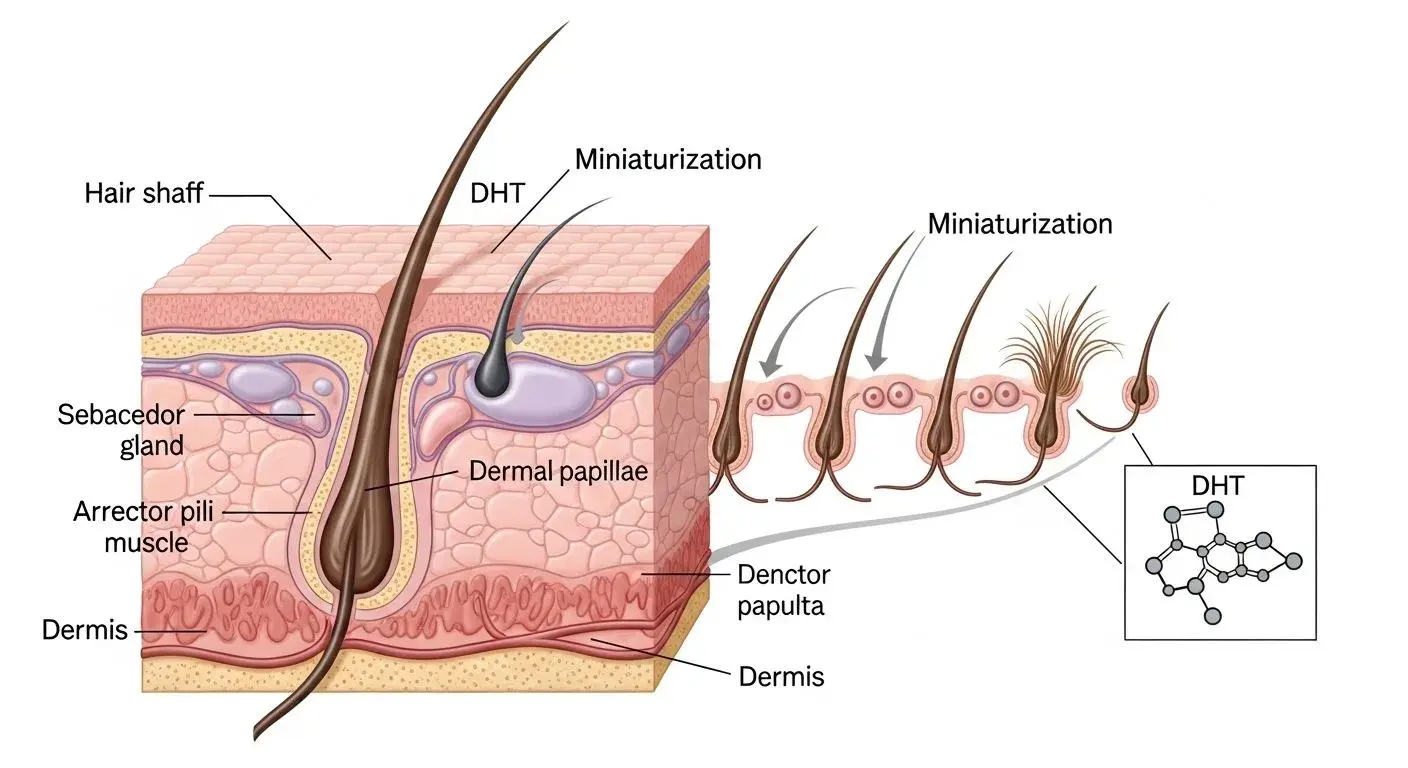
PCOS-related hair loss is driven by androgen excess: elevated testosterone converts to dihydrotestosterone (DHT) at the hair follicle, shrinking it over time in a process called follicular miniaturisation. The result looks like female pattern hair loss — diffuse thinning at the crown and widening part — but with an important distinction: the underlying hormonal imbalance is treatable, which means the hair loss is more reversible than the genetic form.
This matters practically. Many women with PCOS are told they simply have 'androgenetic alopecia' and given the same advice as any other female pattern hair loss patient. But without addressing the PCOS itself — insulin resistance, elevated androgens, inflammation — topical and cosmetic treatments alone will produce only modest results. The follicle is still being suppressed from within.
Two common misconceptions appear here. First, that hair loss only happens in 'severe' PCOS — in reality, even women with mild hormonal elevation can experience significant shedding. Second, that high androgen levels must show up on a standard blood test: many women with PCOS have androgens technically in the 'normal range' but still sensitive follicles that react strongly. Always discuss sensitivity, not just levels, with your doctor.
Reversal Is Possible — But 'Cure' Is the Wrong Word
Searching for a 'PCOS hair loss cure' is understandable, but sets up unrealistic expectations. The more accurate goal is stabilisation followed by gradual regrowth — which is achievable for most women who address both the hormonal root cause and the follicle environment simultaneously. Regrowth timelines are slow: most women see meaningful change only after 6–12 months of consistent treatment.
Evidence-backed approaches include:
- Insulin-sensitising medications (e.g. metformin): Reducing insulin resistance lowers androgen production at the ovary. Women with marked insulin resistance often see hair shedding slow within 3–6 months of treatment.
- Anti-androgens (e.g. spironolactone, finasteride): Prescription-only, but the most direct approach to blocking DHT's effect on follicles. Not suitable during pregnancy.
- Topical minoxidil: Extends the follicle's growth phase. Works better when androgens are simultaneously controlled — using minoxidil alone without addressing PCOS is a common mistake that limits results.
- Low-glycaemic diet and inositol supplementation: Myo-inositol improves insulin sensitivity and has shown androgen-lowering effects in several small trials. Not a standalone solution but a meaningful adjunct.
One important edge case: women who are post-menopausal with PCOS face a more complex picture, because declining oestrogen removes its protective effect against androgens. hormonal shifts during menopause can trigger or worsen androgen-driven hair loss even in women who previously had stable symptoms.
What to Look For in Hair and Scalp Products When You Have PCOS
Topical products can't override a hormonal problem — but the right formulations reduce scalp inflammation, support the follicle environment, and prevent additional damage while systemic treatment takes effect. Look for these ingredients:
- Saw palmetto (topical): A mild DHT blocker with some evidence in scalp serums. Less potent than prescription options but useful as a daily adjunct.
- Niacinamide: Reduces scalp inflammation and supports the skin barrier — relevant because PCOS-related scalp sebum production can clog follicles.
- Zinc pyrithione shampoos: Androgen excess often increases scalp oiliness and dandruff. Zinc helps regulate sebum and calm the follicle environment.
- Biotin and keratin supplements: Widely marketed but evidence is weak unless you have a documented deficiency. Don't replace them with anti-androgen strategies.
Scalp health is closely connected to overall skin hormone sensitivity. If you're also navigating skin changes from hormonal shifts, hormonal skin care strategies offer overlapping guidance on managing androgen-related oil and inflammation. The most important takeaway: treat PCOS hair loss as a systemic condition with a topical support layer — not the reverse.