
Why Perimenopause Triggers Excessive Sweating
The root cause of excessive sweating in perimenopause is a disruption in your body's thermostat. As estrogen fluctuates — rather than simply declining — it destabilises the hypothalamus, the brain region that regulates body temperature. Your hypothalamus becomes hypersensitive to minor temperature shifts and responds by triggering a heat-dissipation response: widened blood vessels, increased blood flow to the skin, and sweating. This is not a malfunction. It is your thermoregulatory system working as designed, but calibrated incorrectly.
Night sweats specifically happen because your core body temperature is already at its daily low during sleep. Any additional signal — a warm room, a heavy duvet, alcohol metabolising in your bloodstream — is enough to cross the new, hair-trigger threshold. The result is a sudden drenching sweat that wakes you, often followed by a chill as the moisture evaporates. Many women report the sweat precedes waking, meaning the body sweats before the brain registers discomfort.
The pattern changes across perimenopause stages. In early perimenopause, episodes may be infrequent and mild. In late perimenopause — when progesterone also drops significantly — sweating intensity often peaks. Women who experience high stress alongside hormonal change tend to report worse episodes, since cortisol further agitates hypothalamic sensitivity. For more on that interaction, see how stress amplifies menopause symptoms.
What Makes Night Sweats Worse — and Common Misunderstandings
A common misconception is that night sweats only happen to women who are 'almost at menopause.' In reality, excessive sweating can begin in the mid-30s during early perimenopause, well before periods become irregular. Another widespread belief is that drinking more water directly reduces sweating — it does not reduce the frequency of episodes, though staying hydrated helps you tolerate them better and reduces associated fatigue.
Known triggers that reliably worsen episodes:
- Alcohol: Even one glass of wine raises core temperature and expands blood vessels, compounding the hypothalamic misfire.
- Spicy food consumed in the evening: Capsaicin activates the same thermosensors the hypothalamus uses to detect heat.
- Synthetic bedding and nightwear: Materials that trap heat and moisture create a feedback loop — trapped warmth triggers sweating, sweating is then trapped, triggering more.
- Unmanaged sleep anxiety: Pre-sleep worry spikes cortisol, lowering the thermoregulation threshold. Many women find night sweats and disrupted sleep intertwine with vivid dreams and perimenopause nightmares.
One case where standard advice fails: cooling gels and fan-based cooling devices are widely recommended, but some women find that the rapid chill after a sweat episode causes shivering intense enough to fully wake them. For this group, moisture-wicking fabric that dries quickly — without active cooling — produces better sleep continuity than devices that overcorrect temperature.
What Actually Reduces Excessive Sweating in Perimenopause
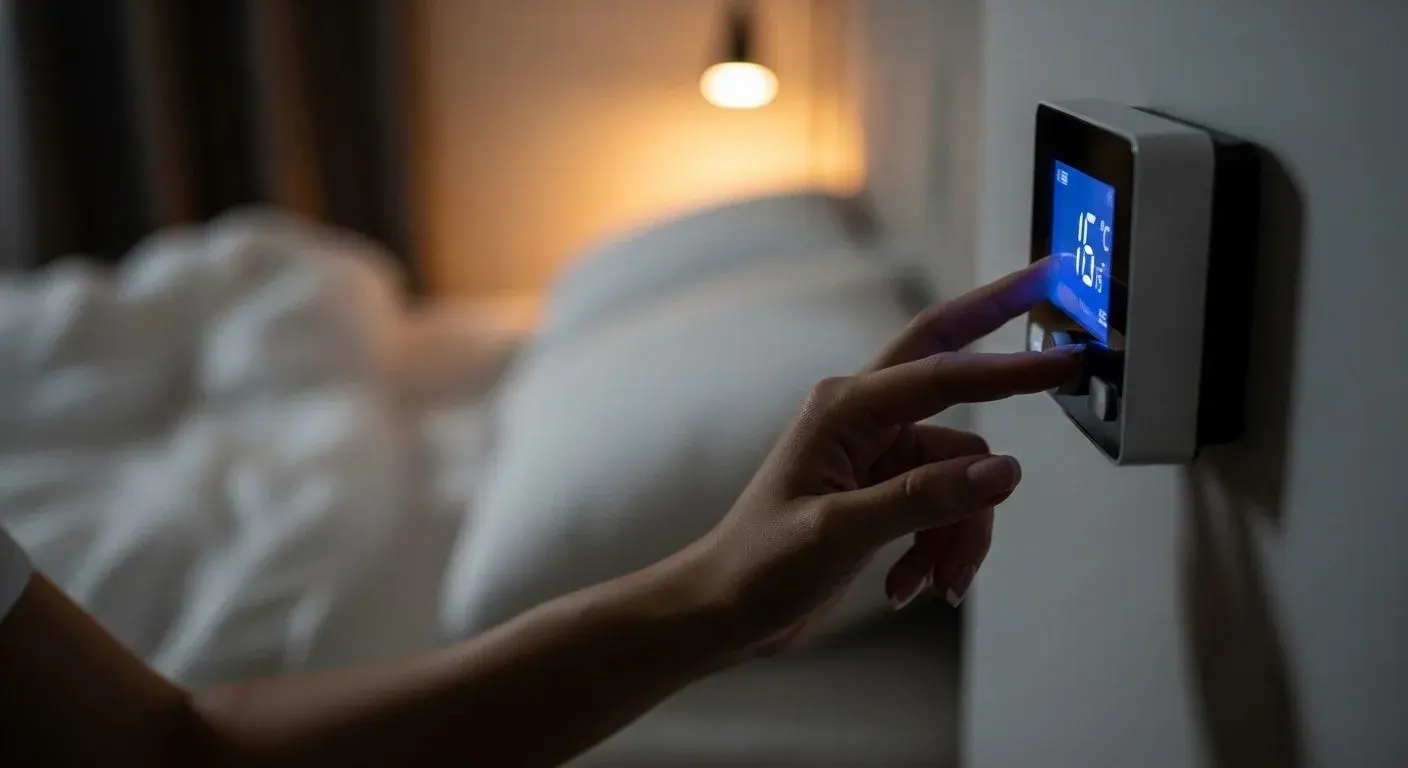
Behavioural changes remain the first line for mild-to-moderate sweating. Keeping your bedroom below 18°C (65°F), layering thin breathable bedding rather than one heavy duvet, and wearing loose moisture-wicking sleepwear create an environment that requires less thermoregulatory correction. These changes help even without hormonal treatment.
Hormone replacement therapy (HRT) is the most evidence-supported intervention for moderate-to-severe night sweats. It directly addresses the cause — estrogen instability — rather than the symptom. However, HRT is not appropriate for everyone, and the decision involves individual health history. Non-hormonal options with clinical support include cognitive behavioural therapy (CBT) for hot flashes (which addresses the cortisol-hypothalamus loop), and certain antidepressants (SSRIs/SNRIs) used off-label. Supplements such as black cohosh and phytoestrogens show mixed evidence: some studies find modest benefit, others find none. The trade-off is low risk but uncertain results.
Track episodes for two weeks before any appointment — time of night, likely triggers, and severity. This detail changes the quality of clinical conversations significantly and helps distinguish hormonally driven sweats from thyroid-related sweating, which requires separate investigation.