
Why Traditional Powder Foundation Fails During Menopause
The universal advice to avoid powder foundation on mature skin exists for legitimate reasons: menopausal skin produces 40% less sebum than pre-menopausal skin, and conventional powder foundations are designed to absorb oil and mattify. On already-dry menopausal skin, these formulas create a catastrophic dehydration effect—within hours, powder settles into every wrinkle, emphasizes texture, and creates a chalky, aged appearance that's worse than wearing no makeup at all. The talc and silica powders that control shine on oily young skin literally suck remaining moisture from menopausal skin.
However, dismissing all powder foundations is an oversimplification that leaves many women without viable options. The contradiction is that some women genuinely prefer powder application for its speed, ease, and portability, or they experience unexpected oiliness in certain facial zones during hormonal fluctuations. Additionally, certain newer powder technologies—specifically mineral foundations and baked formulas—behave completely differently than traditional pressed powder foundations. These modified formulas can work on menopausal skin when used correctly, though they require specific application techniques that differ from both liquid foundation and traditional powder.
The critical factor is understanding that powder foundation success on mature skin depends entirely on formula composition and prep routine, not age alone. Women who fail with powder typically skip the essential 20-minute hydration prep or choose mattifying formulas designed for oily skin. Those who succeed use mineral or baked formulas with light-reflecting properties over extensively hydrated skin. The question isn't whether powder foundation works for mature skin—it's which specific powder types work and under what conditions. Learn more about foundation selection in our complete foundation guide for menopause.
Common Myths About Powder Foundation and Aging Skin
Myth: Liquid Foundation Is Always Better for Mature Skin
Beauty advice universally promotes liquid foundation as superior for mature skin, but this ignores significant drawbacks that powder formulas avoid. Liquid foundations require precise color matching and blending skills that become harder with vision changes common after 50. They also oxidize on menopausal skin differently than younger skin due to altered pH and surface chemistry, often turning orange or gray by afternoon. Many women report that liquid foundations slide into wrinkles within 2-3 hours despite primers and setting sprays, creating the exact texture emphasis they're supposed to prevent.
Powder foundations—specifically mineral and baked types—offer distinct advantages: they're buildable without looking heavy, they don't oxidize or change color, and they're nearly impossible to over-apply. For women with mild to moderate skin concerns, a quality mineral powder over properly hydrated skin often looks more natural than liquid foundation. The trade-off is that powder requires more prep time and won't provide the coverage that full-coverage liquids offer for severe hyperpigmentation or redness. Neither formula is universally superior—the choice depends on individual skin concerns, dexterity, and willingness to commit to proper preparation.
Myth: All Powder Foundations Are the Same Formula
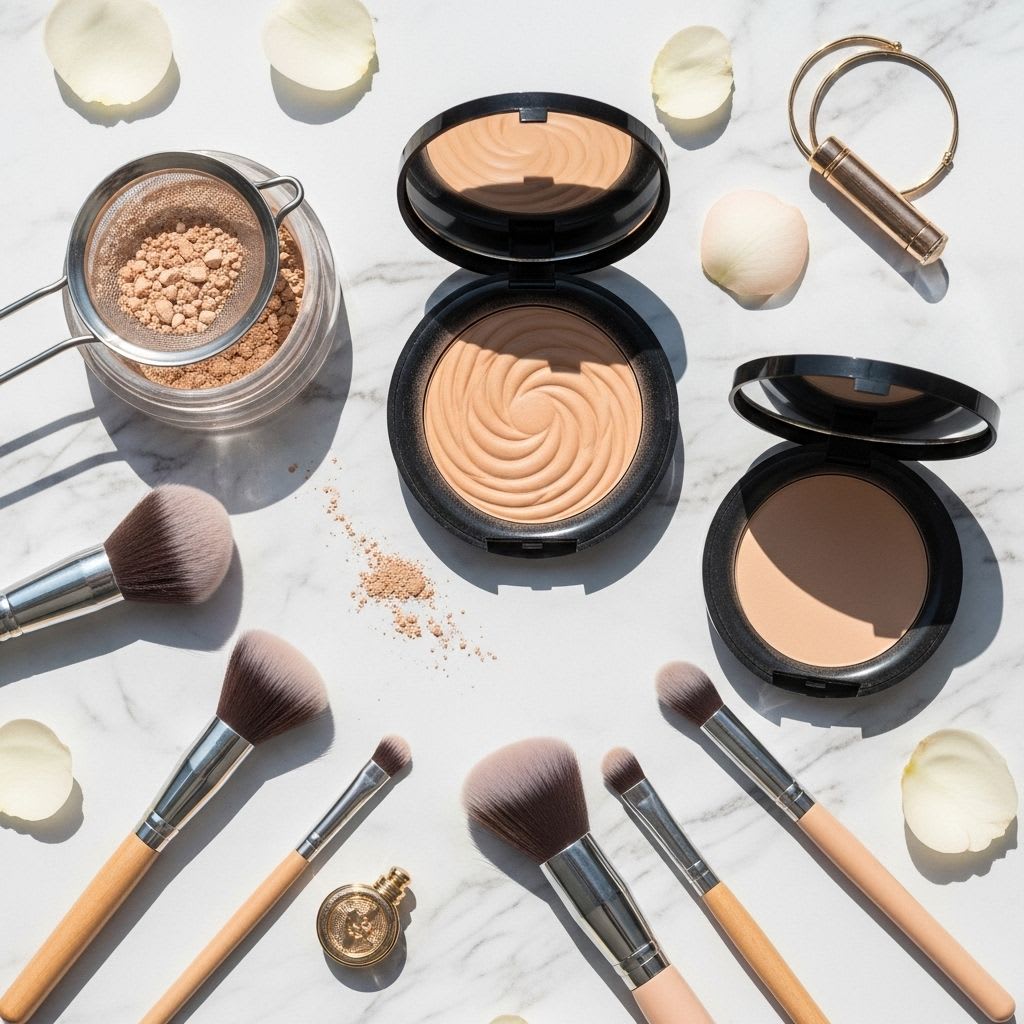
The biggest misconception is treating powder foundation as a single category when formulas vary dramatically in their effect on mature skin. Traditional pressed powder foundations contain talc, kaolin clay, and oil-absorbing ingredients—these are universally terrible for dry menopausal skin. Mineral powder foundations use zinc oxide and titanium dioxide as base ingredients, providing natural SPF and anti-inflammatory properties without absorption agents. Baked powder foundations are baked on terracotta tiles, creating a unique texture that's creamier and more hydrating than traditional pressed powder.
These formula differences create opposite effects on menopausal skin. Traditional pressed powder emphasizes every wrinkle and creates visible texture within hours. Mineral powder sits more gently on the skin surface and its light-reflecting minerals diffuse the appearance of fine lines. Baked formulas have the most cream-like application, blending almost like a liquid-to-powder hybrid. Women who tried one powder foundation type and dismissed all powder are missing formulas that might work perfectly. The edge case where this matters most: women with combination menopausal skin who are unexpectedly oily in the T-zone but dry everywhere else need mineral powder's oil control without traditional powder's dehydrating effect.
How to Make Powder Foundation Work on Menopausal Skin
The Non-Negotiable Preparation Protocol
Powder foundation on mature skin requires intensive hydration prep that takes 15-20 minutes before makeup application. Start with a hydrating serum on damp skin—hyaluronic acid is ideal as it pulls moisture into the dermis. Layer a rich moisturizer or facial oil while skin is still damp, focusing heavily on areas prone to dryness like cheeks and around the mouth. Wait the full 15 minutes for products to absorb completely; applying powder over incompletely absorbed skincare causes pilling and uneven coverage. This waiting period is where most women fail—they rush application and blame the powder when the real issue is insufficient prep time.
Just before powder application, mist face with a hydrating setting spray and let it dry down for 30 seconds—this creates a slightly tacky surface that helps powder adhere without clinging to dry patches. If skin still feels tight or looks dehydrated, add another thin layer of moisturizer and wait another 5 minutes. The skin should look plump, feel bouncy to touch, and show no visible flaking before powder touches it. This preparation transforms powder foundation performance from disaster to success, but it's incompatible with quick 5-minute makeup routines. For comprehensive prep strategies, see our makeup guide for skin changes.
Application Technique: Stippling Over Buffing
Traditional circular buffing motions drag powder across skin, settling it into every line and creating streaky coverage. The correct technique for mature skin is stippling or pressing—using a dense kabuki brush or damp sponge to press powder onto skin rather than sweeping it across. Pick up a small amount of product, tap off excess, then press the brush flat against skin in gentle pressing motions. This deposits powder on the surface without forcing it into wrinkles or texture.
Build coverage gradually through multiple thin layers rather than one heavy application—this is especially important for mineral powders which can look chalky if over-applied. For deeper wrinkles around the eyes or mouth, use barely any product in those zones or skip them entirely, relying on concealer instead. The entire application should feel gentle and take 3-5 minutes of careful pressing—rushed application always results in caked, textured coverage. Many experienced users apply powder with a damp beauty sponge for an even more skin-like finish, though this technique requires practice to avoid creating patches.
When Powder Foundation Cannot Work: The Honest Limitation
There's a threshold of skin dryness and texture severity where no powder formula succeeds regardless of technique. If your skin shows visible flaking, has deep static wrinkles that don't soften with hydration, or feels tight and uncomfortable even after moisturizing, powder foundation will look terrible. This typically occurs during extreme hormonal fluctuations, in very dry climates, or during winter months when indoor heating decimates skin moisture. The trade-off is clear: powder offers convenience and natural coverage when skin cooperates, but it's unforgiving of dehydration in ways liquid foundation isn't.
Additionally, powder foundation cannot provide the full coverage needed for significant hyperpigmentation, melasma, or severe redness—its strength is light to medium coverage with a natural finish. Women needing full coverage must choose liquid formulas or use powder only as a setting element over liquid base. The reality is that powder foundation works beautifully for about 40% of menopausal women who have mild skin concerns and commit to proper preparation, works acceptably with significant effort for another 30%, and simply doesn't work for the remaining 30% whose skin is too dry or textured. This isn't failure—it's matching product type to individual skin reality rather than following universal rules about age and makeup.