
Why Perimenopause Causes Stiff Fingers and Wrist Pain
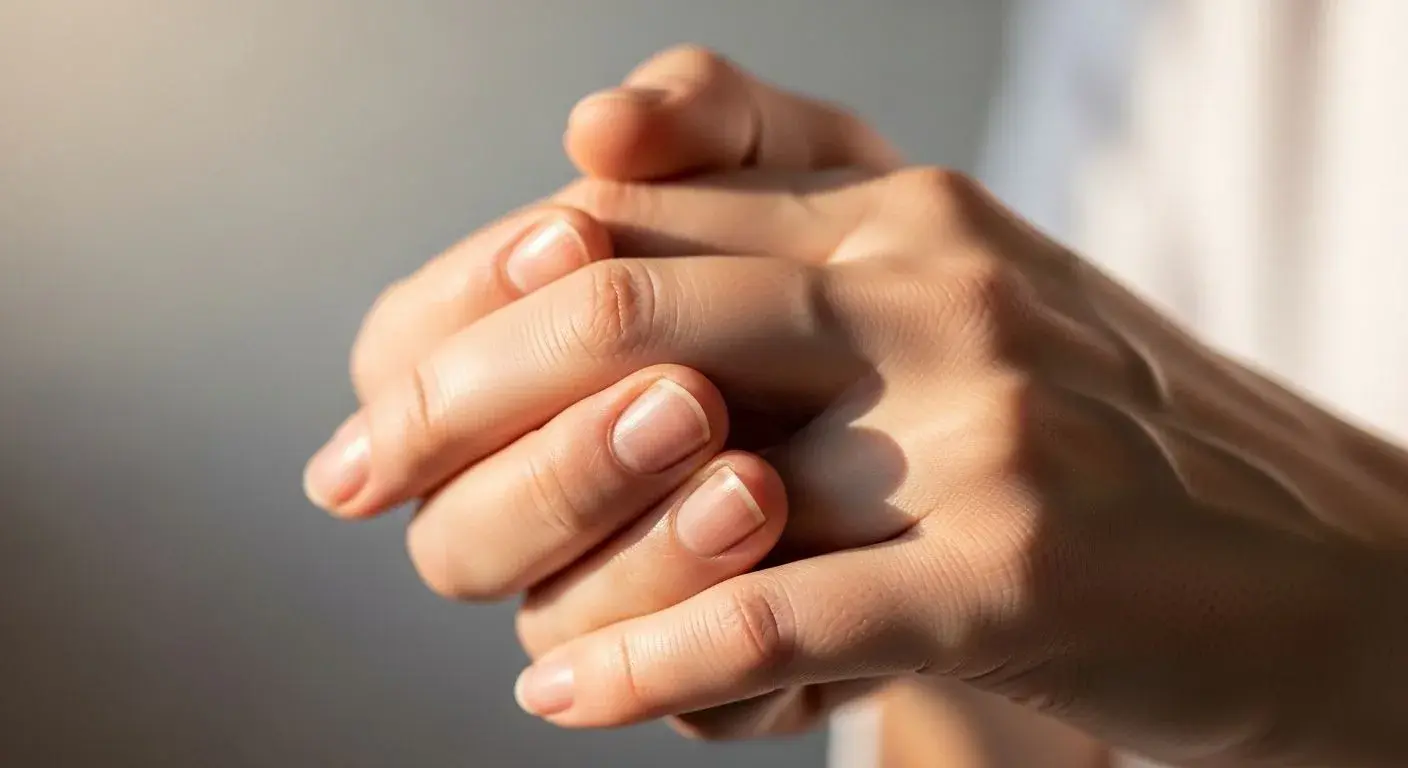
Stiff fingers and wrist pain in perimenopause are not early arthritis — they are a direct consequence of estrogen fluctuation affecting the small joints and tendon sheaths of the hands. Estrogen maintains synovial fluid (the lubricating fluid in joints) and reduces inflammation in tendon sheaths. When estrogen drops, hands and wrists are among the earliest structures to show symptoms because their small joint capsules and tendons respond quickly to hormonal shifts.
A specific condition linked to estrogen withdrawal is de Quervain's tenosynovitis — inflammation of the tendons at the base of the thumb — which is significantly more prevalent in perimenopausal women. Similarly, carpal tunnel syndrome can worsen or newly develop in perimenopause as fluid retention fluctuates with estrogen levels, increasing pressure in the carpal tunnel and causing wrist pain, numbness, and morning hand stiffness.
If you also experience itchy ears or scalp symptoms alongside joint symptoms, these share the same inflammatory hormonal driver — explore our guide on menopause itchy ears treatment.
What Actually Helps Stiff Fingers and Wrist Pain in Perimenopause
The most common mistake is immediately trialling rheumatoid arthritis treatments for perimenopause hand stiffness. While inflammatory arthritis must be excluded with a blood test (checking for rheumatoid factor and anti-CCP antibodies), the majority of perimenopausal hand stiffness is not rheumatoid and does not require disease-modifying drugs.
- Morning warm water soak: Submerging hands in warm water for 5–10 minutes immediately upon waking dramatically reduces the time it takes for morning stiffness to resolve.
- Hand exercises: Gentle finger flexion-extension, thumb opposition circles, and wrist rotations performed consistently reduce stiffness over 4–6 weeks.
- Omega-3 supplementation: 2–3g daily of EPA/DHA has measurable anti-inflammatory effects on synovial tissue and tendon sheaths, reducing small joint stiffness.
- Night splinting for carpal tunnel: A neutral-position wrist splint worn during sleep prevents the wrist flexion that compresses the median nerve, significantly reducing morning hand numbness.
- HRT: Restoring estrogen reduces synovial inflammation and is the most direct intervention for hormonally driven hand stiffness. Discuss eligibility with your GP.
For scalp-related perimenopause symptoms that may share the same inflammatory drivers as hand and wrist stiffness, see our article on menopause itchy scalp.
Frequently Asked Questions
Why are my fingers stiff every morning during menopause?
Morning finger stiffness in menopause is caused by reduced synovial fluid and tendon sheath inflammation driven by estrogen withdrawal. Overnight inactivity allows inflammatory fluid to pool in small hand joints. This resolves within 30–60 minutes in most cases. Stiffness lasting longer than 1 hour warrants a rheumatology review to exclude inflammatory arthritis.
Can perimenopause cause wrist pain?
Yes. Perimenopause causes wrist pain through two main mechanisms: estrogen-driven tendon inflammation (particularly affecting the thumb tendons in de Quervain's tenosynovitis) and fluid retention-related carpal tunnel compression. Both conditions improve with targeted treatment and often resolve or significantly ease after hormonal stabilisation.
Is stiff finger joint pain in menopause the same as arthritis?
No. Menopausal finger stiffness is hormonally driven and reversible to a significant degree, while osteoarthritis involves structural cartilage loss that is not reversible. The two can coexist, but treating hormonal joint stiffness with arthritis protocols — and vice versa — leads to poor outcomes. A blood test and X-ray can distinguish them clearly.
Sources
- Musculoskeletal Symptoms and Menopause: Small Joint Involvement. pubmed.ncbi.nlm.nih.gov — PubMed / NIH
- Carpal Tunnel Syndrome and Hormonal Changes. pubmed.ncbi.nlm.nih.gov — PubMed / NIH
- Hand and Wrist Pain: Overview. nhs.uk — NHS