
Why Menopause Causes an Itchy, Dry Scalp
If your scalp has started itching, flaking, or feeling uncomfortably tight since perimenopause began, you're not imagining it. Scalp changes are a recognized but underreported symptom of hormonal transition — and the root cause is the same one driving hot flashes, dry skin, and hair thinning: declining estrogen.
Estrogen plays a direct role in maintaining the scalp's sebaceous (oil) glands. When estrogen drops, sebum production falls with it. Less oil means a compromised skin barrier, reduced moisture retention, and a scalp that becomes dry, reactive, and prone to inflammation. Simultaneously, the skin's natural desquamation cycle (the shedding and renewal of scalp cells) can speed up or become irregular — producing the visible flaking many women mistake for dandruff.
There's also a neurological angle. Estrogen modulates itch-sensing nerve fibers in the skin. As levels fall, these fibers become more easily triggered — which is why some women experience intense scalp itching even when the skin looks normal on the surface. This is the same mechanism behind the broader symptom of itchy skin during menopause and perimenopause, which affects a significant proportion of women in the menopausal transition.
Three scalp changes are most commonly reported:
- Diffuse dryness and tightness: The scalp feels parched, especially after washing.
- Flaking and what looks like dandruff: Often confused with seborrheic dermatitis, but driven by dryness rather than excess oil.
- Itching without visible irritation: Caused by sensitized nerve fibers, not always an inflammatory skin condition.
Common Myths vs. What the Evidence Actually Shows
Several widespread beliefs about menopause scalp itch lead women in the wrong direction — and some popular remedies can actively make symptoms worse.
Myth 1: 'It must be dandruff, so I need an anti-dandruff shampoo.' Classic dandruff is driven by excess sebum and a yeast called Malassezia. Menopause-related flaking is usually the opposite problem — a dry, under-oiled scalp. Using harsh anti-dandruff shampoos containing zinc pyrithione or selenium sulfide daily strips the scalp further, intensifying dryness and itch. These ingredients have a role when yeast overgrowth is confirmed, but they should not be the default first step.
Myth 2: 'Washing hair less often will rebalance the scalp.' While over-washing is a genuine issue, under-washing during a period of scalp inflammation can allow product buildup, dead skin cells, and sweat (especially from night hot flashes) to accumulate — worsening irritation. The goal is gentle frequency, not avoidance.
Contradiction worth knowing: Some women in early perimenopause experience a temporary spike in scalp oiliness before sebum production eventually declines. If you're oilier than usual and itchy, you may be in this transitional phase — and the treatment approach differs from the dry-scalp model. Tracking symptoms alongside your cycle (if still present) can help clarify which phase you're in.
For a deeper look at the full range of causes and how to distinguish between them, the guide on menopause itchy scalp causes and relief options covers diagnostic steps and condition-specific treatments in detail.

Menopause Dry Scalp Treatment: Practical Strategies That Work
Effective treatment targets the underlying hormonal change and supports the scalp's barrier function directly. The most consistent results come from a layered approach — not a single product switch.
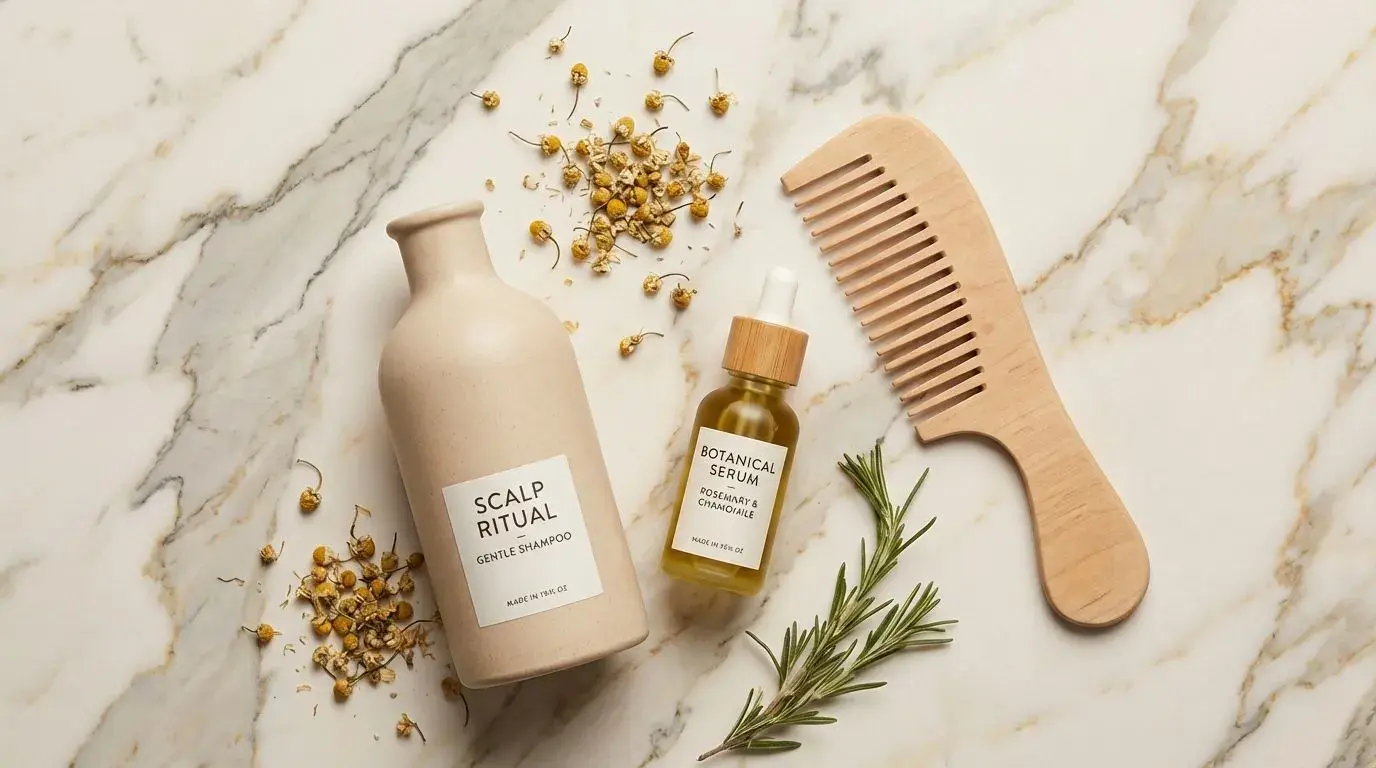
- Switch to a sulfate-free, hydrating shampoo: Look for formulas with ingredients like hyaluronic acid, ceramides, panthenol, or glycerin. These support moisture retention without disrupting what little sebum remains.
- Introduce a scalp oil or pre-wash treatment: Jojoba, squalane, and rosehip oils most closely mimic the scalp's natural sebum composition. Apply to the scalp 30–60 minutes before washing, once or twice a week.
- Use a scalp serum containing niacinamide or salicylic acid: Niacinamide strengthens the skin barrier and reduces inflammation. Low-concentration salicylic acid (0.5–1%) gently dissolves flaking without over-drying. Avoid both if your scalp is acutely irritated — add them once baseline hydration is restored.
- Address systemic triggers: Stress elevates cortisol, which worsens scalp inflammation. Hot showers, heated styling tools, and tight hairstyles all compound dryness. These aren't minor factors — they meaningfully affect symptom severity.
- Consider hormone replacement therapy (HRT) for persistent symptoms: For women whose scalp symptoms are severe and coincide with other menopausal symptoms, HRT can restore estrogen levels sufficiently to normalize sebum production. This is a conversation to have with a gynecologist or menopause specialist, not a standalone cosmetic decision.
When Standard Advice Fails
If you've tried hydrating shampoos and scalp oils for 6–8 weeks without improvement, the issue may not be hormonal dryness alone. Scalp psoriasis, contact dermatitis (from hair dye, fragrances, or new products), lichen planopilaris, and frontal fibrosing alopecia all present with itching and can be triggered or worsened during the menopausal transition. These conditions require dermatological assessment — and treating them as simple dryness delays appropriate care.
Similarly, iron deficiency — which is common during perimenopause due to irregular heavy periods — can cause scalp sensitivity and hair changes that look like hormonal dryness but won't respond to topical treatment. A basic blood panel (ferritin, thyroid, vitamin D) rules out the most common nutritional drivers before you invest further in scalp-specific products.