
Why Your Shoulders Are Stiff Every Morning
Morning shoulder stiffness has three main structural causes that are frequently confused with each other. The first is inflammatory pooling — overnight inactivity allows inflammatory fluid to accumulate in the shoulder bursa or joint capsule, producing the characteristic 'rusty hinge' feeling that eases after 20–30 minutes of movement. The second is postural compression — sleeping with the shoulder internally rotated or compressed under body weight narrows the subacromial space and irritates the bursa and rotator cuff tendons. The third is capsular contracture — the early phase of frozen shoulder, where the joint capsule tightens overnight due to reduced movement.
The distinction matters because each responds to a different intervention. Inflammatory pooling improves with anti-inflammatory medication and gentle morning movement. Postural compression improves with sleep position changes. Capsular contracture requires physiotherapy targeting the shoulder capsule itself — and will worsen without it.
For women in perimenopause and menopause, estrogen decline is an additional driver of all three mechanisms, and morning shoulder stiffness often accompanies broader musculoskeletal symptoms. Our article on perimenopause body aches and joint pain covers the systemic picture.
Evidence-Based Fixes for Morning Shoulder Stiffness
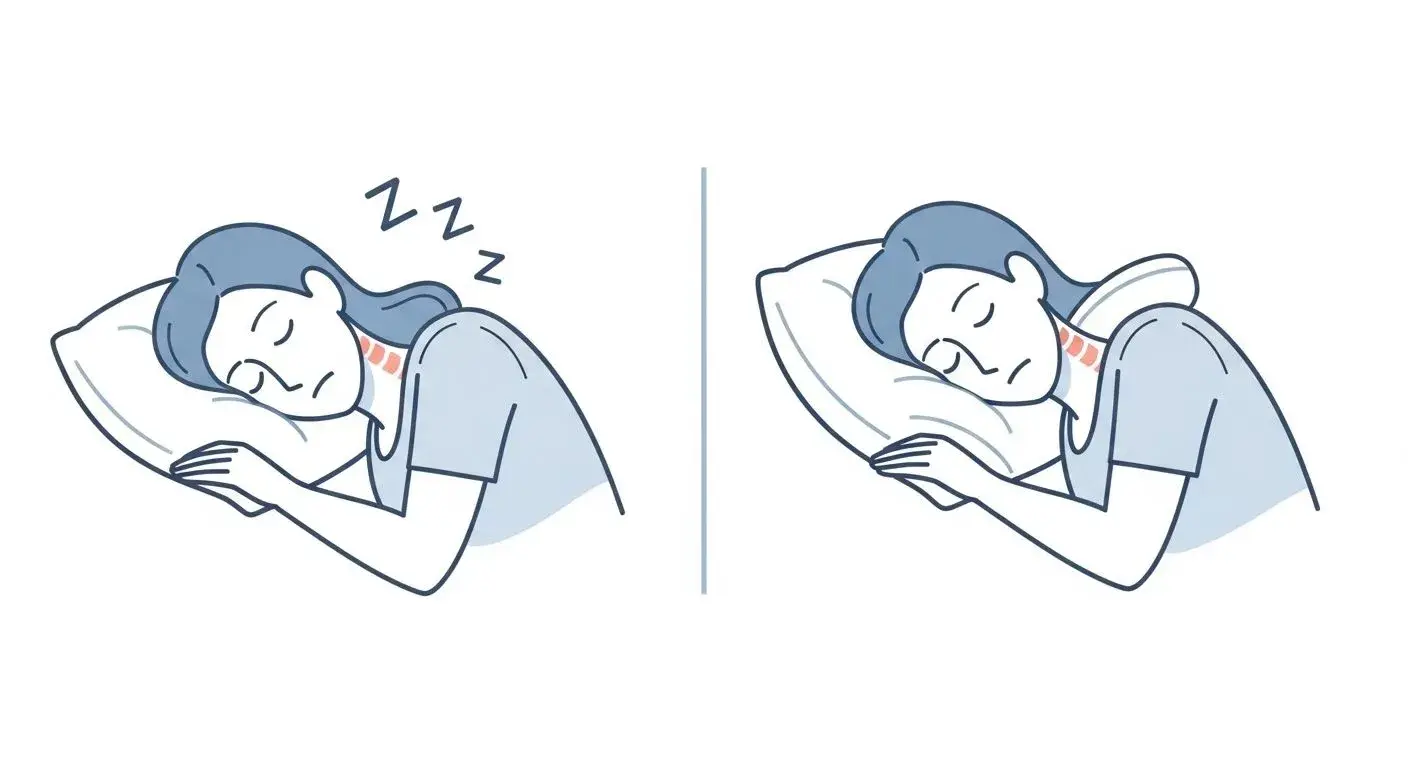
The fastest single intervention is sleep position optimisation. Side-sleeping on the affected shoulder is the most common aggravating factor and the most easily changed. Sleeping on your back with a small pillow supporting the arm in slight abduction reduces overnight shoulder compression. If side-sleeping is unavoidable, sleeping on the unaffected side with the affected arm resting on a pillow in front of you maintains a neutral shoulder position.
- Morning heat application: A heat pack on the shoulder for 10 minutes upon waking increases circulation and reduces inflammatory pooling faster than movement alone.
- Pendulum exercises on waking: Gentle circular swings with the arm hanging freely disperse synovial fluid through the joint without loading inflamed structures.
- Thoracic mobility work: Poor thoracic spine extension is the most underdiagnosed driver of shoulder stiffness. Foam roller thoracic extension for 5 minutes each morning reduces shoulder impingement significantly within 4 weeks.
- Evening NSAIDs: Taking an anti-inflammatory such as ibuprofen before sleep (if medically appropriate) reduces overnight inflammatory activity and noticeably improves morning shoulder mobility.
Morning back and hip stiffness often accompanies shoulder symptoms in perimenopause. Our article on back and hip pain in menopause explores how these symptoms are connected through the same hormonal mechanism.
Frequently Asked Questions
Why are my shoulders so stiff when I wake up?
Morning shoulder stiffness is caused by overnight fluid accumulation in inflamed shoulder structures (bursa, joint capsule, or tendons) combined with postural compression during sleep. It improves with movement because activity redistributes fluid and increases blood flow to the joint. Stiffness lasting over 60 minutes suggests a more significant inflammatory process and warrants assessment.
Can sleeping position cause shoulder stiffness?
Yes, sleeping position is one of the primary causes of morning shoulder stiffness. Side-sleeping on the affected shoulder compresses the subacromial space and bursa throughout the night. Switching to back sleeping or opposite-side sleeping with pillow support consistently improves morning symptoms within 1–2 weeks for most people.
Does menopause make shoulder stiffness worse in the morning?
Yes. Estrogen loss during menopause increases systemic inflammation in tendons and joint capsules, making the overnight inflammatory pooling that causes morning stiffness more severe. Menopausal women are also at higher risk of frozen shoulder, which presents as progressive morning stiffness that does not ease with movement.
Sources
- Shoulder Pain and Sleep Position: Clinical Evidence. pubmed.ncbi.nlm.nih.gov — PubMed / NIH
- Thoracic Spine Mobility and Shoulder Pain. pubmed.ncbi.nlm.nih.gov — PubMed / NIH
- Frozen Shoulder and Hormonal Factors. menopausesociety.org — The Menopause Society