
Why Perimenopause and Menopause Trigger Tennis Elbow
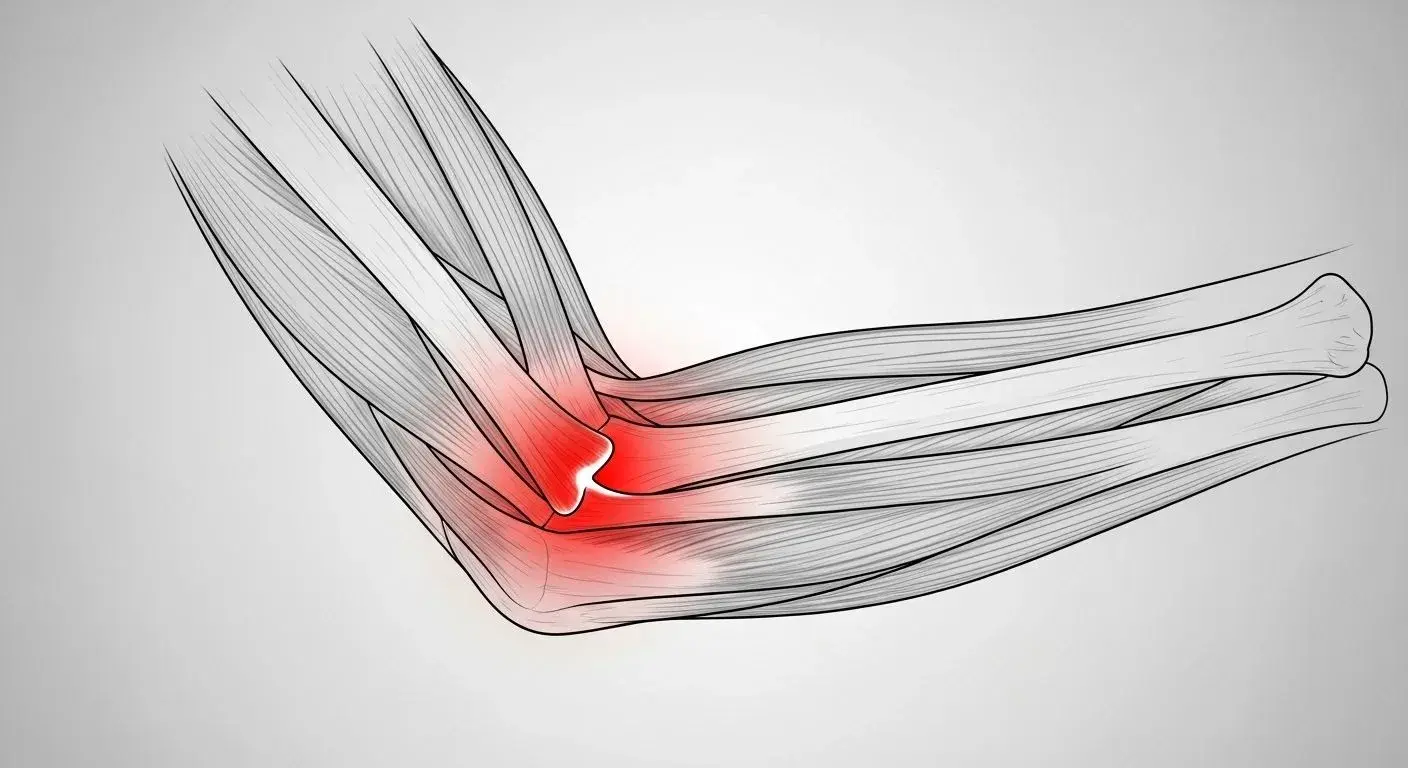
Tennis elbow — formally called lateral epicondylitis — is a painful tendinopathy of the forearm extensor tendons at their attachment point on the outer elbow. Despite its name, it affects far more women over 40 than tennis players, and its spike in prevalence during perimenopause is directly linked to estrogen-driven collagen loss. Estrogen is essential for maintaining tendon strength, flexibility, and repair capacity. When estrogen fluctuates and falls in perimenopause, tendons throughout the body — including those at the elbow — become stiffer, weaker, and far more susceptible to micro-tearing from everyday activities.
The activities that trigger menopausal tennis elbow are often surprisingly mundane: repeated mouse use, gripping a steering wheel, lifting grocery bags, or opening jars. Unlike sports-related lateral epicondylitis, which typically has a clear overuse event, perimenopause tennis elbow can appear seemingly without cause — because the underlying driver is hormonal deterioration of the tendon structure itself, not the activity.
This hormonal tendon vulnerability is part of the broader pattern of musculoskeletal change in perimenopause. Our article on perimenopause body aches and joint pain explains the full systemic picture.
Treating Tennis Elbow in Perimenopause: What Works and What Does Not
The most important correction is this: menopausal tennis elbow is a tendinopathy (degeneration), not tendinitis (acute inflammation). This distinction matters because anti-inflammatory treatments — including cortisone injections — are significantly less effective for tendinopathy than for acute inflammation. Cortisone injections provide short-term pain relief in tennis elbow but have consistently shown worse long-term outcomes than physiotherapy alone. They are most useful for breaking the pain cycle to allow rehabilitation to begin, not as a standalone treatment.
- Eccentric wrist extension exercises: The most evidence-supported rehabilitation for lateral epicondylitis. Performed slowly and progressively, they stimulate tendon collagen remodelling over 8–12 weeks.
- Tennis elbow strap (counterforce brace): Reduces the tensile load on the extensor tendon attachment during daily activities. Provides immediate functional relief and reduces pain during the rehabilitation period.
- Activity modification: Identifying and temporarily reducing the specific grip-heavy activities triggering the tendon is essential. Rehabilitation cannot succeed if the tendon is being continuously re-irritated.
- HRT consideration: Restoring estrogen improves tendon collagen quality and reduces the hormonal vulnerability driving the tendinopathy. This is the root-cause intervention.
For an understanding of how hip and back pain often co-occurs with elbow and wrist tendinopathy in perimenopause — all driven by the same mechanism — see our article on back and hip pain in menopause.
Frequently Asked Questions
Can perimenopause cause tennis elbow?
Yes. Perimenopause directly increases tennis elbow risk through estrogen-driven collagen loss in the extensor tendons of the forearm. Women in their 40s and 50s are the demographic most affected by lateral epicondylitis — and hormonal change, not sport, is the primary reason. The condition can occur without any sports or heavy manual activity.
How long does tennis elbow take to heal during menopause?
Menopausal tennis elbow typically takes 3–6 months to heal with consistent eccentric exercise rehabilitation. It heals more slowly than sports-related tennis elbow because the underlying hormonal vulnerability continues to affect tendon tissue quality. Women who address estrogen levels alongside physiotherapy typically achieve faster and more durable recovery.
Is a cortisone injection good for tennis elbow in menopause?
Cortisone injections reduce pain short-term but produce worse outcomes than physiotherapy at 6 and 12 months. In menopause, where the tendon is already collagen-depleted, repeated cortisone injections carry a higher risk of further tendon weakening. One injection to enable rehabilitation is reasonable; using injections as the primary treatment is not.
Sources
- Lateral Epicondylitis: Cortisone vs Physiotherapy. pubmed.ncbi.nlm.nih.gov — PubMed / NIH
- Estrogen Effects on Tendon and Collagen Synthesis. pubmed.ncbi.nlm.nih.gov — PubMed / NIH
- Tennis Elbow: Diagnosis and Management. mayoclinic.org — Mayo Clinic